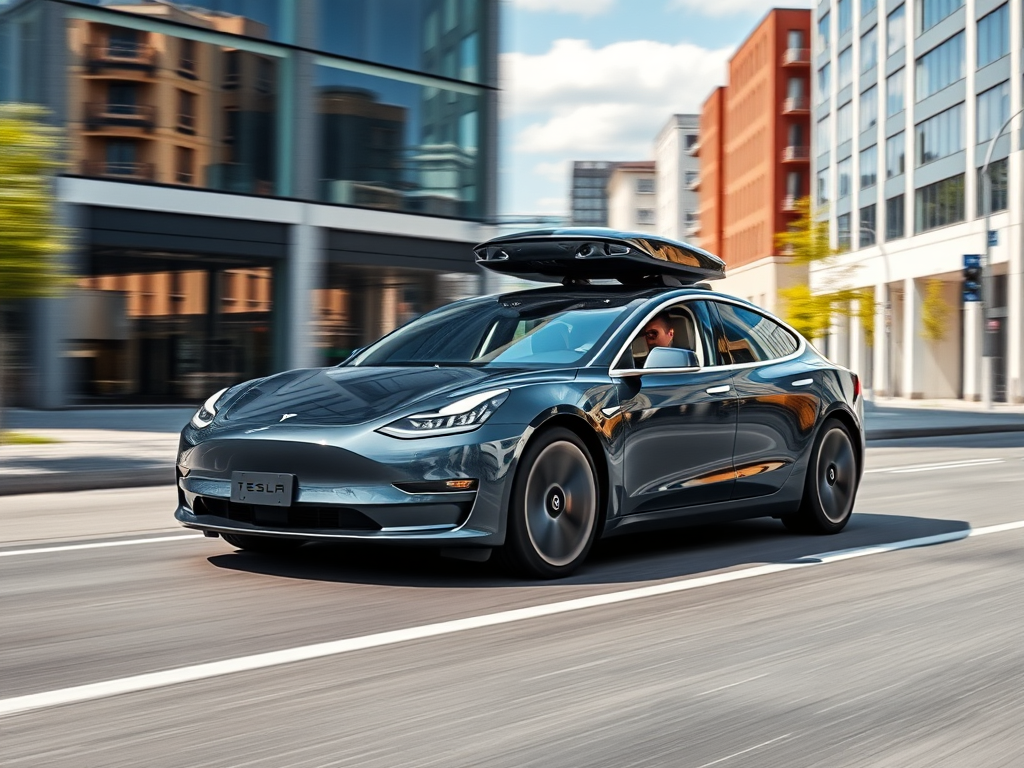
Sweden is gaining renewed attention in the realm of autonomous vehicles as the U.S. electric-vehicle manufacturer Tesla explores a new site for its Full Self-Driving (FSD) trials: a Swedish city that has reportedly welcomed the concept. While the final location remains under wraps, this development reflects both Sweden’s advanced road-tech ecosystem and the global competition for autonomous-mobility leadership.
According to recent reports, Tesla is in discussions with Swedish authorities about deploying FSD on public roads within a Swedish urban area. The city in question has reportedly signalled positive interest in hosting the trial.For Sweden, the proposition fits neatly with broader national goals: it aspires to be a test-bed for cutting-edge mobility technologies, intelligent transport systems, and smart-city initiatives.
There are several attractive features of Sweden for such trials. First, Swedish cities tend to have well-maintained road infrastructure, consistent signage, and high levels of digital connectivity—all of which facilitate autonomous systems testing. Second, the regulatory environment in Sweden is relatively open to experimentation, with authorities seeking to balance innovation with public safety and data protection. Third, Swedish consumers and regulators often show early interest in new mobility models, including EVs, shared mobility, and digital mobility services.
For Tesla, the Swedish pilot would bring multiple benefits. A public-road FSD trial in Europe complements its U.S. efforts and bolsters its international credibility. It signals to global regulators, investors and consumers that Tesla is advancing beyond driver-assist systems and into next-generation autonomy. It also allows the company to collect rich data in a Nordic environment characterised by diverse weather, light-conditions (e.g., long twilight periods), and mixed urban-rural driving scenarios—which can strengthen system robustness.
However, significant challenges must be navigated. Autonomous driving on public roads raises concerns ranging from liability in accidents, interoperability with existing traffic and infrastructure, pedestrian behaviour, to cybersecurity and data privacy. In Sweden, any trial will need to align with strict regulatory oversight, consumer protections, and public acceptability. There is often public wariness about handing over control to machines—especially after high-profile accidents elsewhere involving autonomous or semi-autonomous systems.
Moreover, for Tesla, setting up the necessary infrastructure (mapping, sensor arrays, localised fleet deployment, regulatory approvals) imposes both cost and risk. If the trial fails to meet safety and performance benchmarks, it could raise reputational questions. For Swedish cities, hosting the trial also means assuming some invisible risk: Will local traffic disruptions increase? Will the local authority be blamed if something goes wrong?
From a broader mobility policy perspective, Sweden stands to gain several advantages. Hosting the Tesla FSD trial could place Sweden at the forefront of European autonomous-mobility development, attracting research investment, industry partnerships, and start-ups. It could spur local innovation ecosystems around sensor fusion, machinelearning for perception in winter conditions, V2X (vehicle-to-everything) communications, and regulatory frameworks for mobility as a service (MaaS). Sweden could then export not only vehicles but mobility systems and smart-city know-how.
On the flip side, Switzerland or Germany or other European countries might view Sweden’s initiative as precedential—raising the question of whether Sweden might become the go-to sandbox for large tech-mobility players. That could expose Sweden to debates about data sovereignty, public versus private roles in mobility infrastructure, and ethical issues such as algorithmic accountability.
In terms of timing, if Tesla proceeds, we might expect a staged rollout: mapping and simulation phases, then limited real-world operation in mixed traffic, followed by incremental expansion. Swedish regulators may require specific performance metrics (e.g., incident rate, disengagement rate, pedestrian and cyclist safety, winter handling). If successful, the trial could pave the way for larger scale deployment, regulatory approval of driverless taxi services, or eventual integration of FSD capabilities into Swedish vehicle fleets more broadly.
To summarise: Sweden has the opportunity to position itself at the cutting edge of autonomous mobility by welcoming Tesla’s FSD trial. The initiative promises innovation, investment and global visibility—but also carries risk, costs and responsibility. Whether Sweden can strike the right balance between being a mobility pioneer and safeguarding public interests will likely become a case-study in how small advanced nations manage the transition to autonomous transport.

Leave a comment