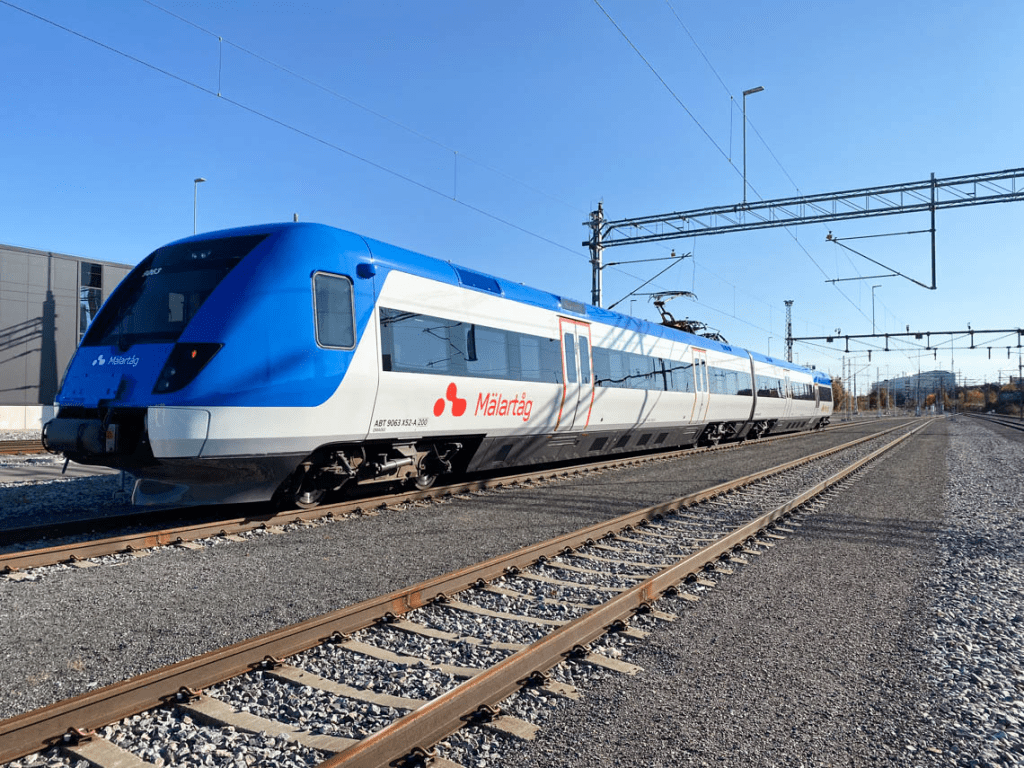
In a major move for Swedish rail infrastructure and commuter transport, the global mobility company Alstom SA has secured a long-term maintenance contract covering 62 trains operated by regional operator Mälartåg AB. The contract’s effective start date is December 2026, and its scope runs up to ten years.
Details of the contract
Alstom will carry out maintenance operations for the entire Mälartåg commuter fleet, including depots in Eskilstuna and Västerås, among other locations. This signals the start of a deeper collaboration in the Mälar-region (Mälardalen) of Sweden.
The agreement reflects Alstom’s strategy to expand its footprint in the Nordic market, especially in maintaining fleets that were not originally built by Alstom. The ability to service mixed-fleet stock underlines the company’s versatility.
Significance for Swedish commuter transport
For commuters in the Stockholm-Mälar region, the contract promises enhanced reliability, upgraded maintenance regimes, and the possibility of improved service quality over the next decade. The long horizon (up to ten years) provides strategic stability for both operator and manufacturer.
Greater focus on maintenance often translates into fewer breakdowns, improved safety, and reduced life-cycle costs. Sweden’s investment in its commuter rail network underscores the country’s commitment to sustainable mobility, reducing car usage, and improving regional connectivity.

Industrial & regional economic impact
The award helps cement Mälardalen’s role as a transport-industry hub. The presence of Alstom in the region means jobs, regional suppliers, and technology transfer are likely to receive a boost. For Sweden as a whole, maintaining modern commuter fleets contributes to the broader goal of sustainable transportation infrastructure.
Broader context & challenges
Sweden’s transport policy increasingly emphasises electrification, low emissions, and listener-friendly commuter services. However, maintenance contracts of this scale also bring challenges: coordinating depot scheduling, ensuring spare-parts logistics, handling legacy fleet issues, and integrating technological upgrades (e.g., digital monitoring, predictive maintenance).
Given that the contract spans into the early 2030s, there’s also a strategic dimension: how will fleet renewal, rolling stock investment, and evolving commuter patterns affect the viability of maintenance-only deals? Will Alstom’s contract include provisions for upgrading or retrofitting trains as regulations tighten?
What to monitor
- Alstom’s rollout plan: how will the transition in December 2026 be managed without major disruption to commuters?
- Any additional options or contract expansions beyond the initial ten-year term.
- Technological innovations deployed: will predictive maintenance, remote diagnostics, and IoT monitoring be included?
- How this contract fits into the Swedish government’s broader vision for sustainable mobility and possibly national rail upgrade strategies.
- Impact on service performance metrics: punctuality, breakdown rates, commuter satisfaction.
In sum, Sweden’s decision to award Alstom the maintenance contract for its Mälartåg fleet represents both a vote of confidence in the region’s transport future and a sign of how infrastructure management is evolving. The decade-long horizon offers stability, but also raises questions about how durable and adaptable these systems will be as mobility patterns and technologies shift.

Leave a comment