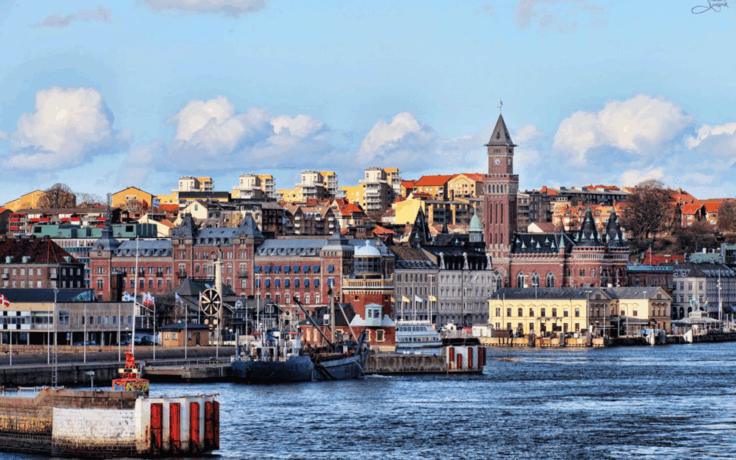
Sweden’s cultural scene is undergoing a creative revival as artists, promoters and municipalities join forces to breathe new life into unused urban spaces. In a bright example of this trend, the city of Helsingborg is spearheading the “Pop Up City” project, backed by the event-agency All Things Live, to turn vacant buildings into pop-up live-music venues.
This initiative is part of a broader movement across Sweden: to rejuvenate the live-music ecosystem, provide performance space for younger artists, tackle under-utilised real estate, and reinvigorate local economies and nightlife culture.
Why this matters
Live music was hit hard by the pandemic and subsequent economic pressures: venue closures, rising rents, supply-chain disruptions (for sound/lighting), and changing audience behaviour all took a toll. For Sweden’s music-loving culture and globally recognised artists, resurgence was overdue.
The Pop Up City project captures several compelling elements:
- Adaptive re-use of space: Instead of building from scratch, the initiative finds under-utilised warehouses, factories or storefronts, converts them into vibrant music venues, dresses them with event infrastructure, and hosts concerts for one to several nights.
- Emerging-artist platform: By lowering the barrier to venue access, local bands and performers get a stage and audiences in city centres where conventional venues may be too costly or saturated.
- Urban-regeneration ripple effects: Concerts attract foot-traffic, hospitality spending, and increased visibility for neighbourhoods. They transform otherwise dormant zones into dynamic social hubs.
- Creative-economy signal: Cities like Helsingborg are emphasising culture not just for entertainment, but as part of economic and civic strategy — boosting tourism, branding and youth retention.
Project details and early results
Launched in early November 2025, Pop Up City in Helsingborg is backed by city-tourism and cultural units in collaboration with All Things Live.
They survey unused municipal real-estate, partner with building owners, and programme a series of live-events, ranging from indie rock nights to experimental electronic sets, over a period of months. The inaugural nights reportedly drew good attendance, with positive feedback from both audience and performers.
Key features include:
- Flexible layout: Venues are modular, allowing for 300-1,000 capacity depending on space, stage configuration and sound-design.
- Local-artist prioritisation: At least 50 % of performance slots are reserved for regional artists with fewer than three full-length releases.
- Community outreach: Workshops and artist talk-backs are included to engage local youth and music-students.
- Sustainable operations: Re-using existing buildings limits new-construction footprint and aligns with Sweden’s low-carbon mindset.
Why now?
The timing is significant. Several converging trends made this possible:
- Vacant or under-used real estate supply: In some smaller cities or former industrial zones, buildings sat under-used after structural economic shifts; this project offers a fresh purpose.
- Post-pandemic appetite: Audiences are hungry to return to live events after restrictive years; artists are keen to perform; event infrastructure is adapting.
- Municipal culture strategy: Cities recognise that culture and live-music scenes help retain youth, attract visitors and contribute to vibrant civic life.
- Entry point for innovation: Pop-up venues allow lower cost and risk compared to full-scale clubs or arenas, enabling experimentation in format, genre, and demographics.
Wider implications for Sweden’s live-music landscape
While Helsingborg is an early mover, the concept has implications for Sweden more broadly:
- Regional revitalisation: Smaller cities or towns away from Stockholm and Gothenburg may benefit disproportionately, gaining cultural economy boosts and fresh identity advantages.
- Genre diversity and inclusion: By lowering access barriers, lesser-known genres (e.g., electronic, world music, underground hip-hop) can flourish, enhancing Sweden’s musical ecosystem.
- Industry pipeline: Emerging-artist exposure leads to recording, touring and international breakout — which can reinforce Sweden’s global music brand (already strong with pop and songwriting exports).
- Urban-cultural planning model: The pop-up approach offers a template for flexible cultural infrastructure — less fixed cost, more experimentation, more responsive to local demand.
Challenges to address
As promising as the initiative is, several challenges warrant attention:
- Financial sustainability: Smaller venues often run on thin margins; ensuring profitability or subsidies remains tricky.
- Venue licensing, noise regulation & neighbourhood concerns: Pop-ups in formerly dormant areas may face community push-back on noise, late-hours disturbances, or licensing conflicts.
- Scalability and replication: While one city may do well, replicating across Sweden’s diverse municipalities (each with different resources, cultural leadership and urban fabric) is non-trivial.
- Artist support beyond performance: A one-night gig is good, but developing artists need broader infrastructure (recording, management, touring support) to build sustainable careers.
- Infrastructure logistics: Converting spaces involves sound-proofing, crowd-management, access, safety licences — and retrofits can be expensive or technically constrained.
Looking ahead: What to watch
The success of the Pop Up City initiative and similar ventures will depend on:
- Attendance metrics and repeat bookings: Are audiences returning? Are events financially viable?
- Artist feedback and development trajectory: Are performers leveraging the platform into broader opportunities?
- Municipal expansion or policy support: Will other Swedish cities pick up the model? Will cultural policy and funding follow?
- Venue lifecycle and community impact: Do formerly idle spaces get permanently revitalised? Do neighbourhoods benefit?
- Innovation in format: Could pop-up venues blend live music with tech (immersive audio/visual), hybrid events or cross-discipline arts to stay ahead in a competitive entertainment landscape?
Conclusion
Sweden’s live-music revival may seem like a cultural side-note compared to security or energy policy, but it touches a different but equally important dimension: the soul of civic life. As the Helsingborg Pop Up City project shows, culture can be both a beacon of renewal and a foundation for social cohesion. In a time of rapid change, keeping spaces for collective experience, creative expression and community matters more than ever.

Leave a comment