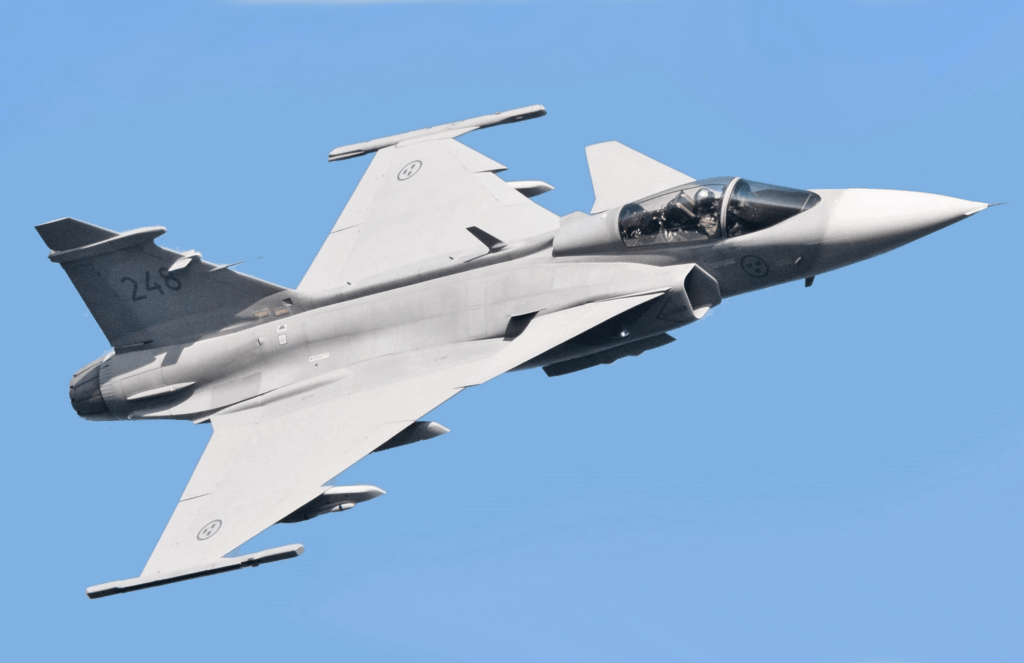
In recent weeks, Sweden has announced major steps to strengthen its defence posture — reflecting a growing commitment to military modernisation in the face of heightened geopolitical tensions in Europe. At the center of this shift is a new strategic plan by the Swedish Armed Forces that calls for acquisition of long-range weapon systems capable of striking targets up to 2,000 kilometres away — well within Russian territory.
A New Strategic Posture: Long-Range Strike
According to a report released by the Swedish Armed Forces, the aim is to match Russia’s expanding long-range arsenal — which includes cruise and ballistic missiles and drones — by acquiring advanced strike capabilities.
Currently, Sweden has already ordered Taurus cruise missiles (with a reach of around 500 km) for its Saab JAS 39 Gripen fighter jets.But the new plan contemplates systems with significantly greater range, indicating Sweden’s willingness to adopt a more assertive deterrence strategy.
Defence Minister Pål Jonson emphasized that this buildup aims to respond to “developments observed during the war in Ukraine,” where long-range strike and missile capabilities have played a central role.The Swedish government is keen to deter possible threats and ensure national security — transitioning from traditional defensive posture toward deterrence through reach and precision.
Naval Expansion: New Frigates on the Horizon
Complementing the airborne strike upgrades, Sweden is simultaneously investing in naval power. The country is on track to decide early next year on a supplier for four new Lulea‑class frigates — the largest surface warships in Sweden’s navy with a projected 40-year lifespan.
Sweden is reportedly considering several reputable bidders, including France’s Naval Group, Spain’s Navantia, and the UK’s Babcock — all in collaboration with Swedish defense firm Saab.The decision underscores a broader trend: Sweden is investing significantly in both air and sea capabilities, signalling that national defence is being reimagined to face 21st-century threats.
The planned frigates, when delivered (expected by 2030), will enhance Sweden’s capacity for maritime defence, territorial protection, and regional deterrence. Combined with long-range strike systems, the naval build-up signals a holistic renewal of Sweden’s military capabilities.
Defence Tech Boom and Industry Growth
This strategic push isn’t limited to hardware. The defence sector in Sweden is also rapidly transforming, increasingly driven by tech-oriented startups alongside traditional defence firms. The growth is partly fueled by geopolitical instability, Sweden’s accession to NATO, and an influx of private-sector interest and investment.
According to Swedish Security & Defence Industry Association (SOFF), the perception of defence has shifted: what was once seen as purely military is now viewed as a pillar of sustainability — contributing to national security, industrial innovation, and economic resilience.
Between 2023 and 2024 alone, the defence sector reportedly grew by 55 percent, reaching a total turnover of SEK 100 billion.

Leave a comment