On the evening of March 8, 2026, a meteorite event in western Germany drew significant attention from local residents, emergency services and scientific observers. A bright luminous object traversed the sky shortly before 19:00 local time, creating an intense flash of light and a loud sonic response that was widely witnessed across a broad swathe of western German states and even reported beyond Germany’s borders. The incident culminated in fragments of the meteoroid striking terrestrial targets, including residential properties, leaving visible damage but no confirmed fatalities.
According to official statements issued by the police and emergency agencies in Rheinland‑Pfalz, the first reports of damage began arriving around 7 p.m. local time on Sunday evening. Authorities in the Koblenz area received numerous calls from citizens reporting an unexplained light phenomenon and unusual sounds originating from the sky over the region. Initial confusion about the origin of the sighting led to speculation ranging from military activity to aircraft malfunction, but this was soon clarified as a natural event involving a meteor entering Earth’s atmosphere at high velocity. The night sky display was described by eyewitnesses as a “fireball,” “brightly glowing missile” or “fiery celestial object,” followed by a brief flash and audible boom.
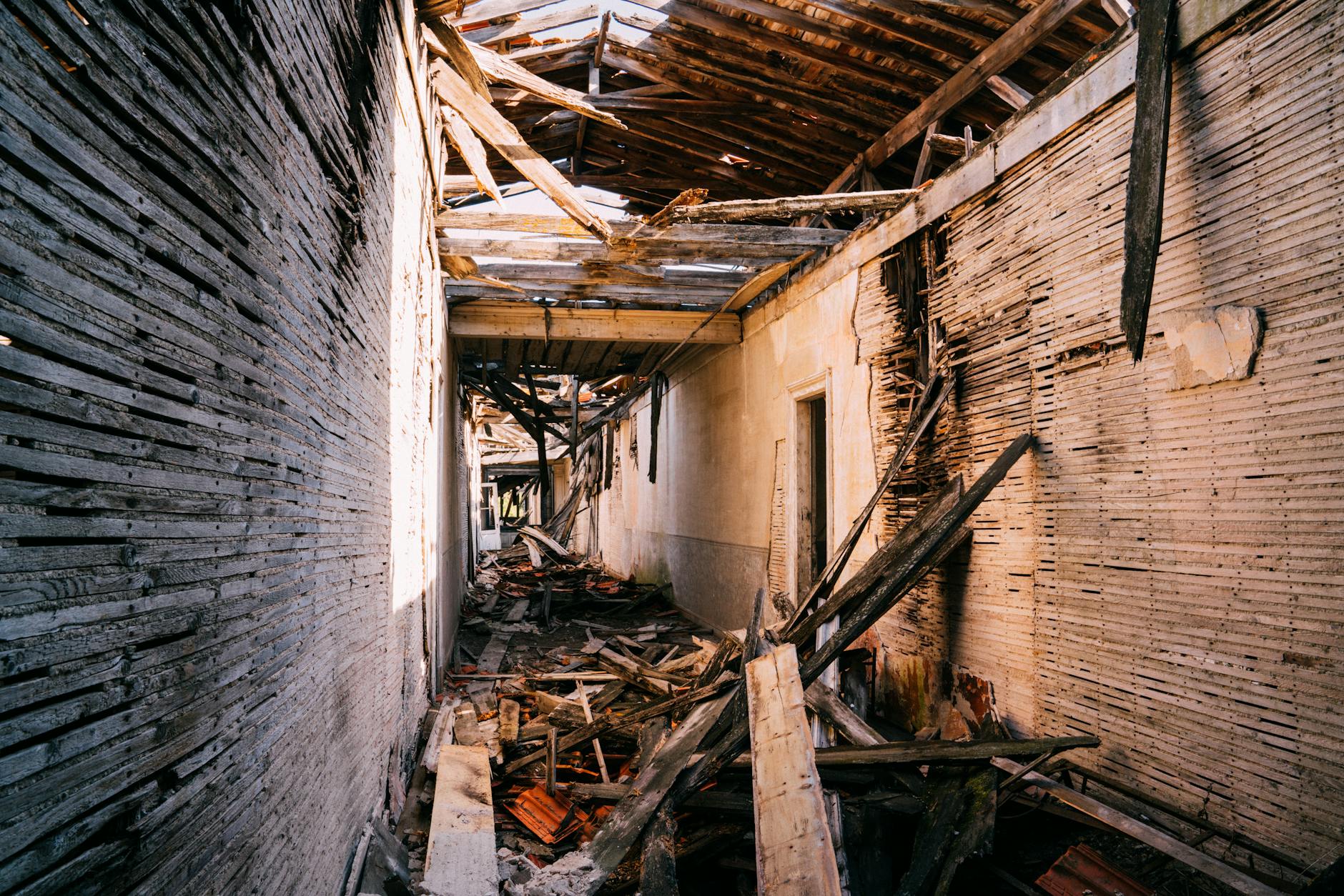
Police sources reported that fragments of the meteorite struck the roof of a residential building in the Koblenz district of Güls, penetrating through and causing structural damage. Residents in the house were reportedly present at the time, though they were located in other rooms and thus avoided physical injury. Local firefighters responded to the scene, secured the area, and confirmed that there was no continuing danger from hazardous materials or further falling debris. Reports from neighbouring areas — including the mountainous regions of Hunsrück and Eifel — indicated additional minor property impacts, such as roof tile breakage and scattered fragments, but no widespread destruction.
Emerging accounts from authorities and residents in several federal states described the visual spectacle preceding the fall as something out of the ordinary. Social media platforms were quickly flooded with photos and videos captured by witnesses in Rhineland‑Palatinate, North Rhine‑Westphalia, Hesse, Saarland, and Baden‑Württemberg. Many users shared footage of a bright streak of light cutting across the sky against an otherwise dim evening backdrop, often accompanied by a sound reminiscent of a distant explosion or sonic boom. Some videos showed small fragments raining down, though clear, confirmed imagery of destructive impacts remained limited. Police in Kaiserslautern and other cities received numerous inquiries and sighting reports before confirming the celestial nature of the phenomenon and soothing public concern.
Despite its dramatic visual impact, meteorite strikes that cause tangible damage to property are exceedingly rare on Earth. Most meteoroids — small celestial bodies travelling through space — disintegrate upon entry into the dense layers of Earth’s atmosphere due to intense heat and aerodynamic pressure, yielding fleeting streaks of light known as meteors. Only a fraction of larger meteoroids survive atmospheric entry to become meteorites capable of reaching the ground. This event stands out not only because of its visibility over a densely populated region but also because some fragments survived the fiery descent and inflicted physical damage by breaching building structures.

Authorities in Rhineland‑Pfalz and neighbouring states emphasized that, at present, there is no indication of any ongoing risk associated with the meteoroid event. Officials from the Landesamt für Brand‑ und Katastrophenschutz reported that the situation is stable, though investigations into the exact trajectory, size, and composition of the object are continuing. Emergency services have urged residents who believe they may have found fragments or debris to exercise caution and report their findings to local authorities or scientific institutions. Given the rarity of such falls, intact meteorite fragments can provide valuable scientific data regarding the composition of solar system material and the dynamics of atmospheric entry.
The incident prompted comparisons with other notable meteor events in recent memory. While the German meteorite fall of 2026 caused house damage but no casualties, larger events elsewhere in the world have had more dramatic effects. For example, the Chelyabinsk meteor of February 2013 — an event in the Russian Urals — resulted in thousands of buildings suffering broken windows and over a thousand people injured due to shockwaves from a much larger object exploding in the atmosphere. In contrast, the most recent German meteorite events in years past, such as the Braunschweig meteorite in 2013 and the Elmshorn fragments in 2023, were observed falls with recovered material but minimal impact on inhabited areas. The 2026 Western Germany fall therefore adds to a small catalogue of such phenomena affecting modern European populations.
Scientific organisations tracking near‑Earth objects and meteoroid activity, including amateur astronomy networks and official bodies such as the German Meteorological Network and European fireball observation programmes, are expected to analyse the trajectory and potential strewn field where fragments may have landed. The pattern of descent and fragmentation can shed light on the original size and composition of the object as well as how it interacted with the atmosphere upon entry. These insights not only contribute to planetary science but also inform broader efforts in planetary defence — understanding how space debris behaves can help refine detection and monitoring systems.
In the immediate aftermath of the event, local authorities focused on assessment and public reassurance. Police in several states reiterated that there was no evidence of any military activity, rocket re‑entry, or other man‑made causes for the aerial display. The Meteorite Event of March 8, 2026, has been categorised officially as a natural phenomenon. Rural and urban communities alike shared accounts of astonishment at the sight overhead, and discussions about the event have dominated local news cycles, social media feeds, and scientific forums alike.
The fulfilment of standard protocols for scientific logging of such events will involve cataloguing any recovered samples and corroborating sighting data from observers across western Germany and potentially neighbouring countries. Meteorite fragments, once authenticated, are often of considerable interest to scientific institutions and museums, and could be studied for mineralogical composition, isotopic signatures, and clues about the early solar system. Specimens from notable falls around the world have helped researchers better understand not only the diversity of meteoritic material but also the processes through which such material interacts with planetary atmospheres.
For residents directly affected by the fall, insurance claims and structural assessments will likely follow as homeowners survey roofs and interiors for impacts that may not have been immediately apparent in the immediate aftermath. The psychological impact of such an unexpected celestial encounter should also not be underestimated; many who observed the event described an initial sense of alarm before learning its natural cause. Local authorities have advised citizens to rely on official sources for information and to avoid speculation that could otherwise fuel unfounded fears or misinformation.
Looking ahead, the event serves as a vivid reminder of the dynamic environment surrounding Earth. Space is not empty, and small bodies continually intersect with our planet’s orbit. While most of these pass unnoticed or burn up harmlessly in the atmosphere, occasionally one will survive the fiery journey to ground level. In regions where population density is high, preparedness and clear communication from authorities are essential to manage public response, ensure safety, and facilitate scientific study. The March 2026 Western Germany meteorite fall will likely become a reference point for future such incidents, both in terms of public engagement and scientific inquiry.
In closing, while meteorite strikes that damage property remain a rarity, the event over western Germany underscores the importance of ongoing observation programmes and the value of rapid, coordinated response between scientific bodies and civil protection agencies. As investigations continue and more details emerge about the size, origin and composition of the object, it is expected that this event will contribute valuable data to Europe’s understanding of near‑Earth space and atmospheric entry phenomena.
Leave a Reply