Russia launched a wide drone assault across Ukraine in daylight on April 1, a relatively uncommon tactic in a war where large-scale aerial barrages are more often timed for the night. Ukrainian officials said the attack killed four people in the central Cherkasy region and caused damage from the country’s centre to its western borderlands, hitting energy, industrial and logistics sites as well as residential property. The scale, geographic spread and timing of the operation made it one of the most notable drone attacks of recent weeks.
According to the Ukrainian air force, Russia sent more than 360 drones between 8 a.m. and 6 p.m. local time. Officials said 345 of those were shot down or otherwise neutralised, but enough penetrated to produce multiple impacts. Ukrainian authorities also reported more than 339 drones in overnight strikes, bringing the total for the 24-hour period to about 700. Official data indicated that this was the second exceptionally heavy Russian drone day in just over a week, after another surge on March 24 that Ukrainian reporting said exceeded 900 drones over 24 hours.
The deadliest single episode on April 1 was reported in Cherkasy region, where Governor Ihor Taburets said four people were killed in the Zolotonosha district during an air-raid alert. He said the victims were outside when the strike occurred. Local authorities continued to clarify the exact circumstances, but the deaths quickly made Cherkasy the focal point of the day’s reporting. The location, well away from the main eastern front, also underscored a recurring feature of the war’s drone phase: lethal danger is no longer limited to frontline cities.
Injuries were recorded elsewhere. Ukrainian officials said six people were wounded in Poltava region, while two more were injured in Khmelnytskyi region. Separate local reporting also described damage to critical infrastructure in Cherkasy district and harm caused by falling debris. The pattern was consistent with the way mass drone attacks now affect Ukraine: even when intercept rates are high, debris, blast effects and the few drones that get through can still impose civilian casualties and widespread disruption.
What distinguished this barrage most clearly was its daytime execution. Since the introduction of large Shahed-type drone waves into the conflict, darkness has typically served as part of the attack logic, complicating visual detection and increasing public anxiety overnight. A daylight offensive reduces some of those advantages, but it can also stress air-defence systems differently, force extended alert cycles over many hours and signal operational confidence. The Ukrainian air force said the vast majority of drones approached from the south-east and moved westward, suggesting a deliberate effort to push deep into the country rather than concentrate only on front-adjacent targets.
Western Ukraine featured prominently in the damage reports. Officials in Lviv, Ivano-Frankivsk, Ternopil and Zakarpattia regions all reported incoming drones or confirmed strikes. In Zakarpattia, Governor Myroslav Biletskyi said Russian drones hit critical infrastructure in the Khust and Uzhhorod districts, an important detail because the region lies near the borders with Slovakia and Hungary. Attacks that reach this far west serve both military and political purposes: they test the breadth of Ukrainian air defence, disrupt infrastructure far from the front and remind neighbouring European states that the war’s air dimension remains geographically expansive.
In Ivano-Frankivsk region, officials said power supplies were cut to around 11,000 customers. That figure was limited compared with some previous Russian attacks on the Ukrainian energy grid, but it still illustrated the continuing vulnerability of localised electricity systems. Even relatively short outages can hit pumping stations, telecommunications, transport services and household heating or cooling, depending on weather conditions and local infrastructure resilience. The cumulative effect of repeated attacks is often greater than the immediate headline number, especially in regions already managing wartime repair cycles and constrained equipment stocks.
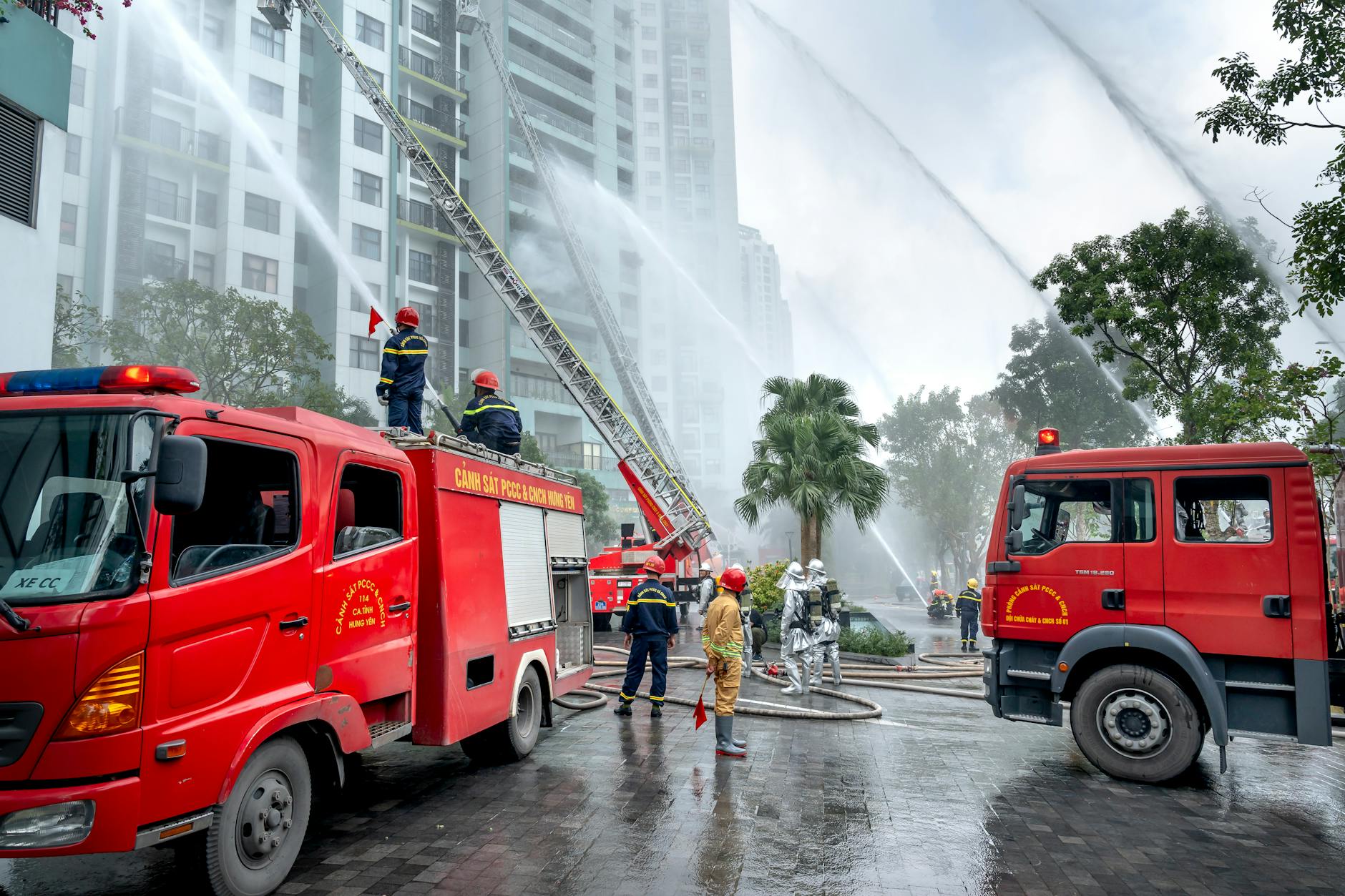
One of the most visible incidents occurred in Lutsk, a city in north-western Ukraine that has become an important logistics node because of its position on routes linking Ukraine to Poland and the rest of Europe. Mayor Ihor Polishchuk said an industrial facility had been hit and that a postal sorting centre and a food distribution site were damaged. Falling debris also ignited a fire in a residential building. Emergency services reported no deaths there, but imagery from the scene showed firefighters tackling major flames and highlighted the vulnerability of civilian supply chains that support both ordinary urban life and wartime distribution networks.
The strike on postal and warehouse facilities mattered beyond its local impact. Throughout the war, Russia has repeatedly targeted infrastructure that sits in the grey zone between civilian commerce and national resilience: electricity substations, rail assets, depots, fuel stores, repair points and warehouses. Such sites may not carry the symbolic weight of a government building or the raw visibility of a residential block, but damage to them can degrade Ukraine’s ability to move goods, deliver parcels, maintain inventories and absorb economic shocks. In a prolonged war of attrition, those effects accumulate.
Ukraine’s air force said 14 strikes hit targets during the daytime phase despite the large number of intercepts. That ratio reflected both the scale of the assault and the difficult arithmetic of drone defence. Even a very high success rate leaves room for meaningful damage when the incoming total is counted in the hundreds. Ukrainian officials have for months argued that raw intercept percentages can obscure the operational reality: each major wave compels the use of munitions, radar time, personnel, emergency mobilisation and repair resources. For defenders, success is expensive.
The April 1 barrage also arrived amid an intensifying contest over military signalling and diplomatic messaging. President Volodymyr Zelenskyy said the latest strikes were Russia’s response to his proposal for an Easter ceasefire. Orthodox Easter falls on April 12 this year, and Kyiv had presented a temporary pause as a possible confidence-building step. Russia’s foreign ministry publicly dismissed the idea as a public-relations gesture. Zelenskyy said the drone attacks showed instead that Moscow remained focused on pressure and coercion, including pressure against Ukraine’s energy sector and infrastructure.
That diplomatic context is central to understanding why the attack resonated beyond the immediate casualty toll. Ukraine has been engaged in renewed contacts with U.S. intermediaries about possible parameters for future negotiations and security guarantees. Zelenskyy said fresh talks with American negotiators, including figures close to U.S. President Donald Trump, were positive, but he paired that message with criticism of Russia’s conduct on the battlefield. In effect, Kyiv used the April 1 barrage to strengthen its familiar argument that Russian actions, not Ukrainian rhetoric, reveal the true state of prospects for de-escalation.
At the same time, the war’s military tempo remains high along the front. Ukrainian officials say Russian forces are pressing a spring offensive while attempting to intensify assault activity in the east. Moscow on the same day made a fresh claim that it had taken full control of the Luhansk region, a statement denied by Kyiv. Against that background, the drone barrage was not an isolated episode but part of a broader strategy of multi-domain pressure: front-line assaults, long-range strikes on infrastructure, and information moves aimed at shaping diplomatic perceptions.

For Ukrainian civilians, however, the day’s meaning was less strategic than immediate. Air-raid alerts stretched across hours rather than the more familiar overnight period. Residents in central and western regions who might normally expect the most acute danger after dark instead faced drone threats during routine daytime movement, work and travel. That shift matters psychologically. When daylight no longer offers relative reassurance, the sense of normal temporal rhythm erodes further. In a war already defined by chronic unpredictability, a broad daytime assault signals that no part of the day can be treated as structurally safer.
The geographic spread of the attacks was also notable for what it suggested about Russian priorities. Cherkasy, Poltava and Khmelnytskyi lie in central Ukraine; Lviv, Ternopil, Ivano-Frankivsk, Zakarpattia and Volyn anchor the west. Striking across that span forces Ukraine to disperse monitoring and response capacity while reminding allies that western regions often viewed as deeper rear areas remain exposed. When infrastructure close to European Union and NATO borders is hit, the war’s proximity to the bloc is not theoretical. It is visible in smoke plumes, power disruptions and firefighting operations near international transport corridors.
Daylight drone raids also raise operational questions about adaptation on both sides. Russia has steadily expanded its use of drones as a relatively lower-cost means of exhausting Ukrainian defences, probing weak points and imposing constant repair burdens. Ukraine, for its part, has improved layered interception and electronic warfare, and has increasingly relied on mobile fire groups as well as more sophisticated systems. But the central dilemma remains unchanged: offensive drones can be produced and launched in high volume, while defensive interceptors and coverage hours remain finite. The side that can better manage those asymmetries gains leverage over time.
Europe’s stake in the episode is immediate and practical. The barrage underlined the continuing need for air-defence support, ammunition supply, transformer equipment, grid repair components and assistance to civil protection systems. It also highlighted the importance of logistics routes running through western Ukraine toward EU states. Damage in Lutsk and Zakarpattia carried implications beyond local disruption because these regions connect Ukraine physically and economically to the rest of the continent. Every strike that reaches them is, in effect, a strike on the corridors through which resilience is sustained.
The April 1 attack did not produce the highest casualty toll of the war, nor was it the single largest aerial assault Russia has launched. Its significance lay in the combination of features: daytime timing, very high volume over a 24-hour period, broad geographic spread, direct civilian deaths in the centre of the country and confirmed damage to western infrastructure. It showed that Russia remains capable of varying its strike patterns while maintaining pressure on targets far from the battlefield. It also reinforced Ukraine’s warning that even when large numbers of drones are intercepted, the margin for damage remains substantial.
As emergency crews extinguished fires and local authorities counted outages, the political meaning of the barrage became clearer. Moscow’s message was that tempo can still be raised, routines can still be broken and rear areas can still be reached. Kyiv’s message was that the attack proved the hollowness of ceasefire talk not backed by concrete restraint. For Europe, the lesson was familiar but undiminished: the war remains dynamic, adaptive and deeply consequential for the continent’s security architecture, and the protection of Ukrainian skies remains inseparable from the stability of Europe’s eastern frontier.
Leave a Reply