Prime Minister Keir Starmer said on April 13 that British lawmakers would vote on plans connected to the government’s proposed alignment with selected European Union rules, making Parliament’s role central to one of the most politically sensitive aspects of the United Kingdom’s post-Brexit strategy. The commitment was intended to answer accusations from Brexit supporters and opposition critics that the government could allow significant regulatory convergence with Brussels without full democratic scrutiny.
The immediate significance of Starmer’s statement lies in the constitutional question it seeks to address. Since leaving the EU, Britain has formally regained the ability to diverge from European rules. Yet in practice, governments of different political stripes have had to weigh the economic benefits of alignment against the symbolic and political value of regulatory independence. Starmer’s government has argued that the trade-offs should be judged pragmatically. Where alignment removes barriers for exporters, smooths border procedures or improves cooperation in strategic sectors, ministers say it can serve the national interest without amounting to a reversal of Brexit.
That argument, however, carries a built-in political risk. If Britain agrees to track EU rules in areas where Brussels continues to update its own legal framework, then the question becomes how those future changes would be carried into UK law. Critics say allowing ministers to make such adjustments through secondary legislation would weaken parliamentary oversight, especially if lawmakers are effectively asked to ratify a broad framework first and then watch technical but consequential changes unfold later. Starmer’s assurance that lawmakers will vote on the plans is therefore not a procedural detail. It is an attempt to frame the government’s approach as democratically anchored rather than executive-led.
According to Reuters, the government is preparing legislation that would allow certain agreements with the EU to function domestically, particularly in policy areas where closer regulatory cooperation is being explored. Those areas include food and agricultural standards, emissions trading and parts of the electricity market. Ministers argue that these are economically important sectors where post-Brexit friction has raised costs, complicated supply chains and reduced the ease of cross-border commerce.
Food standards and sanitary and phytosanitary rules are especially sensitive because they directly affect the movement of agricultural and food products between the UK and the EU. Businesses have long complained that additional checks, paperwork and certification requirements have added complexity and expense since Brexit. A more closely aligned framework could reduce those burdens. Supporters of an agreement say that for producers, retailers and logistics firms, the issue is not ideological but operational: the closer the rules, the easier the trade. For ministers seeking growth without major fiscal looseness, that commercial logic is attractive.
Emissions trading is another area where alignment has practical consequences. The UK established its own emissions trading system after leaving the EU, but separate carbon markets can create administrative complexity and price divergence. Closer linkage, or even partial alignment of rules and accounting frameworks, could improve market efficiency and provide greater predictability for energy-intensive sectors. Electricity market cooperation has similar appeal. Cross-border energy arrangements are technical, but they matter to supply security, price formation and broader industrial competitiveness.
Starmer has repeatedly tried to draw a line between operational cooperation and political reintegration. He has maintained that his government does not intend to rejoin the EU single market, customs union or freedom of movement system. That stance is designed to preserve Labour’s claim that it respects the result and constitutional consequences of Brexit while still pursuing a less confrontational and more economically functional relationship with Brussels. The political test is whether voters, lawmakers and businesses accept that distinction in practice.
The line is easier to state than to maintain. Dynamic alignment, in particular, has long been one of the most contentious concepts in UK-EU relations. Under such a model, Britain may choose to keep certain standards closely matched to EU law over time in exchange for easier market access or lower border friction. Critics argue that this means accepting rules over which the UK has no formal vote. Supporters respond that all countries trading deeply with large regulatory blocs adapt to external standards in some form, and that the real question is whether Britain does so transparently, selectively and with its own sovereign consent.

That is why parliamentary scrutiny has become the central political battlefield. A House of Lords European Affairs Committee briefing earlier this year stressed that any dynamic alignment to EU rules in future agreements would have “significant implications for Parliament” and called on the government to explain how scrutiny would work. The committee’s broader review of the UK-EU reset described the post-Brexit relationship as unfinished and pressed ministers to provide clear mechanisms for oversight as negotiations develop. That background helps explain why Starmer moved to say publicly that lawmakers would vote.
The dispute is not only about whether Parliament gets a vote, but also about what kind of vote it would be. In Westminster practice, framework legislation can authorize ministers to implement detailed changes later through statutory instruments or other forms of secondary legislation. Such mechanisms are common in technical policy areas, but they are controversial when they touch on politically salient questions of sovereignty. Brexit supporters fear that once a broad legislative architecture is approved, ministers could use delegated powers to keep Britain in step with evolving EU rules without repeated, substantive Commons battles.
Starmer’s opponents have seized on precisely that concern. Reuters reported that Conservative MP Andrew Griffith warned Parliament risked becoming a “spectator” if ministers were given too much discretion over future updates. The criticism reflects a longstanding Conservative argument that any post-Brexit government should preserve maximum freedom to diverge and should be suspicious of arrangements that create structural incentives to shadow EU law. From that perspective, alignment is not merely an economic tool but a constitutional slope.
For the government, the answer is twofold. First, ministers say the decision to align in chosen sectors is itself an expression of sovereignty rather than a surrender of it. Britain, on this view, is free to decide where it wants regulatory independence and where it wants interoperability with its largest nearby market. Second, Labour argues that the economic and strategic environment has changed since the early Brexit years. Supply chain fragility, geopolitical shocks, energy insecurity and pressure on living standards have all raised the cost of needless friction. A more stable relationship with the EU, ministers say, is therefore a matter of national resilience as well as commercial sense.
That case is likely to find support among many businesses. Trade groups and parliamentary committees have for months emphasized that the EU remains the UK’s largest trading partner and that smoother market access would be materially beneficial. Earlier parliamentary work on UK-EU relations described closer ties with the bloc as critical to growth. Although business opinion is not uniform across sectors, there is broad support for reducing avoidable costs in food trade, product compliance, energy cooperation and cross-border regulation. In economic policy terms, the government appears to be betting that practical gains will outweigh symbolic objections.
Yet the politics remain delicate because Brexit is still a live identity issue in Britain. Public fatigue with the subject coexists with strong sensitivities around any suggestion that the country is drifting back under EU influence. Starmer’s language has therefore been tightly controlled. He presents the emerging framework not as reconciliation for its own sake, nor as a moral reconsideration of Brexit, but as a transactional reset built around jobs, prices, trade and security. That emphasis is designed to reduce ideological polarization and make parliamentary support easier to assemble.
The wider diplomatic context also matters. Since taking office, Labour has sought a steadier and less adversarial tone in dealings with European capitals. The May 2025 UK-EU summit and the subsequent “reset” agenda created a pathway for talks on sanitary and phytosanitary cooperation, emissions trading links, security coordination and youth mobility-related discussions. Parliamentary materials published in early 2026 made clear that these areas could require structured forms of legal alignment if negotiations were to produce concrete agreements. Starmer’s statement on April 13 therefore did not emerge in isolation; it was part of a longer process in which the government has been trying to convert diplomatic intent into domestic legal form.
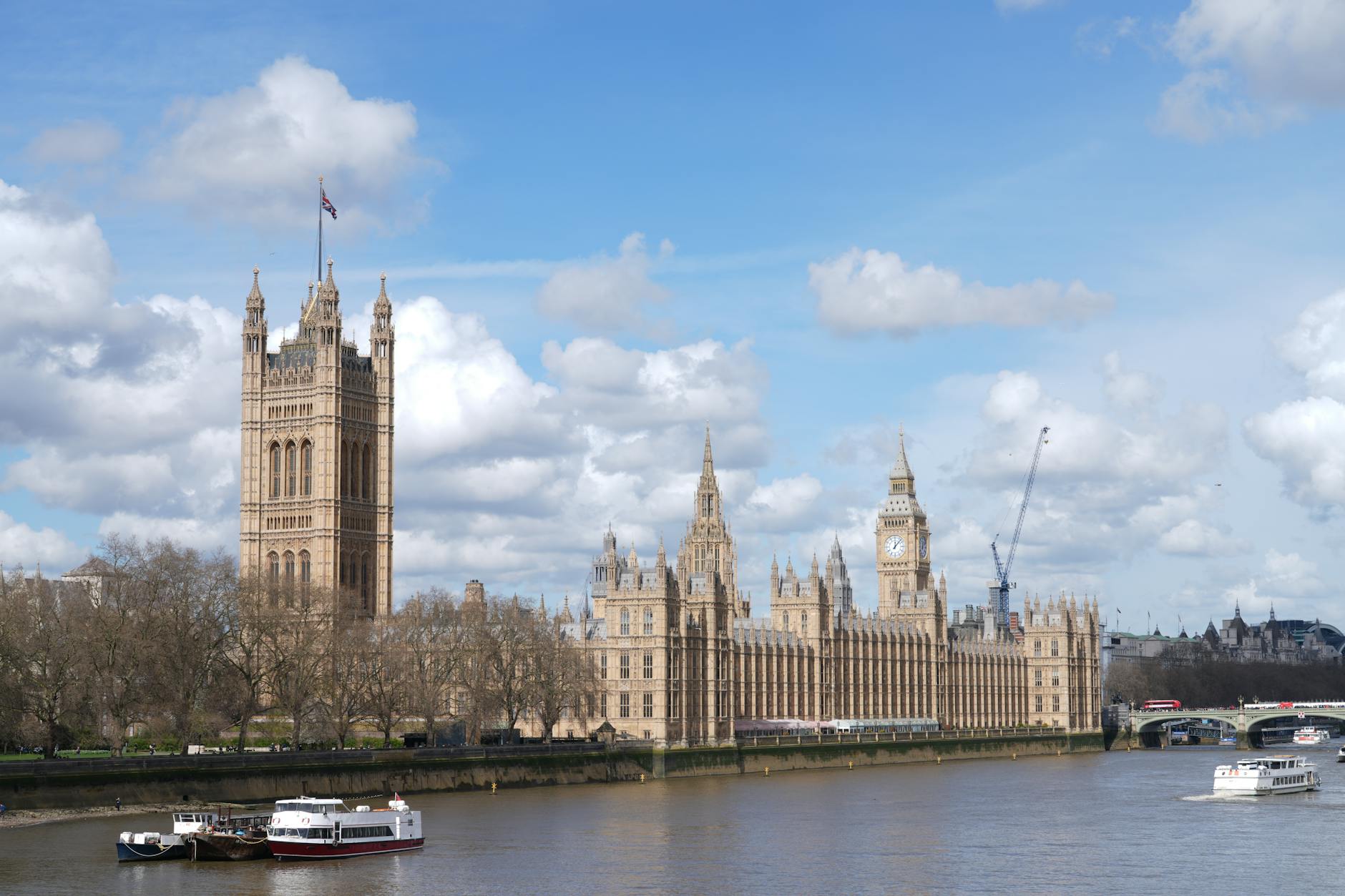
The constitutional challenge is sharpened by Britain’s uncodified system. In some countries, major treaty-related adjustments would automatically trigger a formal legislative route with clearly defined parliamentary stages for each subsequent rule change. In the UK, the boundary between primary legislation, delegated powers and treaty scrutiny is more flexible, which makes political trust particularly important. Supporters of the government may see that flexibility as necessary for efficient rulemaking in technical domains. Critics see it as exactly the reason Parliament must guard against broad executive discretion.
That debate is likely to intensify as the details of any bill emerge. A single promise that lawmakers will vote may not settle questions about amendment rights, the treatment of future EU legal updates, the role of select committees or the degree to which MPs can block or revise implementing measures. Much will depend on legislative drafting, committee scrutiny and the political willingness of Labour backbenchers, opposition parties and cross-party committees to push for stronger safeguards. If ministers want durable legitimacy for the reset, they may need to show not just that Parliament can vote once, but that it can scrutinize continuously.
There is also a regional dimension. Alignment in areas such as food standards and trade administration has direct implications for Northern Ireland, where post-Brexit arrangements have already created a complex legal interface between UK and EU rules. Any new Britain-wide framework touching on EU standards will be examined closely for its interaction with existing obligations under the Windsor Framework and the practical management of internal UK trade. Although the April 13 announcement focused on Parliament at Westminster, the policy consequences extend beyond London.
For Starmer personally, the issue is a test of political positioning. He has tried to construct a governing identity that is economically pragmatic, institutionally sober and less theatrically confrontational than the governments that handled much of the post-referendum period. A parliamentary vote allows him to claim constitutional seriousness while continuing to pursue closer working relations with Europe. But it also exposes him to attack from both sides: from Brexit purists who see alignment as retreat, and from pro-European voices who may argue that the government still understates the scale of reintegration required to deliver larger economic benefits.
Whether the coming vote becomes a major national flashpoint or a contained legislative contest will depend on the final scope of the bill and the intensity of the campaign around it. If the proposal is framed narrowly around technical cooperation with visible economic benefits, ministers may be able to keep the argument grounded in trade facilitation and cost reduction. If opponents succeed in depicting it as a constitutional handover in slow motion, the debate will become far more charged. Starmer’s intervention on April 13 suggests Downing Street is aware of that risk and is trying to shape the narrative before the legislation becomes a symbol larger than its text.
For now, the core message from the prime minister is that Britain can choose closer rule alignment with the EU in limited fields and still remain outside the bloc’s central political and economic structures. Parliament, he said, will have a vote on that choice. The next phase will determine how meaningful that vote is, how much discretion ministers retain after it, and whether Labour can persuade lawmakers and the public that regulatory pragmatism is compatible with democratic control in the long shadow of Brexit.
Leave a Reply