Russian President Vladimir Putin has issued a pointed warning to Armenia that its pursuit of closer ties with the European Union could trigger a “Ukraine scenario,” employing language that evokes Russia’s full‑scale war against Kyiv as a cautionary precedent. Putin’s remarks came during a May 9 press conference in Moscow following Victory Day commemorations, where he addressed a range of foreign policy topics, including Armenia’s geopolitical orientation and its evolving relationship with the European bloc. Putin’s comparison to Ukraine — where Russia launched its invasion in 2022 in part citing Kyiv’s western aspirations — underscores the Kremlin’s firm stance against deeper EU integration among states it considers within its traditional sphere of influence.
At the heart of Putin’s message was an explicit suggestion that Yerevan’s government should exercise caution and consult Moscow before advancing any EU membership trajectory. According to Putin, Armenia could mitigate geopolitical risks by putting the question of EU alignment to a national referendum, allowing the Armenian electorate to determine the country’s strategic orientation. He described such a process as logical “in principle” and suggested that if the people opted for closer ties with the European Union, Russia could then make decisions “accordingly” — even invoking a metaphorical “civilized divorce” in bilateral relations.
The Kremlin leader drew a direct line between Armenia’s current ambitions and the early phases of Ukraine’s own westward drift, asserting that Kyiv’s initial desire for EU association in 2013 eventually contributed to Moscow’s decision to take “decisive actions” in Ukraine. Such framing is consistent with longstanding narratives promulgated by the Russian leadership that depict EU and Western institutional expansion as existential threats to Russia’s security and regional influence. Putin’s remarks thus serve both as a warning and as a reinforcement of Moscow’s perception of geopolitical contestation with Western powers.
Russia and Armenia share deep historical, economic and security ties. Armenia is a member of the Russia‑led Eurasian Economic Union and until recently had been part of the Collective Security Treaty Organization (CSTO), a military alliance dominated by Moscow. However, Yerevan’s political elite and segments of the population have grown increasingly disillusioned with those ties, particularly after Russia’s failure to effectively intervene during renewed hostilities with Azerbaijan over the Nagorno‑Karabakh region in 2020 and again in 2023. This has accelerated Armenia’s diplomatic outreach to the European Union and other Western institutions, including hosting an EU summit in Yerevan in early May with over 40 European leaders in attendance — a sign of Armenia’s strategic pivot toward Brussels.
In recent months Armenia has expanded cooperation with the European Union on multiple fronts, including sending EU experts to assist with countering disinformation and safeguarding democratic processes ahead of parliamentary elections scheduled for June 7. The EU has also signaled further interest in supporting Armenia’s economic development, infrastructure, and potentially facilitating visa liberalization discussions — steps that could gradually integrate Armenia into broader European market and political structures. These moves mark a departure from the post‑Soviet status quo and reflect a conscious recalibration of Armenia’s foreign policy priorities.
Putin’s statement that Armenia must balance its EU ambitions with consideration of Russian interests signals Moscow’s concern that Yerevan’s turn toward the West could weaken its traditional role as a Russian ally in the South Caucasus. While Putin stopped short of threatening military action, his invocation of a “Ukraine scenario” resonates ominously, given the scale and human cost of Russia’s conflict in Ukraine. Analysts interpret the language as diplomatic pressure, intended to compel Armenia to reassess or slow its EU engagement lest bilateral relations deteriorate further. In recent weeks, diplomatic tensions have already increased, with the Russian Foreign Ministry summoning Armenia’s ambassador over comments by Ukrainian President Volodymyr Zelensky made at an EU‑sponsored event in Armenia — a sign of the simmering strain.
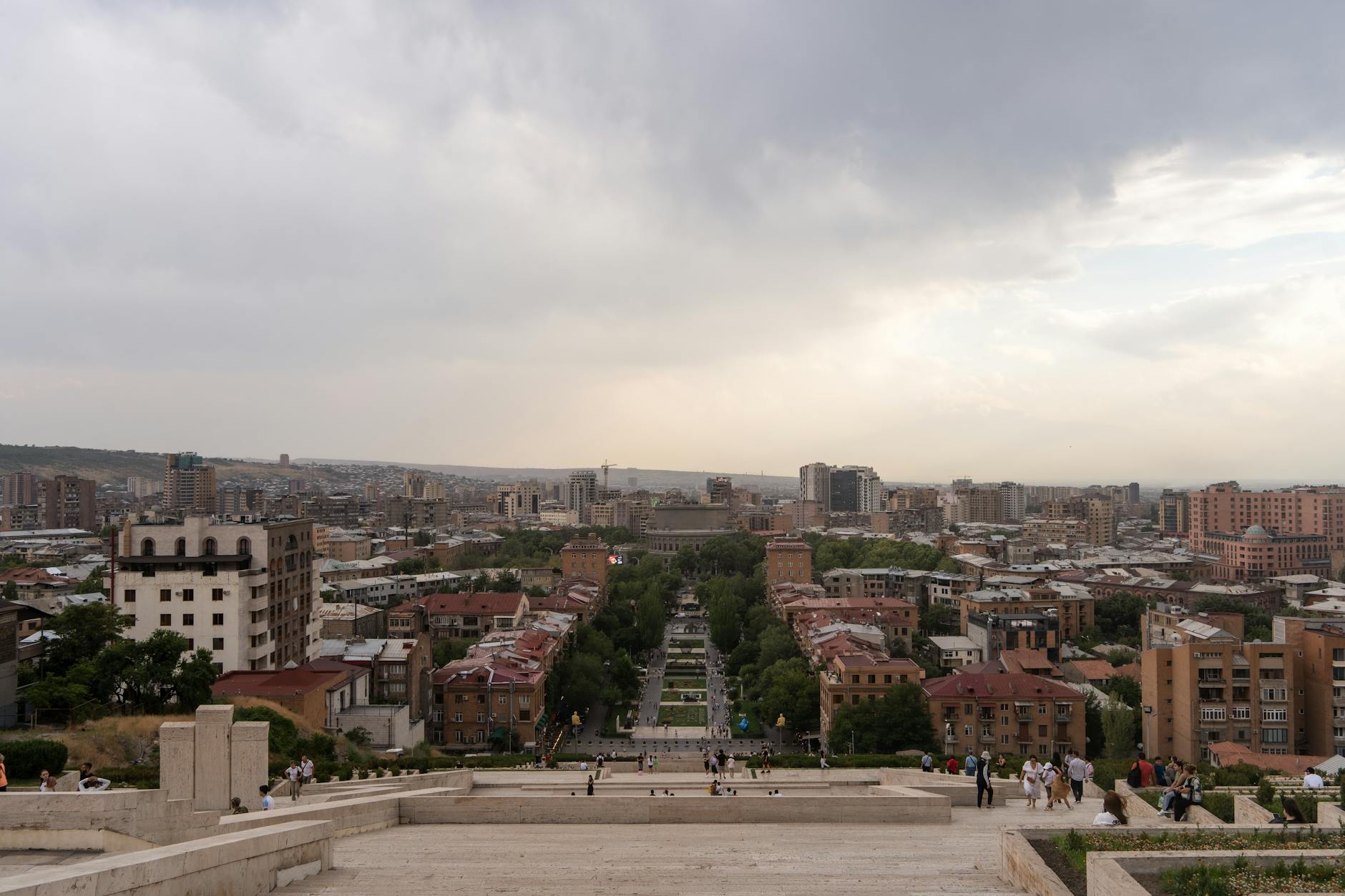
Armenian leaders have responded to these challenges by emphasizing their sovereign right to pursue foreign policy options that best serve the country’s democratic and economic interests. Prime Minister Nikol Pashinyan has publicly stated that Armenia would be “happy” to eventually join the EU, framing European integration as a driver for democratic reforms and institutional development. At the same time, Yerevan acknowledges the complexity of its geopolitical environment, seeking a balanced approach that maintains security cooperation with Russia while exploring closer ties with the West.
Observers note that Armenia’s upcoming elections could be a defining moment for the nation’s geopolitical trajectory, as parties and voters weigh the benefits and risks of further integration with the European Union against the backdrop of Russia’s disapproval. The electoral outcome may offer insight into domestic public sentiment on these issues and influence how dramatically Armenia shifts its foreign policy. In the meantime, Putin’s remarks are likely to reverberate not only in Yerevan but across capitals in Brussels, Moscow and beyond, underscoring the broader contest for influence in Europe’s eastern periphery.
Leave a Reply