The 70th Eurovision Song Contest grand final opens in Vienna on Saturday under the most sustained boycott pressure the competition has faced in years, as Israel’s participation turns Europe’s largest televised music event into a focal point for anger over the war in Gaza.
The final is scheduled for 21:00 CEST at the Wiener Stadthalle, with 25 entries competing after semi-finals held earlier in the week. The European Broadcasting Union and Austrian host broadcaster ORF are presenting the night as the culmination of a 70th-anniversary edition, complete with the traditional flag parade, guest performances and a continent-wide vote. But the show is unfolding against a political backdrop that has narrowed the field, divided public broadcasters and drawn protests to the host city.
Spain, Ireland, the Netherlands, Iceland and Slovenia have withdrawn or boycotted the contest over Israel’s inclusion. Their absence has reduced the number of participating broadcasters to 35, the smallest Eurovision field since 2003, according to Reuters. The boycotting broadcasters have cited the humanitarian toll of Israel’s military campaign in Gaza, concerns over civilian casualties and objections to allowing Israel to compete while the war continues.
Israel’s broadcaster KAN remains in the competition, and Israeli singer Noam Bettan has qualified for the final with the song “Michelle.” The official running order places Israel third, after Denmark and Germany and before Belgium. That early slot ensures the dispute surrounding Israel’s presence will enter the live final almost immediately, rather than remaining a background issue until the voting sequence.
The controversy has complicated Eurovision’s long-standing effort to describe itself as a non-political event. The contest’s slogan, “United by Music,” is designed to emphasise common cultural space across borders. Yet Eurovision has repeatedly reflected European political divisions, from voting patterns shaped by regional alliances to disputes over whether artists or broadcasters should be excluded during armed conflict. Russia was barred after its full-scale invasion of Ukraine in 2022, a precedent frequently cited by campaigners who argue that Israel should face similar treatment.
The EBU has not adopted that position. In guidance and statements around the 2026 contest, it has maintained that all members willing to comply with the contest’s rules remain eligible. The organisation has also sought to distinguish between participating broadcasters and governments, a line that is central to Eurovision’s institutional structure but has become increasingly contested as public pressure grows over Gaza.
The dispute has not remained confined to eligibility. The EBU said this month that it issued a warning to Israeli broadcaster KAN after videos connected to the Israeli campaign carried an on-screen instruction to “vote 10 times for Israel.” Eurovision rules allow voters to cast multiple votes, but organisers said campaign material by participating delegations must comply with contest rules and avoid conduct that could undermine fairness or the spirit of the event. The warning followed wider concerns, raised by several broadcasters and commentators after recent contests, about state-backed promotion and organised voting drives.
For the boycotting countries, the issue is not only the song or the artist but the symbolism of participation. Ireland’s RTÉ has said it will not take part, citing the humanitarian crisis in Gaza and the deaths of civilians and journalists. Spain’s RTVE has taken one of the most consequential positions because Spain has traditionally been among Eurovision’s major financial contributors and large audience markets. Slovenia and Ireland are also not showing the live contest, while the Netherlands and Iceland are not competing but are expected to make the show available to audiences in some form, reflecting the complex balance between institutional protest and public demand.
Those decisions have forced broadcasters to replace one of the year’s largest live television events with alternative programming. Reuters reported that Irish viewers will be offered a Eurovision-themed episode of “Father Ted,” Spain has turned to music programming connected to Raphael, and Slovenia has scheduled Gaza-focused documentaries. In some countries, alternative screenings and boycott events are being used to redirect attention from the final to the war and to criticism of the EBU’s decision-making.
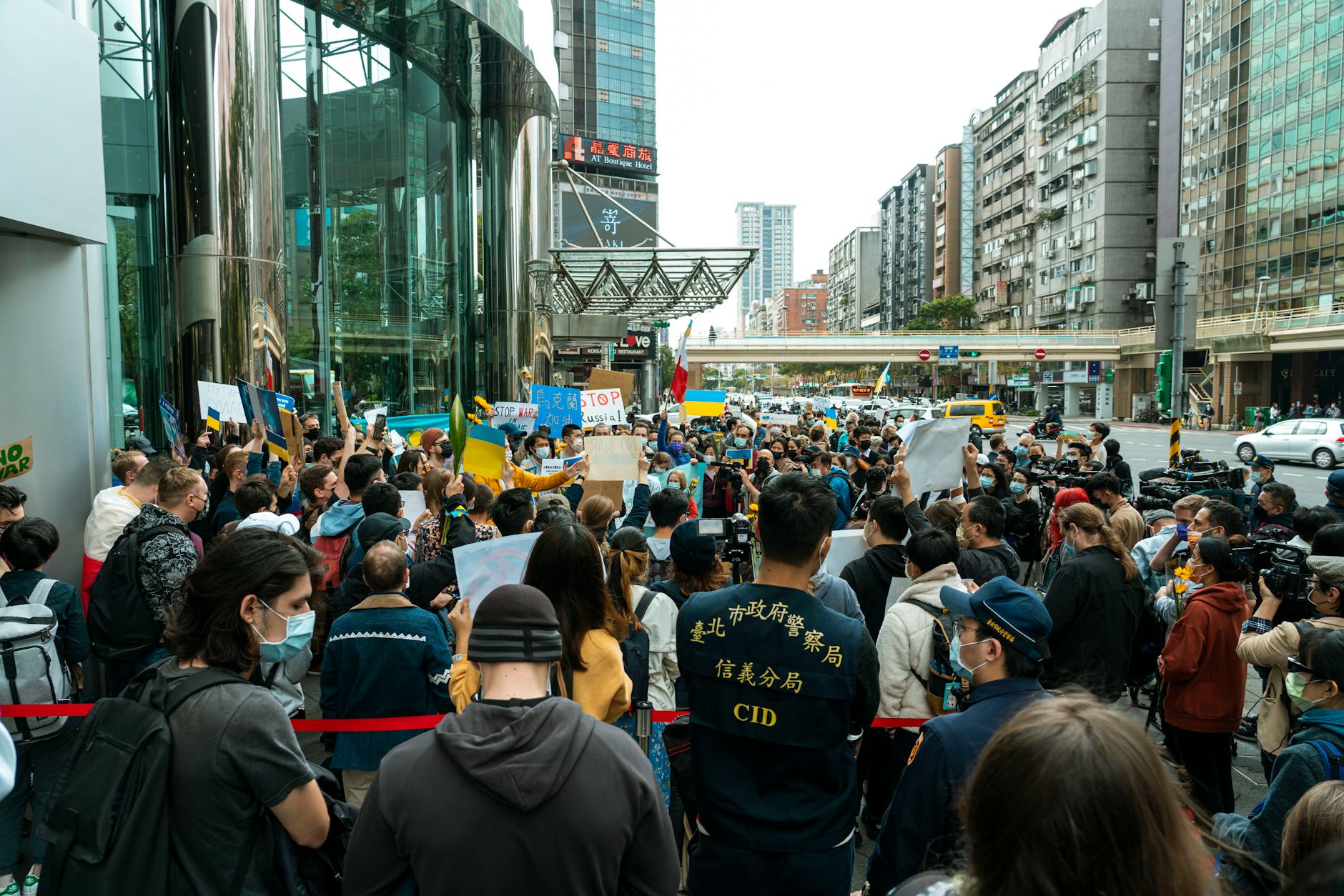
In Vienna, the contest has proceeded with visible security measures. The Wiener Stadthalle and official fan areas have operated under tightened entry controls, and police presence has been part of the atmosphere around Eurovision week. Pro-Palestinian groups have organised protests and a parallel “Song Protest” event under slogans opposing Israel’s participation. Supporters of Israel have also gathered in cultural and fan spaces, including venues that have sought to provide a welcoming setting for Israeli visitors and Eurovision fans.
The result is a split-screen final: inside the arena, the show is staged as a polished entertainment broadcast; outside it, activists and boycotting broadcasters are framing the night as a test of Europe’s cultural institutions. That duality has become one of the defining features of the 2026 edition. The final still carries the familiar Eurovision elements of choreography, national staging, multilingual pop and public voting, but it is also being watched as a barometer of how European institutions respond to public anger over Gaza.
The musical competition itself remains wide open. The official grand final lineup includes Denmark, Germany, Israel, Belgium, Albania, Greece, Ukraine, Australia, Serbia, Malta, Czechia, Bulgaria, Croatia, the United Kingdom, France, Moldova, Finland, Poland, Lithuania, Sweden, Cyprus, Italy, Norway, Romania and host country Austria. Eurovision’s official guide says voting in participating countries will open before the first song is performed and continue through the performances and for about 40 minutes after the final entry.
Finland and Australia have been identified by several observers as strong contenders going into the final, while Greece and Moldova have also drawn attention during Eurovision week. But the 2026 contest is unlikely to be assessed solely by the winner. The immediate questions include whether protests disrupt the broadcast, whether Israel’s televote result becomes another source of controversy, and whether the EBU can close the contest without further escalation among member broadcasters.

Austria’s role as host adds another layer. The country earned the right to stage the 2026 contest after JJ won in Basel in 2025 with “Wasted Love.” ORF’s staging places Vienna at the centre of a major European cultural broadcast at a moment when public service media are under budget pressure, political scrutiny and increasing demands to justify large entertainment events. Eurovision is expensive to host and produce, and the withdrawal of major broadcasters can heighten concerns about financing, audience reach and the contest’s long-term stability.
The boycott also raises institutional questions for future editions. If the EBU keeps Israel in the contest and boycotting broadcasters remain away, Eurovision could face a sustained split among members. If it changes course in future years, it could face accusations of politicising eligibility or applying inconsistent standards. That tension is sharpened by the contest’s structure: Eurovision is not a government summit, but it depends on national public broadcasters, national branding, flags, public votes and cultural diplomacy.
The public reaction has been similarly divided. Some fans argue that Eurovision should not become a venue for punishing individual performers and that excluding artists because of state actions would damage cultural exchange. Others argue that the contest cannot claim neutrality while allowing national representation during a war that has caused mass civilian suffering. The visibility of flags, national voting and state-linked broadcasters makes the apolitical argument difficult for critics to accept.
The Gaza war remains the central reason for the boycott. Israel launched its military campaign after the Hamas-led attacks of October 7, 2023, in which about 1,200 people were killed and hostages were taken. The Israeli offensive in Gaza has killed tens of thousands of Palestinians, according to Gaza health authorities cited by international agencies, and has produced a humanitarian crisis that has become a defining issue in European public debate. Israel says its campaign is directed at Hamas, while critics argue that the scale of destruction and civilian harm requires stronger international consequences.
For Eurovision, the final may determine more than the 2026 winner. It will show whether the EBU can preserve the format’s reach while managing a boycott by significant broadcasters, maintaining voting confidence and preventing the show from being overshadowed by conflict-related protest. The contest has survived Cold War tensions, regional disputes, voting scandals and past exclusions, but the Vienna final is a particularly direct test of whether the idea of a shared European cultural stage can withstand the politics surrounding it.
As the broadcast begins, organisers will aim to keep attention on the performances, the anniversary staging and the voting sequence. But the defining story of Vienna 2026 is already broader than the scoreboard. Eurovision’s final is opening as both a music competition and a public argument over cultural legitimacy, institutional consistency and the limits of neutrality during war.
Leave a Reply