French volunteers are training with Ukraine’s military intelligence-led International Legion, offering a fresh glimpse into the foreign fighter pipeline that continues to feed Kyiv’s war effort more than four years after Russia’s full-scale invasion began.
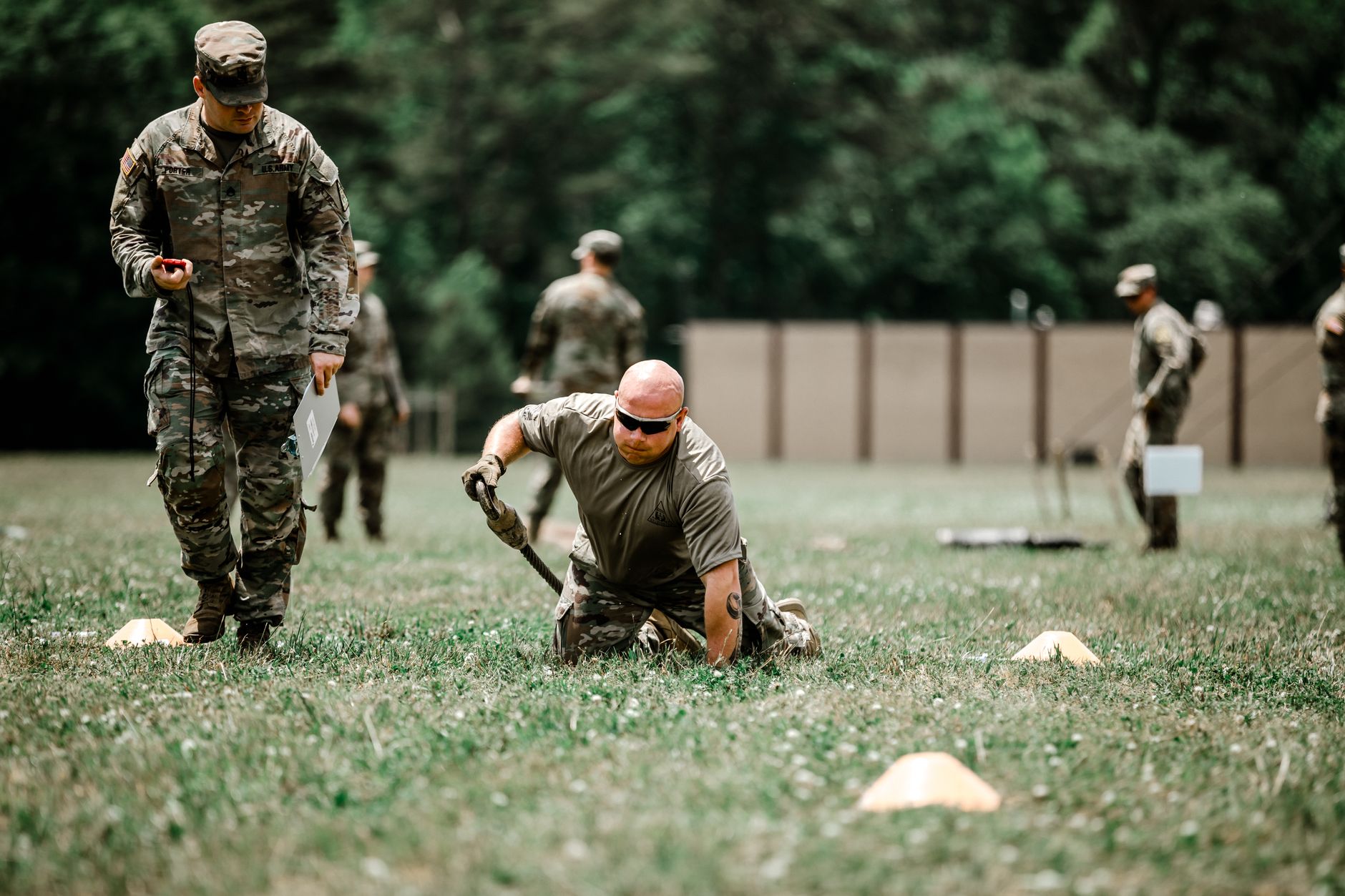
The training, reported on 5 July, showed French recruits working with Ukraine’s International Legion of the Defence Intelligence of Ukraine, including the Revanche Tactical Group. The volunteers were shown practising assault drills, weapons handling and small-unit manoeuvring as part of preparation for combat-related service. The footage and accompanying reporting framed the volunteers as individuals who had travelled independently to join Ukraine’s defence, rather than as representatives of the French state or members of a deployed French military contingent.
One French volunteer identified by the call sign “Leon” said he had gone to Ukraine because he wanted to help the Ukrainian people. His comments reflected a motivation often cited by foreign volunteers since the opening months of the war: a mixture of military interest, political conviction and personal identification with Ukraine’s resistance to Russian aggression. The volunteers’ presence also illustrates how Ukraine’s foreign recruitment architecture has evolved from the emergency mobilisation of 2022 into a more differentiated system of units, contracts, training channels and specialist assignments.
The military intelligence-linked legion is distinct from the more widely known International Legion associated with Ukraine’s Ground Forces. Ukraine’s Ministry of Defence has described the foreign volunteer component as a broad network rather than a single unit, with international fighters serving across different formations, including Ground Forces units, special operations structures, the National Guard and the Main Intelligence Directorate of the Ministry of Defence. The Defence Intelligence legion is one of the most sensitive parts of that network because of its association with reconnaissance, intelligence-linked operations and specialist combat tasks.
Ukraine has said the foreign legion system has been undergoing changes, particularly after the Ground Forces legion was reorganised and some foreign personnel were transferred into other assault formations. Kyiv has rejected claims that the international legions have been dissolved, saying instead that foreign fighters are being integrated into larger and better-supported formations. According to the Ukrainian defence ministry, the aim of the reorganisation is to improve protection, logistics, weapons access and operational effectiveness for foreign service members.
The French volunteers reported this week were linked to the Revanche Tactical Group, a formation operating within the military intelligence-linked foreign legion framework. Their training appeared to focus on direct tactical tasks rather than rear-area support. Assault movement, weapons handling and small-unit coordination are core requirements for fighters expected to operate in Ukraine’s high-intensity battlefield environment, where infantry manoeuvre is closely tied to drone surveillance, artillery fire, electronic warfare and rapid evacuation planning.
Ukraine’s war has become one of the world’s most intensive laboratories for modern battlefield adaptation. Foreign volunteers who joined at the beginning of the invasion often arrived with conventional military experience from NATO or allied countries, but Ukraine’s battlefield has forced rapid adjustment. Drone saturation, trench assaults, mined approaches, long-range precision strikes and constant reconnaissance have altered the way small units move, communicate and survive. Training for foreign recruits must therefore account not only for marksmanship and movement, but also for drone discipline, concealment, medical evacuation and communications security.
Language remains one of the recurring challenges for foreign volunteers serving in Ukrainian units. Instructors working with multinational groups must often rely on English, French, Ukrainian and interpreters, depending on the composition of a unit. The problem is not simply conversational. Battlefield instructions must be short, standardised and understood under stress. Miscommunication in a training area can be corrected; miscommunication during a live assault, evacuation or artillery strike can be fatal.
The presence of French volunteers is not new. Since President Volodymyr Zelenskyy appealed in 2022 for foreign citizens to join Ukraine’s defence, people from across Europe, North America, Latin America and elsewhere have travelled to the country. Some have been former soldiers, some have had limited military experience, and others have sought to assist through humanitarian, medical or logistical work. Over time, Ukrainian authorities have sought to impose stricter recruitment, screening and training procedures to separate suitable military candidates from those lacking the skills, discipline or physical capacity required for combat.
Official Ukrainian recruitment guidance states that foreign applicants must apply through recognised channels, undergo review and interview, travel to Ukraine, complete administrative processing, sign a military contract and receive training before deployment. The official system also states that candidates are assessed for physical fitness, knowledge, practical skills and basic military competencies. Basic general military training can last up to two months depending on prior experience, with additional unit integration before combat missions.
For Ukraine, foreign volunteers offer both practical and symbolic value. Practically, they can bring prior military knowledge, language skills, medical experience, drone expertise, reconnaissance training or other specialist backgrounds. Symbolically, their presence reinforces Kyiv’s message that the war is not only a national struggle but part of a wider defence of European security. That symbolism carries particular weight when volunteers come from major European states such as France, even when they act independently of their governments.
For France, the issue is more delicate. Paris is a major diplomatic and military supporter of Kyiv, but it has not deployed regular French forces to fight Russia in Ukraine. French nationals who travel to Ukraine as volunteers do so as individuals. The French foreign ministry continues to warn French citizens against travel to Ukraine for any reason, citing the security situation, frequent air alerts, Russian strikes and disruptions to essential infrastructure. The ministry has also advised French nationals already in Ukraine to exercise extreme vigilance, follow local authorities’ instructions and seek shelter during alerts.
The distinction between volunteers and state forces is central to the politics of the issue. Russian officials and pro-Kremlin media have repeatedly sought to describe foreign fighters in Ukraine as evidence of direct NATO participation in the war. Western governments have generally rejected that framing, stressing that individuals who volunteer for Ukraine are not deployed as national troops. Ukraine, for its part, presents foreign legion members as service personnel within Ukrainian command structures once they sign contracts and are accepted into units.
The legal and political status of foreign fighters remains complex. International law distinguishes between members of a state’s armed forces, civilians, mercenaries and other categories, but real-world conflicts often create ambiguity. Ukraine’s position is that foreign volunteers who lawfully join its armed forces are not mercenaries but members of Ukrainian military formations. Russia has often contested that view rhetorically, using the presence of foreigners to support claims that it is fighting a broader Western military apparatus. Those claims have been central to Moscow’s information campaign since the early months of the invasion.
The French volunteers’ training also comes at a time when manpower remains one of Ukraine’s central military pressures. Russia’s larger population, sustained mobilisation capacity and heavy artillery and missile campaigns continue to impose high costs across the front. Ukraine has sought to expand recruitment, strengthen mobilisation mechanisms and improve unit rotation, while also depending on Western-supplied equipment and financial support. Foreign volunteers do not resolve Ukraine’s manpower challenge, but they remain a visible supplement to Ukraine’s broader defence effort.
The intelligence-linked nature of the unit adds another layer of significance. Ukraine’s Defence Intelligence service has been associated with reconnaissance, special operations support, cross-border raids, maritime drone operations, information gathering and high-profile strikes against Russian military assets. While not every fighter in an intelligence-linked legion performs classified or special operations tasks, the command affiliation signals a more specialised role than standard infantry service. Training in assault tactics and small-unit manoeuvre fits a battlefield environment in which intelligence, drones and rapid tactical action are increasingly fused.
Ukraine’s official Defence Intelligence materials have previously described the DIU International Legion as seeking personnel across combat and support specialties, including reconnaissance, sniping, UAV operation, mortar work, grenade launching, logistics and medical roles. A unit representative said in 2024 that recruits undergo necessary training and exercises before being put into action, and that the formation carries out non-standard actions and operations. Those descriptions align with the kind of training shown in the latest reporting on the French volunteers.
The Revanche Tactical Group itself has attracted attention because of its role within the broader network of foreign-linked units in Ukraine. The latest reporting did not provide detailed figures for the number of French nationals in the unit, nor did it identify their expected deployment sector. Operational security rules in Ukraine often limit disclosure of unit size, location and mission timing, particularly for formations associated with intelligence structures. That restraint reflects the constant threat posed by Russian surveillance, missile strikes and attempts to identify foreign fighters for propaganda or targeting purposes.
Foreign volunteers have also faced uneven experiences in Ukraine. Some have integrated successfully and fought for long periods. Others have left after discovering that conditions, command arrangements, risk levels or administrative procedures did not match expectations. The Ukrainian military has acknowledged the need to improve support and integration for foreign fighters, especially as the initial surge of international volunteers gave way to a more professionalised and selective system. The reorganisation of some international units was partly presented by Kyiv as an attempt to address those problems.
Combat risk remains severe. Foreign fighters in Ukraine face the same battlefield threats as Ukrainian personnel: artillery, drones, mines, glide bombs, missiles, small-arms fire and exhaustion from prolonged deployments. Their foreign status can create additional risk if captured, because Russia has in the past used foreign detainees for propaganda purposes and has described some as mercenaries. Ukraine’s insistence that foreign volunteers serve under contract within its armed forces is therefore not only administrative, but also tied to legal protection and prisoner-of-war status.
The timing of the report is also notable because it comes immediately before renewed allied discussions on Ukraine’s defence needs. NATO members and partners are preparing for further meetings focused on military assistance, air defence, ammunition, industrial production and long-term commitments. While the training of a small group of French volunteers is not itself a strategic turning point, it forms part of the same wider picture: Ukraine is seeking to sustain international backing at every level, from state-to-state arms deliveries to individual foreign recruits willing to serve inside Ukrainian formations.
For European governments, foreign volunteers remain a politically sensitive subject. Public sympathy for Ukraine remains strong in many countries, but there is limited appetite for direct national deployment into combat against Russia. Governments must therefore maintain a clear line between official military support — including weapons, training, intelligence sharing and financial aid — and the independent actions of citizens who decide to travel to Ukraine. The French case illustrates that distinction sharply: French volunteers may serve under Ukrainian command, but they do not constitute a French military deployment.
Russia is likely to continue exploiting the presence of European volunteers in its messaging. Moscow has repeatedly used foreign fighters to argue that the conflict is a proxy war directed by NATO. Kyiv and its allies counter that Russia launched the invasion, that Ukraine has the right to defend itself, and that foreign volunteers are responding to Ukraine’s call as individuals. The information battle around foreign fighters is therefore inseparable from the physical war, particularly when the volunteers come from countries that are central to Europe’s Ukraine policy.
The latest footage of French volunteers training with Ukraine’s military intelligence legion is consequently more than a narrow battlefield vignette. It shows that Ukraine’s appeal to foreign fighters continues to resonate, that Kyiv is still adapting its structures for international personnel, and that the war’s European dimension extends beyond formal diplomacy and arms packages. It also underscores the continuing danger faced by those who travel to Ukraine, the legal and political complexities surrounding foreign service, and the pressure on Kyiv to turn international solidarity into disciplined, effective military capacity.
Leave a Reply