PARIS — Several of Paris’s most visited landmarks shortened their operating hours on Saturday as a third heatwave in less than three months brought dangerous temperatures to much of France and placed the capital under the country’s highest heat-warning level.
The Eiffel Tower, the Louvre Museum and the Musée d’Orsay all announced exceptional early closures covering the weekend and, in the museums’ cases, several additional days. The measures affected the peak afternoon and evening periods, when accumulated heat inside buildings and on exposed visitor routes was expected to create the greatest risks for tourists and employees.
The Eiffel Tower’s operator said the monument would close to the public at 4 p.m. on both Saturday, July 11, and Sunday, July 12 because of the forecast temperatures. The 324-metre iron structure normally remains open until late at night during the summer high season, making the early shutdown a significant reduction in access during one of the busiest periods of the year.
Visitors were advised to consult official ticket information and follow instructions from staff before approaching the site. The tower’s platforms, staircases and security queues include substantial outdoor exposure, while the metal structure and paved surroundings can intensify the experience of direct sunlight. Crowding can also make it more difficult for visitors to reach shade or water quickly.
The Louvre said it would close at 4 p.m. from Friday, July 10, through Monday, July 13, with final admission at 2 p.m. The museum asked visitors to adjust their schedules and take precautions against the heat. Although much of the Louvre is indoors, its historic buildings are not uniformly cooled, and temperatures can rise as thousands of people move through galleries and enclosed circulation areas.
The Musée d’Orsay, housed in a former railway station beside the Seine, announced a 5 p.m. closing time from Saturday through Wednesday. Its management attributed the change to the extreme heat. The shortened timetable was expected to affect advance ticket holders as well as visitors hoping to enter late in the day, particularly those attempting to avoid the strongest afternoon sun.
The closures illustrated how extreme temperatures can affect cultural venues in different ways. Some modern, air-conditioned museums can operate as temporary cooling spaces, but older monuments may become progressively hotter during the day because of limited ventilation, extensive glass, stone surfaces or architectural restrictions that complicate the installation of modern climate-control systems.
Officials must also consider working conditions for guards, security teams, ticketing staff, cleaners and other employees who may remain at fixed posts for extended periods. At outdoor attractions, those duties can involve prolonged exposure to sunlight. Inside museums, high visitor numbers can increase heat and humidity, creating additional concerns for both people and sensitive artworks.
The operational changes came as Météo-France placed Paris on red alert for “extreme heat” from noon on Saturday. Red is the highest level in the national warning system and indicates that exceptional conditions may have major effects on health and daily activity, including among people who would not ordinarily be considered especially vulnerable.
Twenty-four departments, with a combined population estimated at more than 22 million, were under red heat warnings on Saturday. Another 59 of mainland France’s 96 departments were at orange level, meaning that most of the country faced a significant heat risk. The alert area included the Paris region and a broad section of western, central and northern France.
Météo-France said daytime temperatures on Saturday were frequently expected to reach between 36°C and 39°C from parts of Burgundy and the Paris region westwards through the Loire Valley, Brittany, Poitou-Charentes and Aquitaine. Paris was forecast to approach 37°C, with dense urban development and limited overnight cooling increasing the strain.
Provisional readings elsewhere showed the scale of the episode. Météo-France reported a temperature of 40.2°C at Saint-Laurent-du-Pape in the Ardèche department by late Saturday afternoon. Other locations recorded values above 38°C. The weather service warned that Sunday could become hotter across western France, with temperatures reaching or exceeding 40°C in parts of Nouvelle-Aquitaine.
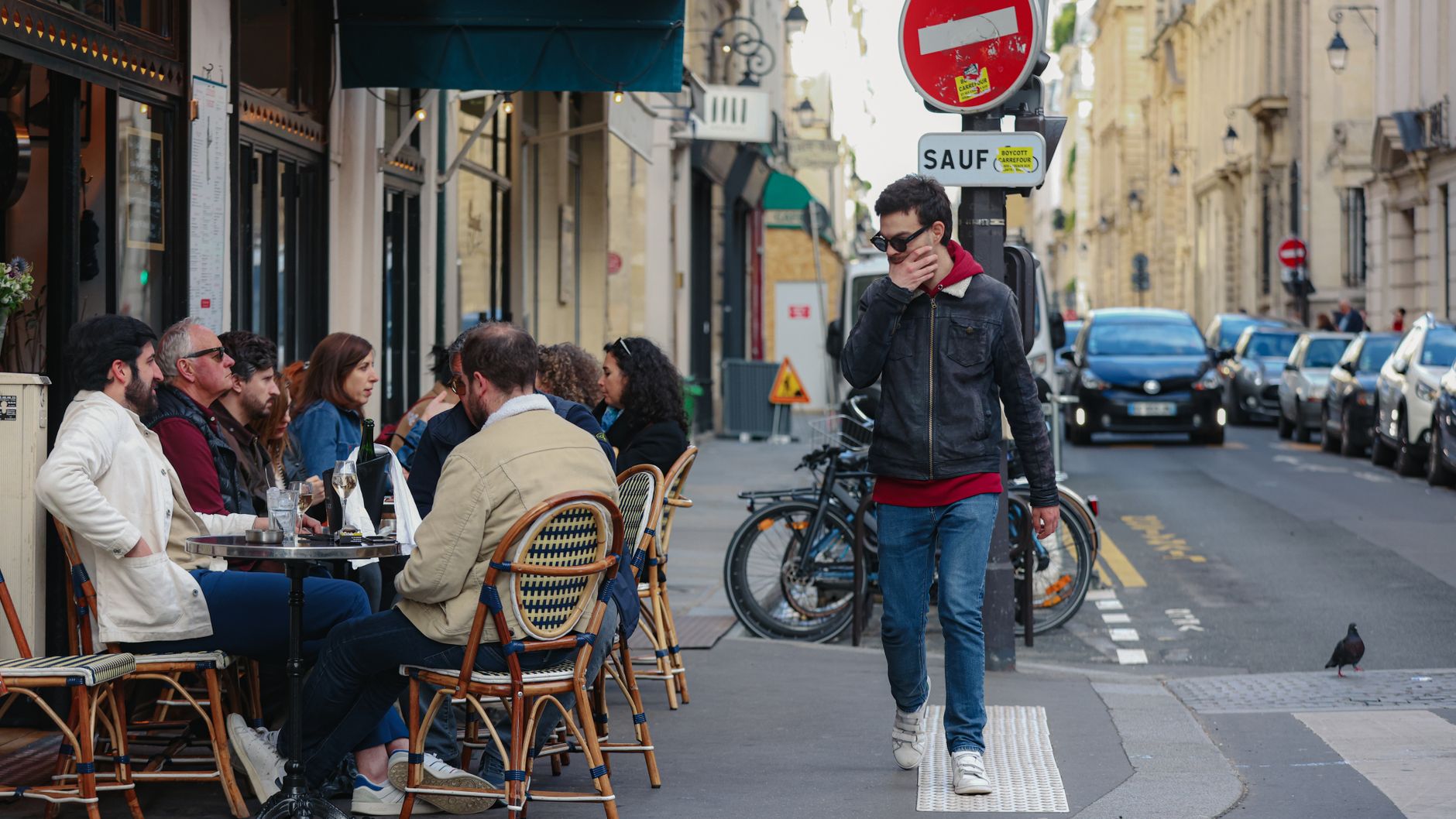
Warm nights were a central concern because they reduce the body’s opportunity to recover after daytime heat. Across several regions, overnight minimum temperatures remained above 20°C. In densely built areas such as Paris, stone, asphalt and concrete absorb heat during the day and release it slowly after sunset, creating an urban heat-island effect that can keep neighbourhoods uncomfortably warm well into the night.
The current episode began around July 4 and is the third heatwave to affect France since May. It follows an exceptionally severe June event that produced record national temperatures and led to widespread disruption. The repeated episodes have given institutions little time to assess earlier responses before again activating emergency procedures.
While the July heatwave was initially considered less intense than the June peak, forecasters stressed that its duration, geographic reach and hot nights remained dangerous. Météo-France said very high temperatures were likely to persist into the middle of the following week, gradually shifting east as limited storm activity brought only uneven relief in western areas.
Paris authorities expanded measures intended to help residents and visitors cope. Municipal information listed approximately 1,400 places where people could find cooler conditions or drinking water, including shaded parks, public buildings, fountains and other designated cooling locations. Numerous parks, gardens and squares were kept open around the clock, subject to local security restrictions.
Air-conditioned rooms were made available in district town halls and other participating buildings. City services also increased attention to older and isolated residents through established heatwave support systems. People experiencing signs of heatstroke, severe weakness, confusion or loss of consciousness were instructed to contact emergency medical services immediately.
Health guidance focused on drinking water regularly, remaining in shaded or cooled spaces, closing shutters or curtains during the hottest hours and limiting physical exertion. Authorities advised against relying solely on thirst as an indicator of dehydration, particularly for older people, young children and individuals with chronic medical conditions.
Tourists faced additional challenges because sightseeing often requires long periods of walking, queuing and travel on crowded public transport. Visitors unfamiliar with the city may also underestimate distances between attractions or the amount of shade available along major routes. Officials urged travellers to carry water, wear light clothing and head coverings, use sun protection and schedule outdoor activities early in the morning.
The timing was particularly difficult for the tourism industry. July is among the busiest months for Paris, and the weekend preceded France’s national holiday on July 14. Rail stations, roads, hotels and tourist districts were already handling increased numbers of domestic and international travellers as the school holiday period gathered pace.
The Eiffel Tower alone attracts roughly seven million visitors in a typical year. An early closing can therefore affect many thousands of people, including travellers with limited time in Paris. Visitors holding afternoon or evening tickets were advised to review messages from the operator and official ticketing channels rather than relying on normal published summer hours.
The heat-related weekend closures were separate from the Eiffel Tower’s previously planned full closure on July 13 for preparations connected to the city’s fireworks and drone display. The overlapping arrangements made it especially important for visitors to verify the operating calendar before travelling to the Champ de Mars area.
At the Louvre, the 2 p.m. final-admission time meant that visitors needed to arrive considerably earlier than the announced 4 p.m. closure. The museum ordinarily receives tens of thousands of people a day, and heat-related reductions in opening hours can create pressure during the remaining morning period as ticket holders attempt to complete visits before the building closes.

Museum operators must balance several competing responsibilities during extreme weather. They are required to protect visitors and staff, preserve artworks under controlled environmental conditions and communicate changes to people who may have booked months in advance. The different closure times announced by the Louvre and Musée d’Orsay reflected the fact that risks vary by building, visitor flow and technical infrastructure.
Paris’s cultural network has been adapting repeatedly during the 2026 heatwaves. During earlier episodes, several institutions reduced hours, closed exposed rooms or moved activities away from spaces with glass roofs. Other museums with reliable air conditioning remained open and in some cases presented themselves as places where the public could temporarily escape the heat.
These contrasting responses show that a museum cannot automatically be treated as a cooling centre. A historic building may offer shade yet still retain substantial heat indoors, especially when ventilation is limited and galleries are crowded. Managers therefore monitor temperatures, humidity, staff conditions and the density of visitors before deciding whether to close rooms or shorten the day.
Extreme heat was also increasing pressure beyond the capital. Météo-France warned that dry soils and high temperatures had produced exceptional forest-fire danger across the country. Soil moisture measured on July 9 had fallen to a record low for the time of year, reflecting limited rainfall and recurring high-pressure conditions since late spring.
French authorities said wildfire activity had already intensified sharply during the early summer. Officials and emergency services urged the public to avoid behaviour that could ignite vegetation, including improperly discarded cigarettes, outdoor fires and work capable of producing sparks. The combination of heat, drought and holiday travel was viewed as a particularly serious risk.
The government activated national extreme-heat crisis arrangements as the red-alert zone expanded. Measures included closer coordination between ministries, health services, local authorities and emergency responders. Hospitals and care facilities were instructed to reinforce protections for patients, while municipalities were asked to identify isolated people who might need assistance.
Repeated heatwaves have renewed debate over the resilience of French buildings and public spaces. Paris contains large numbers of older apartments, schools, museums and offices built for a historically milder climate. Retrofitting them with cooling systems, insulation, shading and improved ventilation presents technical, financial and heritage-preservation challenges.
The capital has sought to expand tree cover, shaded spaces, water points and reflective surfaces, but adaptation projects require years to complete. Heat emergencies, by contrast, demand immediate decisions. Early closures are therefore increasingly used as a short-term safety measure when institutions cannot guarantee acceptable conditions during the hottest part of the day.
Climate research has consistently found that human-driven warming is making European heatwaves more frequent, longer and more intense. Météo-France has said that recurring hot periods and persistent atmospheric blocking over western Europe are consistent with the changing climate, while warning that future French summers will require substantially greater adaptation.
For residents and travellers, the immediate message remained practical: verify opening times, avoid unnecessary exposure during the afternoon, identify cooling locations in advance and respond quickly to symptoms of heat illness. Attraction schedules could change again depending on updated forecasts and conditions inside individual sites.
As Saturday’s visitors left the Eiffel Tower, Louvre and Musée d’Orsay earlier than planned, the closures offered a visible indication of how extreme weather is reshaping daily life in Paris. What was once an occasional operational exception is becoming a recurring feature of the summer calendar, testing the city’s ability to keep its cultural institutions accessible without compromising public safety.
Leave a Reply