KYIV — Russia launched a large-scale overnight missile and drone barrage against Kyiv and several other Ukrainian cities on Sunday, killing civilians, injuring dozens and setting fires across residential and commercial districts of the capital. The attack, which Ukrainian officials said included an unusually heavy concentration of ballistic missiles, again exposed the limits of Ukraine’s air-defence network as it confronts increasingly frequent and complex Russian strikes.
The Ukrainian Air Force said Russia fired 41 missiles and 125 attack drones across the country during the operation. Ukrainian units reported destroying 18 missiles and 108 drones. President Volodymyr Zelenskyy said most of the missiles had been directed towards Kyiv, making the capital the central target of a bombardment that began at approximately 1:30 a.m. local time and continued for several hours.
Explosions were heard repeatedly across Kyiv as air-defence units engaged incoming weapons. Residents were ordered into shelters while emergency crews were placed on alert throughout the city. The intensity and speed of the attack, particularly the ballistic component, left limited time between warnings and impact.
At least one person was killed in Kyiv. Injury figures reported during the day ranged from eight to 16 as hospitals, municipal authorities and emergency services continued assessing the consequences. Several of those injured were described as being in serious condition. Officials cautioned that casualty numbers could change as damaged buildings were searched and residents sought medical treatment.
Ukraine’s State Emergency Service said fires and destruction were recorded in five districts of the capital. Residential buildings, offices, industrial premises, warehouses, parked vehicles and a student dormitory were among the sites damaged. Local authorities also reported damage to a supermarket, a metro facility and pedestrian infrastructure.
In the western Sviatoshynskyi district, rescuers pulled four people from a burning house. Emergency teams simultaneously worked at a three-storey building in the central Shevchenkivskyi district, where fire had spread through part of the structure and one person was later found dead. Additional fires were reported in the Solomianskyi, Desnianskyi and Dniprovskyi districts.
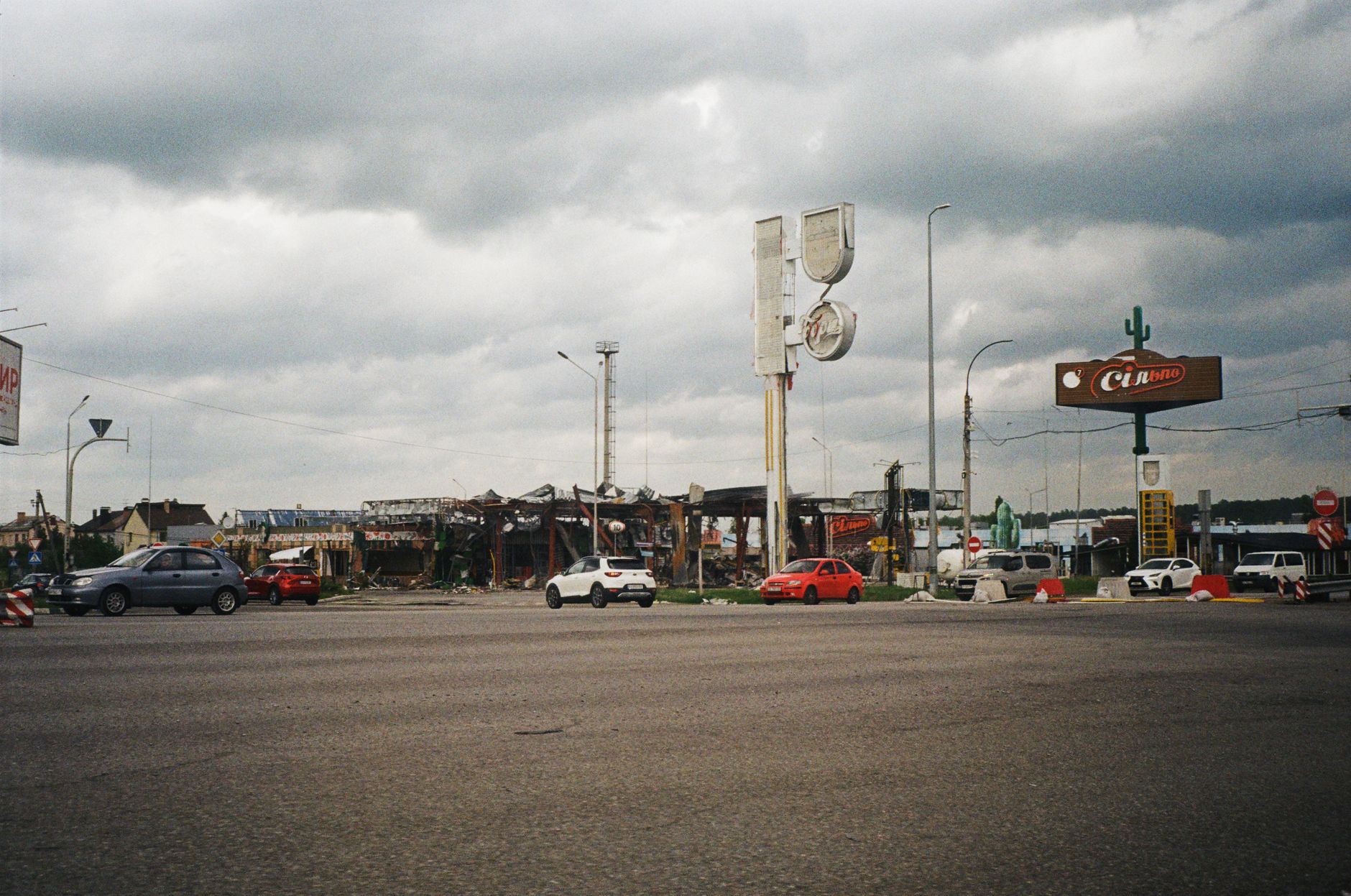
Photographs from affected neighbourhoods showed blackened buildings, shattered windows, damaged cars and debris surrounding a large crater. Firefighters continued damping down smouldering structures after sunrise, while municipal workers began clearing rubble from roads and pedestrian areas. Residents returned cautiously to damaged homes to retrieve possessions and inspect whether buildings remained safe.
One resident described sheltering in the corridor of an apartment building with her husband and seven children after receiving a warning that ballistic missiles were approaching. She said explosions followed in rapid succession, illustrating the particular threat posed by weapons that can reach Kyiv within minutes of launch.
Unlike slower attack drones, which can sometimes be tracked across Ukraine for hours, ballistic missiles descend at high velocity and can manoeuvre during flight. That compresses the time available for detection, identification and interception. It also narrows the range of systems capable of engaging them successfully.
Ukraine’s most effective defence against many Russian ballistic missiles is the US-made Patriot system. Kyiv has received Patriot batteries and interceptors from the United States, Germany, the Netherlands, Romania and other partners, but Ukrainian officials have repeatedly said the number remains insufficient to protect every large population centre, military facility and critical infrastructure site.
A Patriot battery can defend only a limited geographical area, while each interceptor is costly and available in restricted quantities. Russian forces can exploit those constraints by launching drones, cruise missiles, decoys and ballistic missiles in coordinated waves. Lower-cost drones may force Ukrainian crews to activate radars or expend ammunition before faster missiles approach their principal targets.
The July 19 operation demonstrated that pressure. Ukraine reported intercepting a large majority of the drones, but fewer than half of the missiles. Those figures do not by themselves establish how many missiles struck their intended targets, because weapons can malfunction, fall in unpopulated areas or be diverted by electronic warfare. They nevertheless show the greater difficulty of stopping the missile component of a mixed barrage.
Falling debris from intercepted weapons can also cause casualties and fires, particularly in a dense urban environment. Ukrainian authorities generally investigate individual impact sites before determining whether damage was caused by a direct strike, fragments from an interception or a missile that broke apart during flight. The immediate priority on Sunday remained rescue operations rather than a complete technical reconstruction of every impact.
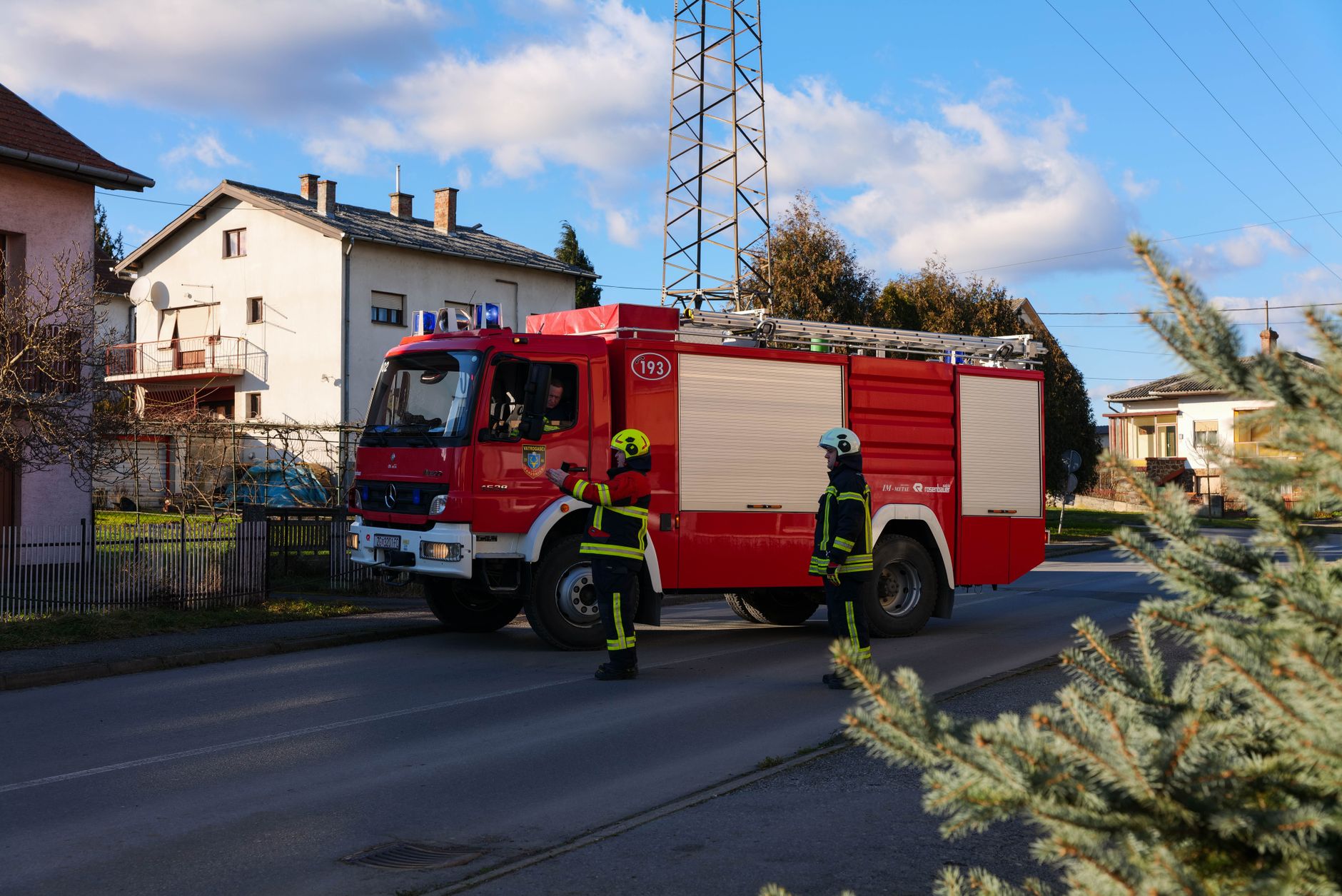
The nationwide civilian toll extended beyond Kyiv. A Russian strike on a postal logistics facility near Kharkiv killed at least three people and injured approximately 20, according to regional authorities cited by international news agencies. Some reports placed the Kharkiv death toll at four as emergency operations continued.
The facility was located outside Ukraine’s second-largest city, which lies relatively close to the Russian border and has endured repeated attacks by missiles, drones and guided aerial bombs. Kharkiv’s location gives residents even less warning than Kyiv when Russia launches short-range ballistic systems or aircraft release glide bombs from positions near the frontier.
Russian guided bombs also struck Kherson and Sumy, with authorities reporting at least one death in each city. A rehabilitation facility was among the locations reported hit in the Sumy region. Taken together, the attacks raised the confirmed nationwide toll to at least six dead, although figures remained preliminary.
Russia’s Defence Ministry said its forces had attacked Ukrainian military-related targets. It identified facilities allegedly involved in manufacturing Flamingo drones, producing components for Neptune guided missiles and storing dual-use goods. Moscow also claimed that one postal terminal was being used for the assembly or storage of drones, robotic systems and electronic-warfare equipment.
Those claims could not be independently verified immediately. Russia routinely states that its long-range attacks are directed against military, defence-industrial, energy or logistics targets. Ukrainian authorities say Moscow repeatedly strikes civilian homes and public infrastructure, whether intentionally, through inaccurate targeting or because of the large destructive radius of the weapons used.
International humanitarian law requires parties to distinguish between military objectives and civilian objects and to take feasible precautions to minimise harm to civilians. The presence of a possible military or dual-use facility in an urban area does not remove the obligation to assess proportionality and expected civilian harm before an attack.
The latest bombardment came as Russian forces intensified their use of ballistic missiles against Ukrainian cities. Ukrainian officials and military analysts say the change is intended partly to exploit shortages of Patriot interceptors and other high-end air-defence ammunition. Ballistic missiles also provide Russia with a greater chance of penetrating defended airspace than many conventional cruise missiles or one-way attack drones.
Moscow can further complicate interception by varying launch directions, timing separate waves and combining weapons with different speeds and flight profiles. Drones may approach at low altitude, cruise missiles can follow indirect routes, and ballistic weapons may arrive from above at several times the speed of sound. Air-defence operators must decide quickly which targets present the greatest danger and which interceptor should be used.
Ukraine has built a layered network that includes mobile gun teams, electronic-warfare equipment, Soviet-designed systems, Western short- and medium-range launchers, fighter aircraft and Patriot batteries. That network has prevented many attacks from inflicting their full potential damage. It has not, however, eliminated Russia’s ability to penetrate Ukrainian airspace or strike heavily defended cities.
Kyiv’s difficulty is not limited to the number of launchers. Radar coverage, maintenance capacity, trained personnel and a dependable supply of replacement missiles are all essential. A battery that has exhausted its interceptors, is undergoing repair or must be moved to avoid detection cannot provide continuous protection.
Russia, meanwhile, has expanded production of missiles and attack drones during the war and receives military support or components from foreign partners and international supply networks. Ukraine has urged Western governments to tighten controls on electronics and machine tools that can be incorporated into Russian weapons.
Zelenskyy said protection against ballistic missiles had become Ukraine’s “absolute and permanent priority” and repeated his demand for daily deliveries of interceptors. His government argues that additional systems would protect not only civilians but also electricity generation, defence manufacturing, railway connections and other infrastructure essential to the country’s war effort.
US President Donald Trump has said Washington is prepared to grant Ukraine licences connected to domestic production of Patriot systems or interceptors. Ukrainian officials have presented the initiative as a potential long-term improvement in supply security. However, the details, financing and implementation schedule remain uncertain, and establishing full-scale production would require extensive industrial preparation.
Even if licensed production begins, it would not immediately resolve Ukraine’s present shortage. Patriot missiles depend on specialised manufacturing lines and components, while global demand has increased as NATO countries expand their own air-defence inventories. European governments are simultaneously attempting to rebuild stocks after transferring substantial quantities of ammunition to Ukraine.
Kyiv is therefore seeking both near-term deliveries from existing inventories and longer-term industrial agreements. Ukrainian officials have also called for more European-built systems, including platforms capable of intercepting cruise missiles and drones, so that scarce Patriot ammunition can be reserved primarily for ballistic threats.
The strategic challenge for Ukraine is one of scale and endurance. Russia does not need every weapon in a barrage to reach its target. If repeated attacks force Ukraine to fire expensive interceptors faster than they can be replaced, Moscow can gradually weaken the defensive umbrella over major cities and infrastructure.
Ukraine has responded by using cheaper means against drones, dispersing equipment, constructing protective barriers and improving coordination between military and civilian authorities. It has also relocated some industrial activity and reinforced critical installations. Such measures reduce vulnerability but cannot substitute for systems designed to destroy high-speed missiles.
For civilians, the result is a cycle of alerts, sheltering and uncertainty. Kyiv has adapted to years of bombardment, with underground metro stations functioning as shelters and residents following mobile applications that track air threats. The July 19 attack nevertheless showed how quickly a large and technologically varied strike can produce casualties across several districts.
The psychological cost is also growing. Residents interviewed after the attack said bombardments that once appeared episodic now felt increasingly frequent. Families must repeatedly decide whether to move children and elderly relatives into shelters, corridors or metro stations, often during the night and with only minutes to react.
The attack will intensify diplomatic pressure ahead of further discussions among Ukraine’s European and North American partners. Kyiv is expected to use the casualty figures and interception data to argue that air-defence support cannot be delayed by lengthy procurement procedures or political negotiations.
European governments face difficult choices because transferring operational systems may temporarily reduce their own national coverage. Ukraine’s position is that interceptors used over Kyiv, Kharkiv or other cities are already defending the wider European security order by limiting Russia’s ability to use mass missile attacks as an instrument of coercion.
The July 19 barrage did not collapse Ukraine’s air defences: the majority of drones and a substantial number of missiles were reported destroyed. Yet the weapons that passed through were sufficient to kill civilians, ignite buildings and disrupt several districts. That outcome illustrates the central problem facing Kyiv — a defence network can intercept most incoming threats and still be judged inadequate when the remainder strike densely populated areas.
Emergency operations continued through Sunday as investigators documented impact sites and engineers examined damaged buildings. Authorities asked residents to avoid affected areas, report hazardous debris and leave missile fragments untouched because unexploded components can remain dangerous.
As casualty assessments continued, the broader conclusion was already clear. Russia retains the capacity to mount coordinated attacks involving large numbers of drones and missiles, while Ukraine remains dependent on a limited pool of specialised interceptors. Unless that imbalance is addressed, the country’s major cities will remain vulnerable even when air-defence crews achieve high overall interception rates.
Leave a Reply