COTIGNAC, France — Residents of the historic Provençal village of Cotignac emerged on Wednesday to streets coated in ash, blackened hillsides and the remains of homes damaged by a fast-moving wildfire that swept through the surrounding countryside during the night.
The fire, which began around midday on Tuesday, July 21, in or near an agricultural field outside the neighbouring village of Pontevès, expanded rapidly through dry woodland and scrub. Pushed northwards by wind and sustained by drought-stressed vegetation, it reached the outskirts of Cotignac and threatened several other communities before firefighters slowed its advance.
By Wednesday afternoon, authorities and regional media said the blaze had covered approximately 2,500 to 2,550 hectares across an area that included Pontevès, Cotignac, Sillans-la-Cascade, Correns and Montfort-sur-Argens. Officials said the main front was no longer advancing at its earlier speed, but the fire had not yet been formally declared fully contained or stabilised. Numerous hotspots remained active inside the burned zone.
Preliminary damage assessments were complicated by inaccessible roads, fallen electricity poles, smoke and the continuing risk of flare-ups. Initial estimates differed as firefighters, municipal teams and property owners entered affected districts. The Var prefecture said dozens of residences had been affected and that a smaller number appeared to have been completely destroyed. Local reporting placed the number of damaged homes at between 30 and 40 during the morning, while later accounts from Cotignac referred to nearly 60 properties destroyed or seriously affected across the village.
The difference reflected the early stage of inspections and the varying definitions used for homes that were destroyed, rendered temporarily uninhabitable or damaged in gardens, roofs and outbuildings. Authorities had not issued a definitive building-by-building total by Wednesday evening.
Several houses on the village’s rural margins were reduced to burned walls and collapsed roofs. Vehicles were left charred beside properties, while electrical equipment and roadside infrastructure were damaged. Photographs from the area showed scorched olive trees, burned vineyards, blackened stone walls and entire sections of woodland stripped of vegetation.
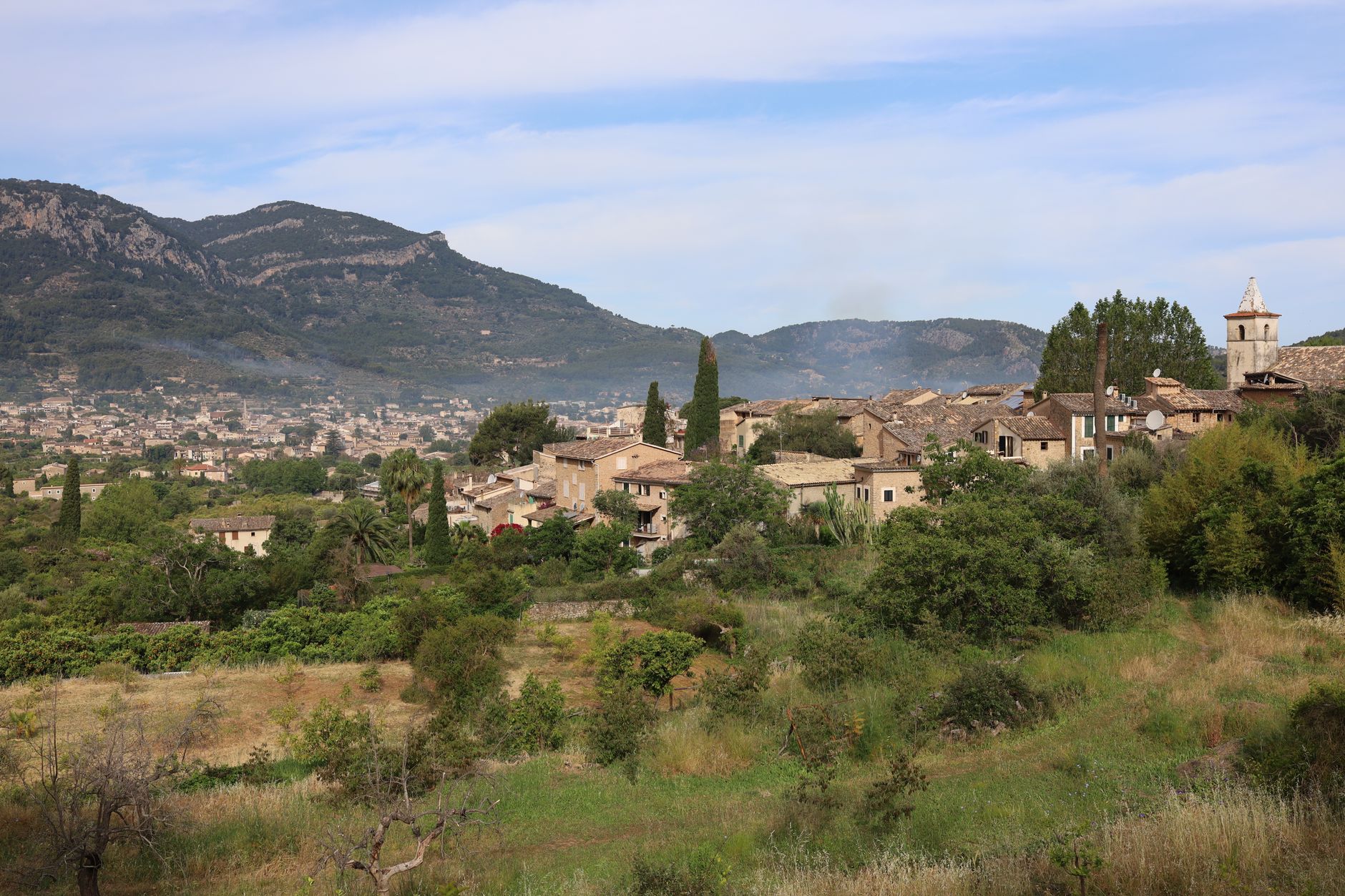
Cotignac, in the inland Var department of southeastern France, is known for its narrow streets, fountains and historic houses beneath a prominent limestone escarpment. The village has a permanent population of about 2,500, but the number of residents and visitors can approach 10,000 during the summer tourist season. The timing of the fire therefore raised concerns that holiday homes, guest accommodation and rural properties could be occupied by people unfamiliar with local evacuation procedures.
Evacuations began on Tuesday as the smoke column grew and the fire moved across the hills. Security vehicles travelled through threatened neighbourhoods warning residents to leave immediately. Around 50 people initially gathered in Cotignac’s Grainage municipal hall, where local officials and municipal workers provided water, food and information.
As conditions deteriorated, the evacuation zone was expanded. Authorities estimated that approximately 400 people were moved from their homes during the first phase of the emergency. Later regional reports put the number closer to 500 across all affected communes. Reception facilities were opened in Cotignac and neighbouring towns, while many evacuees stayed with relatives, friends or residents who offered spare rooms.
The nearby town of Carcès activated its municipal emergency plan and opened several reception centres, including a gymnasium and the Château hall. Community organisations and businesses also provided food, temporary accommodation and practical assistance to families unable to return home.
Residents described confusion during the most dangerous hours as the fire changed direction and descended from the Gros Bessillon area. Some relied on information passed through neighbours, volunteer firefighters and local social networks while official instructions were being updated. People gathered in the village centre to exchange reports about blocked roads, threatened properties and possible evacuation routes.
One resident told Euronews that an elderly woman who returned to rescue her cats became trapped by flames and sought protection in a neighbour’s swimming pool before relatives and firefighters helped her escape. Other residents described leaving with little more than pets, identity documents and a small number of possessions.
The firefighting operation expanded through Tuesday evening and overnight. About 1,100 firefighters were eventually deployed, supported by approximately 350 vehicles and reinforcements from several regions of southern France. The Marseille Naval Fire Battalion was among the units sent to assist local crews. Around 50 gendarmes were also mobilised to secure evacuation zones, manage traffic and prevent residents from entering hazardous areas.
Water-bombing aircraft and helicopters attacked the fire during daylight, while ground crews worked through the night to protect buildings and slow the advance. The aerial response included Canadair amphibious aircraft, Dash water bombers and helicopters operating over the wooded hills. Once darkness restricted flight operations, the defence of threatened homes depended heavily on crews positioned along roads, tracks and the village perimeter.
Fire commanders said the operation was particularly difficult because of the speed of the advance and the rugged terrain. Var Prefect Simon Babre said the fire moved down from the Gros Bessillon mountain at a rate that had not been fully anticipated, even as surface winds appeared to ease. The combination of steep slopes, highly combustible vegetation and shifting local air currents allowed flames to cross natural and operational barriers.
Despite the scale of the blaze, no deaths had been reported by Wednesday evening. Euronews reported that two firefighters and two civilians were injured, while other local accounts referred to people treated for smoke inhalation or related effects. The condition of those injured was not described as life-threatening.
Officials emphasised that firefighters had saved hundreds of buildings. Defensive operations around Cotignac’s central residential area prevented the blaze from entering the densest part of the village, where narrow streets and closely spaced historic structures could have produced a far more destructive urban fire.
Mayor Jean-Pierre Véran said the community had come close to losing both parts of the village and important religious monuments. Two major pilgrimage sites — the Sanctuaire Notre-Dame de Grâces and the Monastery of Saint-Joseph du Bessillon — were evacuated as the fire approached. Flames reached woodland close to the buildings, but firefighters prevented the complexes from burning.
The Notre-Dame sanctuary dates from the 16th century and stands on a site associated in Catholic tradition with an apparition of the Virgin Mary in 1519. The monastery and sanctuary attract pilgrims and visitors throughout the year. Their survival became a focal point of relief for residents, although the surrounding landscape was heavily burned.
The electricity network was another major casualty. Local authorities and Reuters reported that about 2,300 households, most of them in or around Cotignac, lost power because of the fire. Other regional estimates placed the peak number of disrupted connections at approximately 2,600 during the night.
Repair teams restored service progressively on Wednesday. By the morning, local media reported that 340 households in Cotignac and 48 in Pontevès remained without electricity. Crews faced damaged poles, burned lines and continuing access restrictions in areas where firefighting vehicles were operating.
Road closures also limited movement between communities. Authorities urged residents not to return without permission because seemingly inactive ground could conceal hot roots, smouldering vegetation and unstable trees. Burned electricity equipment, weakened walls and unexploded gas cylinders posed additional risks around damaged homes.
Firefighters concentrated on drowning hotspots and strengthening the edges of the burned zone. Although the flames were no longer making the rapid territorial gains recorded on Tuesday, commanders warned that this did not mean the fire was extinguished. Heat remained deep in dry vegetation, and isolated pockets could reactivate if exposed to wind.
Forecasts of stronger winds on Thursday increased the urgency of Wednesday’s work. Emergency officials said crews needed to reduce the number of active points before weather conditions worsened, particularly because the Var department could face additional outbreaks elsewhere. The deployment at Cotignac already represented a substantial concentration of regional firefighting capacity.
Investigators had not announced a final cause. Early reporting placed the ignition in a field near Pontevès, but authorities had not publicly determined whether it resulted from machinery, electrical equipment, deliberate action, negligence or another source. Fire investigators were expected to examine the origin zone once operational conditions permitted.

For affected families, the immediate priority was determining whether homes were safe to enter. Municipal authorities began compiling lists of accommodation needs, damaged properties and residents requiring social support. Insurance assessments were expected to take several days or longer, particularly in rural sectors where access remained controlled.
The fire also threatened the local economy. Cotignac and the surrounding Provence Verte area depend on tourism, agriculture, vineyards, olive production, restaurants and seasonal accommodation. Burned fields and damaged access routes could affect businesses beyond the properties directly reached by the flames. The visual impact on the landscape may also influence summer travel at the height of the tourist season.
Farmers were expected to assess losses to vines, olive trees, irrigation equipment, fencing and storage buildings. Even where crops had not burned completely, prolonged exposure to heat and smoke could reduce yields. Soil damage and the loss of vegetation may later increase erosion during heavy rain, requiring longer-term restoration work.
Residents nevertheless described a strong local solidarity response. People opened their homes to evacuees, transported vulnerable neighbours and cared for pets. Religious workers evacuated from the threatened sanctuaries were accommodated in the village, while a local hotel and restaurant complex provided breakfast to people displaced overnight.
The response illustrated the importance of informal community networks in small rural communes, but it also raised questions about how quickly verified evacuation information reaches people during a rapidly changing fire. Some residents said they had initially relied more heavily on neighbours and personal contacts than on centralised alerts.
Municipal and departmental officials were expected to review emergency communications after the immediate crisis. Cotignac already publishes fire-prevention guidance, as do authorities across the Var, where access to forest areas can be restricted according to daily danger levels. The intensity of Tuesday’s advance, however, showed how little time may be available once an ignition escapes initial control.
The Cotignac fire occurred during a difficult summer for France’s firefighting services, with high temperatures, dry vegetation and repeated outbreaks placing pressure on personnel and aircraft. Mediterranean departments face recurring wildfire risk, but the increasing exposure of homes and tourist areas at the edge of forests has made evacuation and property protection more complex.
Authorities did not immediately announce when all residents would be allowed to return. Decisions were being made neighbourhood by neighbourhood according to fire activity, road safety and the condition of utility networks. Some families were able to obtain information about their properties on Wednesday, while others remained in shelters or temporary accommodation without a confirmed damage assessment.
For Cotignac, the historic centre’s survival prevented the loss of a nationally recognised Provençal streetscape. The greater burden fell on surrounding residential districts and rural land, where the fire left a fragmented pattern of destroyed houses, saved properties and burned agricultural plots.
Fire crews were expected to remain throughout the night and possibly for several days. The operation would move gradually from active suppression to surveillance, mapping and prevention of rekindling. Only after the perimeter was secured could authorities complete a reliable assessment of destroyed buildings, environmental losses and the cost of restoring essential services.
By Wednesday evening, the village had moved from immediate escape to the first stage of recovery, but uncertainty remained. Smoke still hung over parts of the valley, damaged homes had not all been inspected and the forecast wind presented a renewed danger. Officials urged the public to avoid the affected zone and allow firefighters to continue working without obstruction.
The overnight defence of Cotignac preserved its centre and landmark sanctuaries, but the scale of the surrounding destruction was becoming clearer with each inspection. For residents who lost homes or farmland, the emergency had not ended with the retreat of the main flames. The next phase would involve accommodation, insurance claims, infrastructure repair and the long restoration of a burned Provençal landscape.
Leave a Reply