BERLIN — German authorities were conducting an intensive manhunt on Sunday for a 21-year-old suspect following a deadly vehicle attack in central Berlin that killed one woman and injured 29 people near the closing celebrations of the city’s annual Pride event.
Berlin police and the city’s public prosecutor identified the wanted man as Abdul B., using an initial for his surname in accordance with common German privacy practice. Authorities released his photograph and warned that he could be armed and dangerous. Members of the public were instructed not to approach him or attempt direct contact, but instead to call the police emergency number immediately.
The violence began at about 10 p.m. on Saturday, July 25, on Ahornsteig, a path running through Berlin’s Großer Tiergarten. Police said a white vehicle struck several people before coming to a stop after crashing into a tree. The site lies several hundred metres from the Brandenburg Gate, where the final programme of Berlin’s Christopher Street Day demonstration was taking place.
Officials initially reported at least 16 injured people, including several in critical condition. Federal Interior Minister Alexander Dobrindt later said the total number of injured had risen to 29. Some victims remained in serious or life-threatening condition on Sunday. Authorities had not publicly identified the woman who died or released detailed information about the nationalities and ages of the casualties.
Police said the attack did not take place inside the formal parade route or directly within the secured closing-event area. Instead, the vehicle entered a section of the Tiergarten used by pedestrians, including people leaving the Pride celebrations as well as other residents and visitors. Investigators have not yet established whether every person struck was attending Christopher Street Day.
The distinction is important for reconstructing how the vehicle reached the crowd and whether the location had been selected because of its proximity to the Pride gathering. Hundreds of thousands of people had attended the demonstration and related events across central Berlin during the day, creating heavy pedestrian movement around the Tiergarten, the Victory Column and the Brandenburg Gate.
After the collision, one or more people were seen or believed to have left the vehicle and fled. Berlin police said several victims also suffered injuries caused by bladed weapons. Dobrindt said investigators suspected Abdul B. of attacking additional pedestrians with a weapon believed to have been a machete after the vehicle stopped.
Authorities have not issued a final account of whether the suspect was the driver, whether he was the only person inside the vehicle or whether different people carried out the vehicle and stabbing phases of the attack. The police appeal explicitly referred to the possibility that more than one person left the vehicle, leaving open the prospect of accomplices.
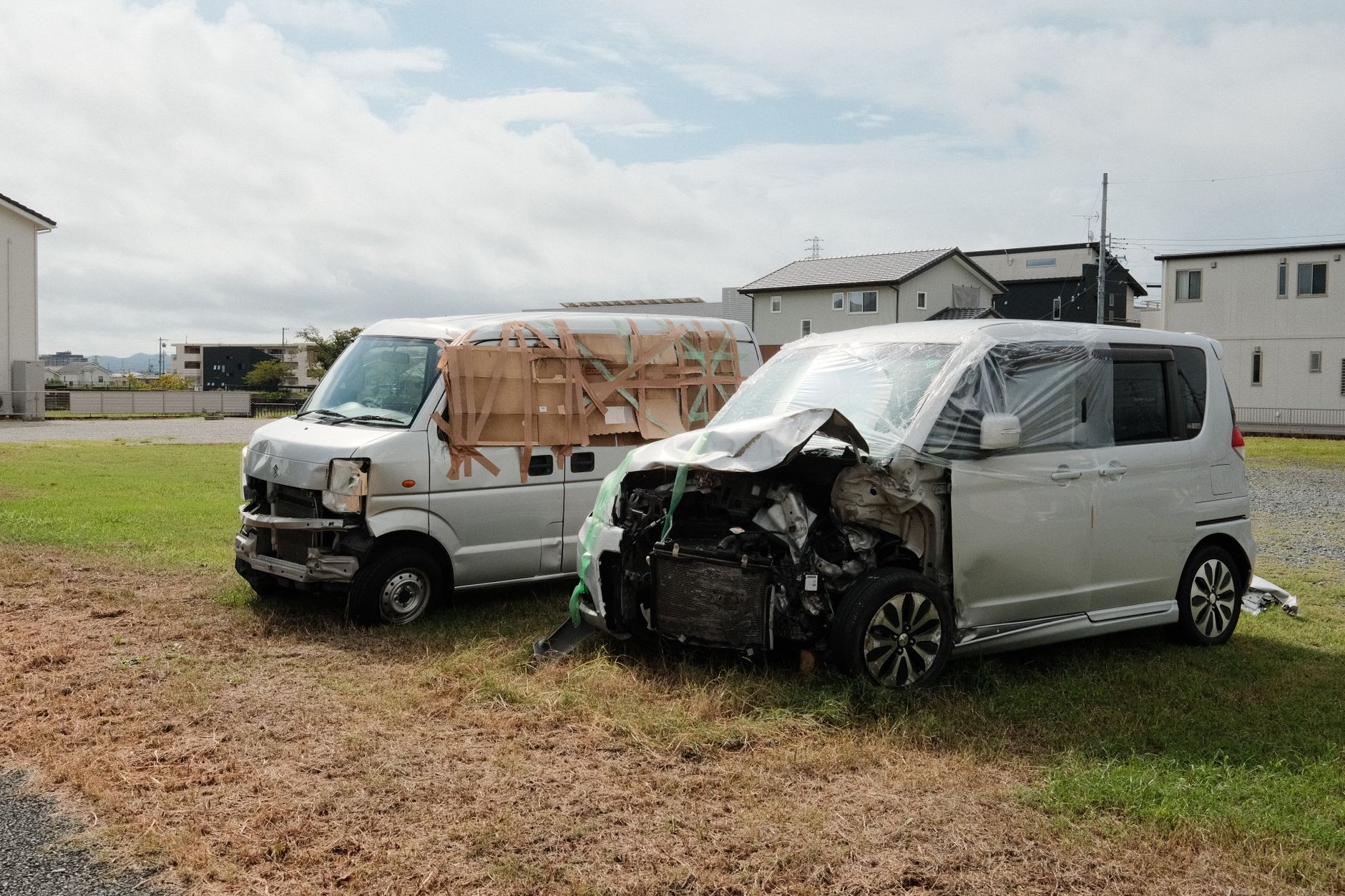
Investigators seized the badly damaged vehicle for forensic examination. Establishing its ownership, recent movements and possible occupants will be central to determining how the attack was organised. Police are also seeking photographs, mobile-phone videos, dashboard-camera recordings and other material that may show the vehicle before, during or immediately after the collision.
A large section of the Tiergarten was cordoned off during the night as officers searched paths, wooded areas and nearby streets. Thermal-imaging equipment was deployed, while police units checked addresses connected to the suspect. An early-morning operation at an apartment in Berlin’s Schöneberg district did not result in his arrest.
Alerts were distributed to transport hubs, airports, border authorities and police forces outside Berlin as the search widened. Officials have not said whether they believe the suspect remains in the capital, has travelled elsewhere in Germany or may be attempting to leave the country.
The public notice describes Abdul B. as approximately 1.90 metres tall, with a slim build and black hair. Police said he was believed to have been wearing a black hooded top and white trousers. Authorities stressed that clothing may have changed and that anyone who sees him should maintain distance rather than attempting to confirm his identity personally.
Dobrindt said the suspect was a German citizen with Lebanese family roots who had previously come to the attention of law-enforcement agencies. According to the minister, he had a substantial record of previous offences and was known in connection with radicalisation and Berlin’s Islamist scene.
The interior minister also confirmed that the suspect had previously received a suspended sentence of one year and ten months. Authorities had not, in their initial public statements, provided a complete judicial history or explained which agencies had most recently assessed the risk he posed.
Dobrindt said the evidence available on Sunday pointed towards an Islamist terrorist attack. That assessment represents the government’s current investigative position rather than a final judicial conclusion. Police and prosecutors must still establish the suspect’s precise role, whether he acted under instructions, whether others assisted him and whether the Pride celebration was deliberately selected as a target.
The investigation is also expected to examine digital communications, travel history and contacts linked to the suspect, alongside the physical evidence recovered from the vehicle and the scene. Any conclusion about organisational links or external direction will depend on evidence rather than the suspect’s reported associations alone.
German officials have been careful to combine the terrorism assessment with warnings against speculation. The involvement of prosecutors means the inquiry must preserve evidence suitable for criminal proceedings, including material establishing intent, preparation and the roles of any additional participants.
Emergency services declared a major casualty response after the attack. Paramedics and firefighters treated victims at the scene before transporting the most seriously injured to hospitals across Berlin. People who were not physically injured were moved away from the area, while officers established controlled routes out of the crowded city centre.
The remaining Christopher Street Day programme was terminated early. Organisers and police instructed participants to leave calmly, bringing an abrupt end to a day that had included a large demonstration, floats, music, speeches and political appeals for LGBTQ+ rights.
Berlin’s Christopher Street Day is one of Europe’s largest Pride demonstrations. The 2026 march travelled through central districts before reaching the area around the Victory Column and Brandenburg Gate. Its closing programme was designed to continue late into the evening, with large numbers of participants expected to move through the surrounding streets and parkland.
The proximity of the attack to the event immediately created fear that the city’s LGBTQ+ community had been deliberately targeted. Organisers condemned the violence while urging the public and political figures not to use the attack to assign collective blame or inflame hostility against entire communities before investigators had completed their work.
The organisers said the response should centre on the victims, their families and solidarity against attempts to divide society. Their position reflected concern that an attack near a highly visible LGBTQ+ event could produce overlapping waves of fear: among queer residents worried about targeted violence and among Muslim communities concerned about generalisation and retaliation.
Berlin Mayor Kai Wegner described the incident as a brutal attack on a gathering associated with a tolerant and peaceful city. Chancellor Friedrich Merz called it an attack on German society and said those responsible would be pursued. President Frank-Walter Steinmeier also expressed outrage and sympathy for the victims.
European Commission President Ursula von der Leyen was among the international figures who issued messages of solidarity. Flags at the German Bundestag were ordered to be lowered to half-mast as Berlin residents began placing flowers, candles and handwritten messages near the scene.
Hundreds of people gathered around the Brandenburg Gate on Sunday for a vigil and demonstration of support. Participants carried rainbow flags and flowers, while mourners visited the area where the vehicle had crashed. Police maintained a visible presence as the gatherings proceeded.
The attack presents an immediate security challenge because the principal suspect remained at large more than a day after the violence. Authorities must balance the need for a rapid arrest with the risk that an armed fugitive could endanger officers, members of the public or anyone mistakenly attempting to intervene.
Police have therefore emphasised controlled reporting rather than public pursuit. Witnesses can provide information through an official evidence portal, a dedicated telephone line or any police station. Investigators are particularly interested in material showing suspicious behaviour, the vehicle’s route or people leaving the scene.
Officials have also urged the public not to circulate unverified identities, locations or claims about accomplices. False reports could divert officers from credible leads, place uninvolved people at risk and complicate the preservation of digital evidence.
Questions are likely to focus on how the vehicle entered the park, whether physical barriers were present and how security zones had been defined around the closing programme. Because the attack occurred outside the formal event perimeter, the investigation will have to distinguish between protection of the organised gathering and security across the wider network of public roads and park paths used by departing crowds.
The open layout of the Tiergarten makes that task difficult. The park contains numerous roads, pedestrian routes, wooded sections and access points connecting government buildings, tourist landmarks and transport stations. A major event can be heavily protected at its stages and parade route while people remain exposed as they disperse through surrounding areas.
Authorities have not announced immediate changes to other public events in Berlin, but the incident is expected to lead to reviews of vehicle access, crowd dispersal routes, emergency communications and cooperation among event organisers, police, transport authorities and medical services.
For Pride organisations elsewhere in Europe, the attack is likely to prompt renewed attention to security without changing the public and political character of Pride demonstrations. Berlin organisers and participants said the violence should not force LGBTQ+ people out of public space or weaken the right to peaceful assembly.
At the same time, officials face pressure to explain what was known about the suspect before the attack and whether existing legal or supervisory measures were adequate. Those questions cannot be resolved solely through the fact that he had previous convictions or extremist associations. Investigators will need to establish what information was available, how recently he had been assessed and whether there were legally actionable indications of imminent violence.
German law places a high threshold on preventive detention and surveillance, requiring authorities to demonstrate specific risks rather than relying only on ideology, previous contact or association. Any review of the case will therefore examine both operational decisions and the legal limits within which police and intelligence services were working.
The immediate priority remains locating the suspect, clarifying whether others were involved and providing an authoritative account of the attack. Police have not disclosed whether a weapon was recovered, whether there was material inside the vehicle indicating preparation or whether the suspect communicated with anyone during his escape.
Until those questions are answered, authorities are treating the case as an active terrorism investigation with a potentially dangerous fugitive. Berlin police said updates would be released as soon as doing so would not jeopardise the search or the collection of evidence.
The incident has left Berlin mourning after one of its largest annual public demonstrations. The city’s response now depends on the treatment of the injured, support for witnesses and bereaved relatives, the safe apprehension of the suspect and an investigation capable of establishing responsibility without allowing unverified claims to deepen social divisions.
Leave a Reply