ROME/MADRID — Italy sharply criticised Spain on Sunday after Spanish authorities began carrying out reciprocal checks on travellers arriving from Italy, escalating a migration dispute that originated at the European Union’s external border in Ceuta into a confrontation over movement between two Schengen countries.
Italian Foreign Minister Antonio Tajani called the Spanish response “incomprehensible and completely unacceptable,” arguing that Rome’s restrictions were a security precaution rather than an action directed against Spain. He said Italy had a responsibility to protect its borders while the consequences of the late-July mass crossings into Ceuta remained under assessment.
Spain began spot checks at midnight on 8 August on passengers arriving from Italy by air and sea. The Spanish order provides for random inspections through 7 September and states that any extension would require a new assessment of necessity and proportionality under the Schengen Borders Code. Madrid has said the checks are intended to be selective and should not interrupt the normal flow of passengers.
Spanish authorities reported checking the documents of 199 passengers on the first day of the operation. Those inspections covered travellers on 12 flights arriving from Italy at six of Spain’s busiest airports. Police were also authorised to conduct checks at ports receiving ferry traffic from Italy.
The measure followed Italy’s introduction of controls on travellers arriving from Spain on 1 August. Rome acted after approximately 72,000 people entered Ceuta from neighbouring Morocco during the final days of July, according to figures cited in reporting on the crisis. The sudden movement overwhelmed local services and caused numerous deaths during attempted crossings by land and sea.
Spain has maintained that the overwhelming majority of those who crossed irregularly were returned to Morocco and that there was no subsequent movement to mainland Spain or other EU countries. That assessment was presented to European home affairs ministers during an emergency videoconference on 4 August and was reflected in the Council of the EU’s summary of the meeting.
Madrid consequently argues that Italy has not established a direct connection between events in Ceuta and a serious threat at Italian ports or airports. Ceuta, although an integral part of Spain and the EU, is not included in the Schengen area. Travellers moving from the territory to mainland Spain must undergo identity and document checks, limiting the possibility of irregular onward travel into continental Europe.
Italian officials dispute the conclusion that the risk has passed. Tajani said Rome was concerned about reports of online calls for another attempt to enter Ceuta around the middle of August. Prime Minister Giorgia Meloni’s government has said its controls will remain at least until 15 August and could continue until the authorities are satisfied that security risks have been excluded.
Rome has also invoked the possibility that people with extremist affiliations could exploit large and disorderly migration movements. Tajani and Deputy Prime Minister Matteo Salvini referred publicly to a potential jihadist threat, although Italian authorities had not disclosed evidence on Sunday that suspected militants who entered Ceuta had travelled, or attempted to travel, towards Italy.
Spanish officials have rejected that rationale as speculative and disproportionate. They say control was restored at the Ceuta border before Italy introduced its restrictions and insist that no person involved in the mass crossing had reached the Spanish mainland. Madrid also points to the operational barriers between Ceuta and the Schengen zone as evidence that Rome’s measures do not correspond to the actual migration route.
Spain initially demanded that Italy withdraw its controls by 9 August. Rome rejected what it described as an ultimatum, saying that decisions concerning national security and border protection could not be dictated by another government. Spain then announced equivalent measures, framing them formally as a response to migration pressure on the central Mediterranean route and Italy’s handling of European asylum responsibilities.
The wording of the Spanish order broadened the dispute beyond Ceuta. Madrid cited migration pressure affecting Italy and alleged shortcomings in Rome’s implementation of newer EU rules governing responsibility for asylum claims. Italian officials, however, characterised the measure as retaliation rather than a proportionate response to an identifiable threat originating in Italy.
Tajani said Italy was not acting against Spain and expressed hope that Rome could end its controls once the anticipated mid-August risk had passed. At the same time, he accused the Spanish government of insufficient vigilance before the Ceuta crossings. His comments contrasted with an earlier public assessment by Italy’s interior minister, who had praised Spain’s handling of the immediate emergency.

Salvini adopted a more confrontational position, accusing the Spanish government of approaching the “ridiculous” by imposing reciprocal restrictions. He argued that Italy was defending Europe’s borders while Spain had failed to do so. Spanish ministers have countered that their authorities restored order rapidly, secured cooperation with Morocco and prevented irregular movement beyond Ceuta.
The dispute has also become entangled with opposing political narratives over migrant regularisation. Italy’s governing parties have criticised Spain’s programme to grant legal status to hundreds of thousands of undocumented residents, arguing that it could encourage additional irregular migration. Madrid maintains that regularisation addresses people who are already living and working in Spain and rejects any direct connection with the sudden mass crossing into Ceuta.
Spain has presented legal migration as necessary for an ageing society and a growing labour market. Italy is likewise planning to issue a large number of work permits to foreign workers over the coming years, reflecting similar demographic and employment pressures. The governments nevertheless frame their approaches differently: Spain emphasises inclusion and labour-market integration, while Italy places greater rhetorical weight on border enforcement and controlled entry.
The disagreement has brought the rival migration policies of Meloni and Spanish Prime Minister Pedro Sánchez into sharper focus. Meloni has made the reduction of irregular arrivals a central objective of her government and has promoted agreements with transit countries and processing arrangements outside the EU. Sánchez has defended pathways for regular migration while insisting that Spain is capable of protecting its borders and returning people who have no legal basis to remain.
Spanish Foreign Minister José Manuel Albares described the Italian restrictions as damaging to the dignity of Spanish travellers and to European unity. Madrid has reported disruption and lengthy procedures affecting some passengers arriving in Italy during the peak holiday season. Italian travellers are now exposed to similar uncertainty at Spanish airports and ferry terminals.
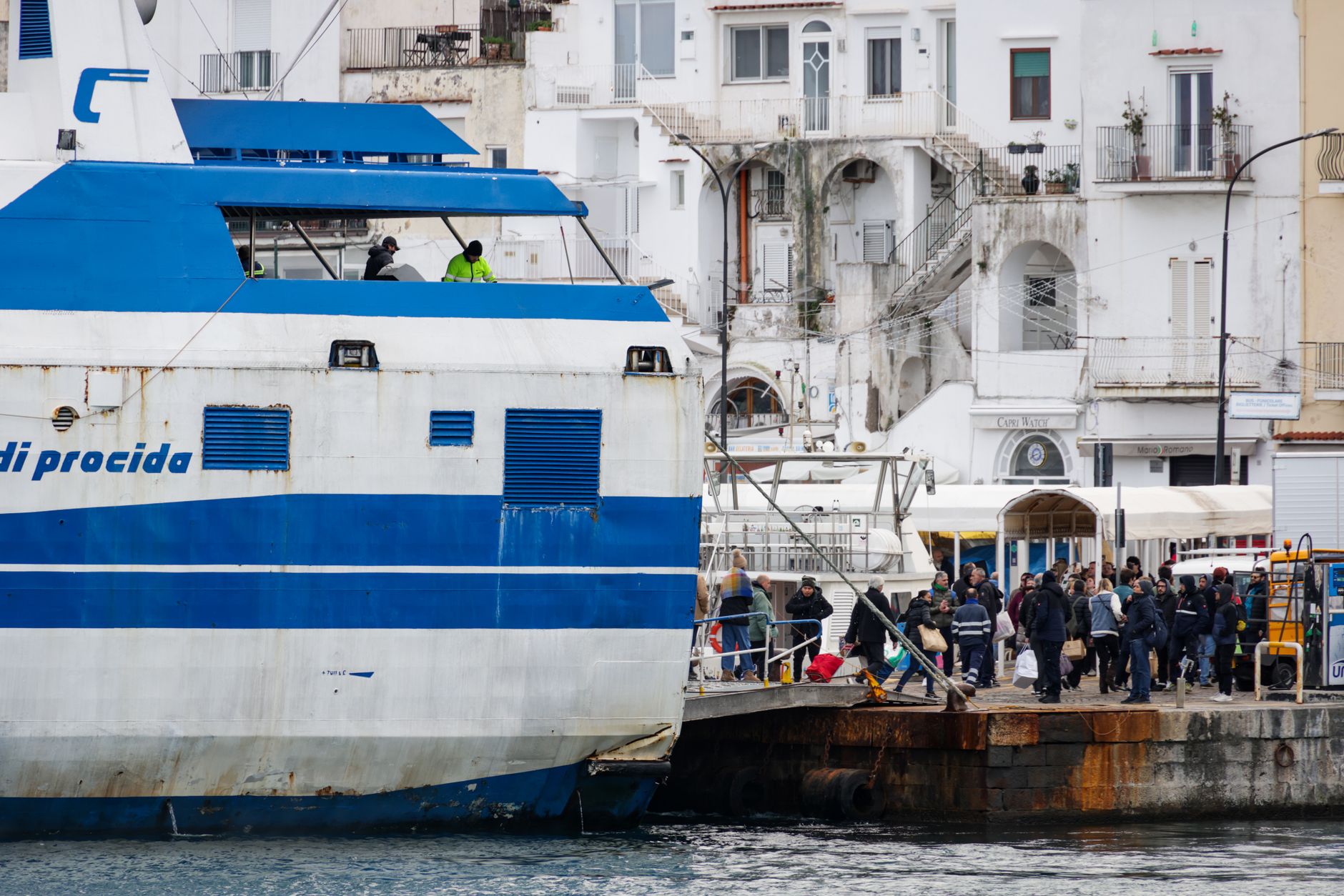
More than eight million journeys were made between the two countries last year, underscoring the potential economic and logistical consequences if the controls persist. Italy and Spain are major tourism markets for each other, with dense air connections linking Rome, Milan, Madrid, Barcelona and numerous coastal destinations. Ferries also connect Spanish ports with several Italian cities and islands.
The immediate impact remained limited on Sunday because Spain described its checks as random rather than systematic. However, passenger delays could increase if police inspect more services or if Italy extends its own measures. Airlines, ferry operators and airport authorities may also face uncertainty over documentation procedures, staffing requirements and the time needed to process passengers.
EU Migration Commissioner Magnus Brunner said he had been in contact with the interior ministers of both countries. According to Brunner, each government confirmed that its internal controls were temporary. He also said Spain had assured the Commission that the events in Ceuta would have no lasting effect on the Schengen area and noted indications that Italy could lift its measures soon.
The European Commission is responsible for monitoring whether the reintroduction of internal controls complies with the Schengen Borders Code. Member states may temporarily restore checks in exceptional circumstances, but such action must be a last resort, must address a defined serious threat and must remain limited in scope and duration. Governments are also expected to notify the Commission and provide reasons for their decisions.
That framework does not automatically prevent two member states from imposing overlapping restrictions, but reciprocal measures adopted amid a political disagreement create a difficult precedent. If governments use internal checks to answer another country’s policy rather than a demonstrable security threat, the distinction between preventive border management and diplomatic retaliation becomes increasingly blurred.
Schengen’s operation depends substantially on trust that each member state is protecting the EU’s external frontier and applying common asylum rules. States at external borders have long argued that they shoulder a disproportionate operational burden, while inland countries have demanded stronger registration, screening and return procedures. The Ceuta dispute shows how quickly failures of trust can affect internal travel even when the original event occurs outside the passport-free zone.
At the 4 August meeting, EU and Schengen-area home affairs ministers expressed solidarity with Spain and welcomed what they described as the swift response of Spanish authorities. The Council said the latest information indicated that the “very large majority” of those entering irregularly had been returned and that there had been no onward movement to mainland Spain or other member states.
Ministers nevertheless agreed on the need to strengthen external borders, expand cooperation with non-EU countries, reinforce returns and improve action against migrant-smuggling networks. They also discussed better early-warning capabilities, including pre-frontier intelligence and monitoring of social-media activity used to organise or encourage mass crossings.
Those conclusions offered partial support to both sides. Spain could point to the recognition that it restored control and prevented onward movement. Italy could cite the ministers’ concern about early warning, smuggling networks and the possibility of renewed pressure. The meeting did not endorse reciprocal internal checks as a solution.
The origins of the crisis remain central to the political argument. Ceuta is located on the North African coast and shares a land frontier with Morocco. Its position makes it one of the few places where the EU has a terrestrial border with Africa. Relations between Madrid and Rabat, together with Moroccan border enforcement, have therefore played a decisive role in controlling migration towards the territory.
Sánchez visited Ceuta during the emergency and promised to use all state resources necessary to guarantee security and restore normality. He described the uncontrolled crossing as an attack on Spain’s territorial integrity while thanking Morocco for cooperation on returns. Spanish police, the Civil Guard, emergency personnel and humanitarian organisations were mobilised to manage arrivals and assist people in distress.
The human consequences of the crossing remain distinct from the diplomatic confrontation. People died while attempting to reach Ceuta, and humanitarian organisations were required to provide food, water, medical assistance and temporary shelter. Families in Morocco continued seeking information about missing relatives after the immediate border emergency subsided.
Spain’s ability to complete rapid returns is likely to attract scrutiny from human-rights organisations, which have repeatedly demanded that access to asylum, individual assessment and protection against unlawful removal be maintained during mass-arrival situations. EU governments face a dual obligation to control external borders and uphold European and international protections for refugees and other vulnerable people.
The political debate in Italy and Spain has concentrated increasingly on blame. Italian opposition politicians accused Meloni’s government of creating an avoidable diplomatic crisis that would ultimately impose costs on Italian travellers. Nicola Fratoianni, leader of Italy’s Greens and Left Alliance, called the episode a serious mistake and said the measures had produced a predictable backlash.
Spanish critics of Sánchez, meanwhile, have demanded fuller explanations from the government about the breakdown at Ceuta’s border and its readiness before the crossings. The crisis has generated pressure for parliamentary scrutiny of the interior, defence and foreign ministries, even as the government defends its operational response.
For the EU, the priority is to prevent the dispute from hardening into a prolonged suspension of routine travel. A withdrawal sequence could prove politically sensitive because neither government wants to appear to have acted under pressure from the other. Italy’s stated review point around 15 August may provide an opening if no new mass crossing occurs. Spain could then reassess whether its reciprocal checks remain necessary before their scheduled expiry.
A negotiated, coordinated removal of the controls would allow both governments to argue that the security environment had changed rather than that either side had conceded. Continued European Commission engagement may be required to verify the legal basis of the measures, facilitate information-sharing and discourage further escalation.
Until then, travellers should expect the possibility of document checks on direct air and maritime routes between the countries. EU citizens retain free-movement rights, but temporary internal controls allow police to require passports or national identity cards and conduct additional verification. Non-EU nationals may face examination of residence permits, visas and travel histories.
The larger issue is whether a short-lived emergency at an external border can be contained without eroding internal mobility and relations between member states. The events in Ceuta already prompted an EU-level review of border preparedness. The Spanish-Italian confrontation has now added a second test: whether Schengen governments can resolve security disputes through shared evidence and common procedures rather than reciprocal restrictions.
As of Sunday evening, neither Rome nor Madrid had announced plans to withdraw its measures. Italian officials continued to describe their checks as necessary precautions, while Spain maintained that its response was lawful, limited and proportionate. The duration of the standoff is likely to depend on developments around Ceuta in the coming days and on whether European mediation can restore sufficient trust between the two governments.
Leave a Reply