Canadian Prime Minister Mark Carney has endorsed a major expansion of relations between Canada and the European Union, telling lawmakers in Strasbourg that the two sides should use their complementary economic, technological and security strengths to build a much deeper transatlantic partnership.
Addressing the European Parliament on September 17, Carney welcomed European Commission President Ursula von der Leyen’s proposal for Canada to become what she described as the European Union’s first “associate member.” The idea, introduced during von der Leyen’s State of the European Union address a day earlier, would represent an unprecedented relationship between the EU and a major non-European partner.
Carney made clear, however, that Canada is not seeking conventional membership of the European Union. He said the eventual terminology and institutional architecture would have to be worked out jointly, emphasizing that Ottawa’s objective is to reinforce Canadian sovereignty through cooperation rather than transfer sovereign authority to European institutions.
The distinction is important because “associate membership” is not currently an established category of EU membership under the bloc’s treaties. European law allows the Union to conclude wide-ranging association agreements with third countries, but the scope proposed for Canada appears potentially broader than many existing arrangements and has yet to be translated into a specific negotiating framework.
Carney placed the proposal within a wider argument about economic security and strategic resilience. He said modern sovereignty increasingly depends not only on traditional national capabilities such as food, energy and defence, but also on reliable access to technologies, minerals, financial infrastructure, semiconductors, communications networks and other systems that underpin advanced economies.
His central argument was that neither Canada nor Europe can efficiently secure every strategic capability independently. Instead, he proposed building deeper interdependence among trusted partners whose strengths can compensate for each other’s vulnerabilities.
Europe, Carney said, offers enormous market scale, advanced manufacturing capacity, research institutions, regulatory influence and a defence industry that is expanding rapidly in response to deteriorating security conditions. Canada, in turn, can contribute large energy resources, substantial reserves of critical minerals, expertise in artificial intelligence and quantum technologies, significant space capabilities, a highly developed financial system and strategic access to both the Atlantic and Pacific regions.
Critical minerals are expected to be one of the most consequential areas of potential cooperation. Western governments are attempting to diversify supply chains for materials required in electric vehicles, batteries, defence equipment, semiconductors and renewable-energy systems. Canada possesses deposits of several strategically important minerals, while the EU has made reducing excessive dependence on concentrated foreign supplies a major economic-security objective.
Closer integration could therefore involve increased European investment in Canadian mining, refining and processing projects, coordinated infrastructure development, long-term purchasing arrangements and greater cooperation on environmental and regulatory standards. Such initiatives would extend an existing Canada-EU dialogue on raw materials and supply-chain resilience.
Defence cooperation is another area where the partnership has already moved beyond political declarations. Canada and the EU signed a Security and Defence Partnership at their June 2025 summit, creating a framework covering issues including defence industries, support for Ukraine, maritime and space security, cyber threats, military mobility, foreign interference and crisis management.
Canada subsequently became the first non-European country able to participate in procurement linked to the EU’s Security Action for Europe, or SAFE, instrument under a bilateral agreement formally concluded by the Council of the European Union in June 2026. SAFE is designed to support large-scale joint defence procurement by EU countries and expand European defence-industrial capacity.
Carney’s Strasbourg address suggested that Ottawa wants to build on those arrangements by integrating Canadian and European defence industries more systematically. The objective would be to expand production capacity, improve compatibility between supply chains and give manufacturers on both sides of the Atlantic greater access to procurement opportunities.
The economic foundation of the relationship is the Comprehensive Economic and Trade Agreement, known as CETA. The agreement has provisionally applied since 2017 and removed tariffs on most goods traded between Canada and the EU while opening parts of public procurement and services markets.
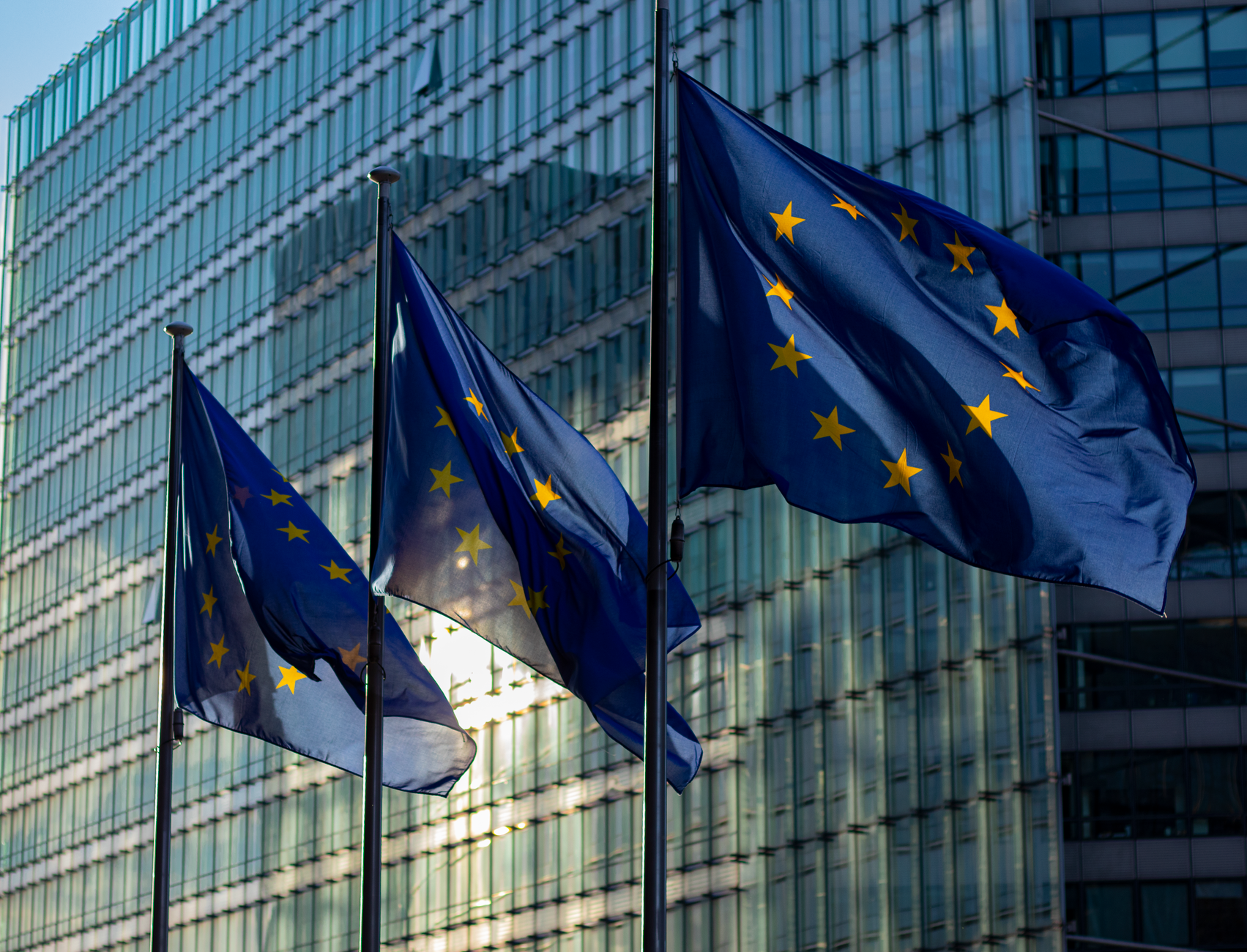
Von der Leyen said in her September 16 address that bilateral trade in goods had risen by 75 percent in less than a decade under CETA. She proposed moving beyond the existing trade framework toward what she called an “Alliance for the Future,” encompassing economic security, advanced manufacturing, technology, defence, the Arctic, energy, minerals, batteries, artificial intelligence, quantum computing and cybersecurity.
Carney broadly endorsed that agenda. His speech presented the potential partnership as far more ambitious than a conventional trade agreement, with cooperation extending into technologies and infrastructure that governments increasingly regard as strategically sensitive.
Artificial intelligence and computing infrastructure featured prominently in the proposed agenda. Canada has a substantial AI research ecosystem, while the EU has been developing large-scale computing capacity, digital regulation and industrial policies aimed at strengthening European technological competitiveness. Deeper cooperation could involve research, investment, computing infrastructure, standards and commercial development, although no detailed bilateral package was announced on Thursday.
Carney also proposed exploring closer integration of financial services. Canada has large banks, pension funds and institutional investors, while the EU is attempting to deepen its own capital markets and reduce fragmentation among national financial systems. A closer Canada-EU financial relationship could potentially give companies and investors broader access to capital, but any integration would involve complex questions of financial regulation, supervision and market access.
People-to-people mobility formed another part of Carney’s vision. He argued for arrangements that could make it easier for younger Canadians and Europeans to study, live and work on opposite sides of the Atlantic. The concept aligns with the broader effort to deepen academic, research and cultural connections, although governments have not yet announced a specific mobility agreement associated with the proposed new relationship.
The Canadian prime minister also emphasized that the initiative should not be interpreted as an attempt to build a rival geopolitical bloc. He presented the partnership as a mechanism for strengthening the ability of democracies to make independent choices, withstand economic coercion and preserve access to essential technologies and resources.
That framing has become particularly relevant as Canada seeks to diversify international trade and investment. Ottawa has increasingly emphasized the importance of expanding economic relationships beyond its historically dominant commercial relationship with the United States. Europe, meanwhile, has pursued its own policy of reducing strategic dependencies while maintaining an open trading economy.
The proposal nevertheless enters complicated geopolitical territory. US President Donald Trump criticized the prospect of a new EU-Canada arrangement and threatened additional tariffs if Washington concluded that the initiative was being pursued in a manner hostile to US interests. Carney rejected the suggestion that closer ties with Europe were directed against another country, describing the initiative as a positive long-term strategy based on Canadian and European interests.
European officials have used similar language. European Parliament President Roberta Metsola said the strengthening of EU-Canada relations was not intended to be against anyone, while von der Leyen described the initiative as a partnership aimed at increasing common strength rather than confronting a third country.
The political challenge for Brussels will be defining how an especially close partnership with Canada could operate while preserving the legal distinctions between EU membership and relations with third countries. EU membership involves participation in a detailed legal and institutional system, including obligations under EU law, budget arrangements and decision-making structures that Canada is not proposing to join.
One potential legal reference point is Article 217 of the Treaty on the Functioning of the European Union, which allows the EU to conclude association agreements involving reciprocal rights and obligations, common actions and special procedures with non-member countries or international organizations. However, officials have not announced that this provision will necessarily become the basis of a Canada arrangement.
The negotiations would also have to establish how far preferential access could extend into the EU single market. Goods, services, capital and labour mobility are regulated through a dense body of European legislation, and expanding Canadian participation could affect politically sensitive questions ranging from agriculture and financial services to professional qualifications and regulatory standards.
CETA itself illustrates the institutional complexity. Although large parts of the agreement have applied provisionally for years, full ratification depends on approval procedures across EU member states because the treaty contains provisions falling under national competences. Any substantially deeper agreement could encounter similarly detailed scrutiny.

Carney acknowledged that the final structure will require democratic approval. He said the future relationship would ultimately be debated and voted on in Canada, while European governments and institutions would have to determine what form of association they are prepared to establish.
European reactions indicate broad interest in strengthening relations with Ottawa but less clarity over whether all governments support the specific label of associate membership. Some officials have stressed that substance should take precedence over terminology, particularly because the concept does not currently correspond to a defined status within the Union.
The process is therefore likely to proceed through negotiations over specific policy areas before any comprehensive institutional formula is settled. Defence procurement, critical minerals, digital trade, research partnerships, financial cooperation, energy security and youth mobility provide practical areas where governments can deepen integration without immediately resolving the larger constitutional question.
The Arctic could become another important component. Canada and several EU member states have direct Arctic interests, while changing climate conditions, new shipping possibilities, strategic competition and security concerns have increased the region’s geopolitical significance. Von der Leyen has proposed making the Arctic a flagship area of joint EU-Canada activity.
Energy cooperation could similarly expand across conventional and low-carbon resources. Canada is a major energy producer, while Europe has spent recent years restructuring supply relationships and attempting to reduce external vulnerabilities. Potential areas range from liquefied natural gas and uranium to hydrogen, electricity technologies and minerals required for renewable-energy infrastructure.
The wider objective emerging from the Strasbourg discussions is the creation of a network of trusted supply chains and strategic capabilities large enough to give both partners greater room for independent policy choices. This approach differs from full economic self-sufficiency, which both Canadian and European officials have generally rejected as unrealistic and economically costly.
Instead, policymakers are increasingly using concepts such as diversification, resilience and de-risking to describe efforts to prevent dependence on a single supplier or market from becoming a source of political vulnerability. Carney’s proposal places Canada firmly within that European economic-security strategy while giving Ottawa a potentially larger alternative market for Canadian resources, technology and investment.
The next stage will be determining whether the political ambition expressed in Strasbourg can be converted into negotiable agreements. The European Commission can develop proposals and conduct negotiations within mandates established through EU procedures, but major elements would require the backing of member states and, depending on the legal instrument, the European Parliament and potentially national ratification processes.
Canada would face its own domestic examination of the economic and political consequences, including questions about regulatory alignment, market access and how any new arrangements interact with its existing trade relationships.
For now, Carney’s address represents a clear Canadian endorsement of moving well beyond the current EU relationship. Ottawa and Brussels already have an extensive trade agreement, formal security cooperation and increasingly integrated defence procurement. The Strasbourg proposal seeks to combine those separate tracks into a broader strategic framework.
Whether that framework ultimately carries the title of “associate membership,” an association agreement or another designation remains unresolved. What is clearer after the September 17 address is that both the Canadian government and the European Commission are publicly advocating a relationship substantially more integrated than the one that exists today.
The significance of the initiative will therefore depend less on the eventual name than on the rights, obligations and practical mechanisms negotiated underneath it. Those details will determine whether the Strasbourg declarations become primarily a political signal or the foundation of a new model for how the European Union works with trusted democratic partners outside Europe.
Leave a Reply