Russia entered the final day of its three-day parliamentary election on Sunday under the shadow of an unusually large Ukrainian aerial assault on Moscow, bringing the country’s wartime security pressures directly into the political centre of the Russian state while voters were choosing a new State Duma.
The attack began overnight from Saturday into Sunday and involved waves of unmanned aircraft directed at Moscow and other Russian regions. Russian authorities described the operation as the largest drone assault yet aimed at the capital since the beginning of Moscow’s full-scale invasion of Ukraine in February 2022. Explosions were reported around the metropolitan region, air defences were activated across a wide area, residential properties were damaged and a major oil refinery inside Moscow was hit.
Moscow Mayor Sergei Sobyanin said Russian forces had intercepted more than 1,600 drones across defensive lines since Saturday, including approximately 450 approaching Moscow. Russia’s Defence Ministry issued a narrower figure for the principal overnight period, saying air-defence units had destroyed 1,110 Ukrainian drones across Russia and Russian-controlled Crimea. The two numbers referred to different reporting periods, and neither figure could be independently verified in full.
Despite the scale of the interceptions, several drones reached targets in or around Moscow. Sobyanin confirmed damage at the Moscow Oil Refinery in the Kapotnya district, one of the capital region’s most important fuel-processing facilities. Reuters witnesses reported hearing explosions and seeing smoke rising from the refinery area during the attack.
Ukraine later acknowledged striking the facility. The General Staff of the Armed Forces of Ukraine said Ukrainian forces had hit the Gazpromneft-Moscow Oil Refinery and reported a major fire at the site. According to the Ukrainian military statement, the AVT-6 primary refining unit, an integrated oil-processing installation and an isomerisation unit were among the facilities struck.
Those claims about the extent of the refinery damage had not been independently verified by the time of reporting. Ukrainian military authorities said the plant has annual processing capacity of roughly 12 million tonnes of crude oil and produces petrol, diesel, aviation fuel and other petroleum products. Kyiv said the refinery contributes to Russian military requirements and presented the strike as part of its campaign to weaken Russia’s military and economic capacity.
The attack also caused civilian casualties in the wider Moscow region. Regional Governor Andrei Vorobyov said two people were killed in separate incidents. International reports citing regional officials said about 20 people were injured, including children. Russian authorities said a 44-year-old woman and an elderly man were among those killed.
A fire at a 21-storey residential building in the Ramenskoye district led authorities to evacuate approximately 400 residents, including around 70 children, according to the regional government. Other homes were damaged during the overnight barrage. Emergency crews were deployed to affected areas to extinguish fires, assess structural damage and remove debris.
Russian officials linked the timing of the attack to the parliamentary election. Sobyanin said the assault had been planned to interfere with voting and said the attempt had failed. That assertion represented the Russian authorities’ assessment of Ukrainian intentions. Ukrainian officials, while acknowledging long-range strikes in the Moscow area and the attack on the refinery, did not publicly say that disrupting the election was an objective.
Ukrainian President Volodymyr Zelenskyy said Ukraine’s long-range operations had produced a significant effect in the Moscow region and referred to strikes on Russian oil and logistics infrastructure that he said generated revenue supporting Moscow’s war effort. His public remarks focused on military and economic targets rather than the Russian electoral process.
The State Duma election began on Friday and was scheduled to conclude Sunday after three days of voting. It is Russia’s first national parliamentary election since the start of the full-scale war against Ukraine in 2022 and determines the composition of the lower chamber of the Federal Assembly for a new five-year term.
Under Russian electoral law, the State Duma has 450 deputies. Half of the chamber — 225 seats — is elected through single-member constituencies. The remaining 225 seats are allocated through the federal party-list vote. Russian authorities said approximately 111 million people were eligible to participate, with voting conducted across the country’s 11 time zones and electronic voting available to some voters.
The election is taking place in a political environment in which the governing United Russia party already holds a large majority in the outgoing State Duma and supports President Vladimir Putin’s government and its prosecution of the war. The other parties represented nationally have also generally supported major Kremlin policies connected with the conflict.
Space for organised anti-war electoral activity has narrowed significantly since 2022. Russia has introduced and enforced laws penalising what authorities classify as false information about the armed forces or actions that discredit the military, while numerous opposition activists have been imprisoned, prosecuted, barred from political activity or have left the country.
Yabloko, a liberal party that has publicly called for an end to the fighting, was unable to run a federal party list after Russia’s Supreme Court rejected it, although individual Yabloko candidates were reported to remain on ballots in some single-member constituencies. The restrictions surrounding opposition participation have been an important part of international reporting on the election.
Russian officials, by contrast, have said the voting process is being conducted according to national election law and have emphasised the scale of electoral administration across thousands of polling locations. Central Election Commission chair Ella Pamfilova said authorities had also confronted extensive cyber activity against election-related infrastructure during the voting period.
Pamfilova was quoted by Russian media as saying that election systems had faced more than 1,000 waves of distributed denial-of-service attacks. She also reported an incident involving severed communications infrastructure in Russia’s Far East, which election authorities characterised as deliberate sabotage. Publicly available information did not establish who was responsible for those cyber incidents.
The drone barrage on Sunday therefore added a physical security challenge to cyber disruptions already reported during the election weekend. Moscow authorities said voting continued despite the attack, and city officials said the third day of balloting began normally.
According to reporting citing Russia’s Central Election Commission, nationwide turnout had passed 50 percent by early Sunday afternoon Moscow time. Final figures and certified seat allocations were not yet available during the period covered by this report, and the results were expected to emerge after voting concluded across the country.
The election is also being conducted in Ukrainian territories occupied and claimed by Russia, including Crimea and areas of Donetsk, Luhansk, Kherson and Zaporizhzhia. Kyiv and most Western governments reject Russia’s annexation claims over those territories, and the United Nations General Assembly has adopted resolutions rejecting Moscow’s attempted annexations. Russia treats the regions it claims as constituent parts of the Russian Federation and has incorporated them into its electoral administration.
The coincidence of voting with one of the largest reported Ukrainian attacks on Russian territory highlighted the increasingly long-range character of the war. Ukrainian forces have expanded attacks on refineries, fuel depots, military installations, logistics facilities and other infrastructure far behind Russia’s border as Kyiv seeks to raise the economic and logistical cost of Moscow’s military operations.
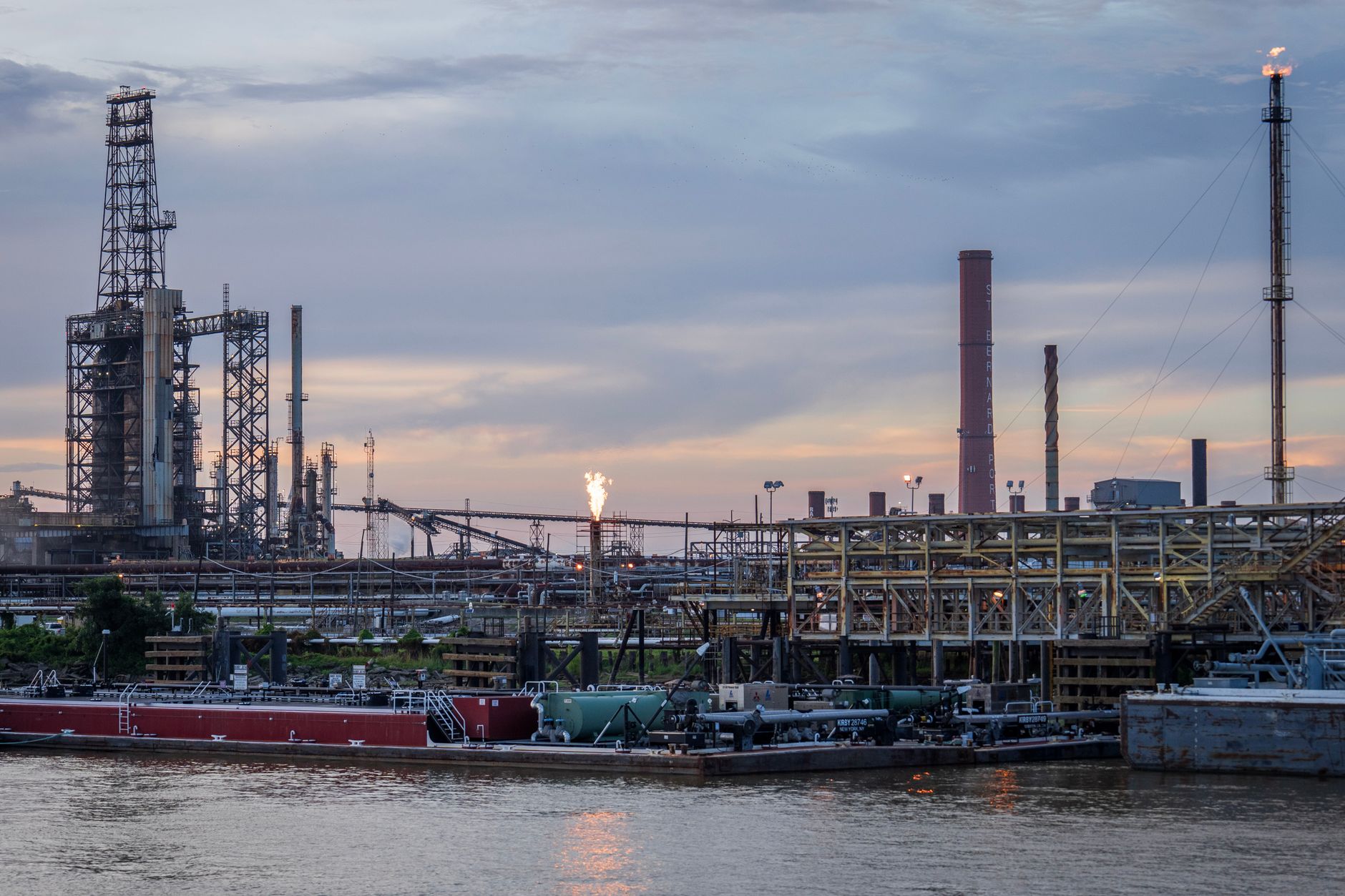
The Moscow refinery has been targeted before. Its location inside one of Russia’s most important urban and economic regions gives attacks on the facility additional significance beyond the direct physical damage. The plant is owned by Gazprom Neft and has processing capacity of roughly 245,000 barrels per day, according to Bloomberg reporting, making it an important supplier to Moscow and surrounding areas.
Russian authorities have frequently said their air-defence networks destroy most incoming Ukrainian drones. At the same time, repeated strikes against refineries and industrial facilities have demonstrated that some aircraft can travel hundreds of kilometres through Russian airspace and reach strategically important locations.
Sunday’s attack was notable not only for its reported numerical scale but also because hundreds of drones were directed toward the Moscow region. Previous Ukrainian attacks have periodically forced Moscow-area airports to restrict operations and have damaged buildings around the capital, but Russian officials characterised this wave as unprecedented.
Ukraine has increasingly relied on domestically produced long-range weapons as restrictions, supply considerations and political debates have affected how Western-supplied systems may be used against targets inside Russia. Ukrainian authorities have presented their own drone and missile programmes as an important means of striking military production, fuel and logistics networks supporting Russian forces.
For Moscow, the assault created a highly visible security event on the last day of a national vote. The capital is both Russia’s political centre and a major logistical hub, and the ability of Ukrainian systems to reach the area has challenged the perception that the effects of the war can be contained largely to border regions and occupied Ukrainian territory.
The Kremlin and regional authorities have repeatedly accused Kyiv of deliberately attacking civilian areas. Ukraine says its long-range operations are directed primarily at military and war-supporting infrastructure, although drone interceptions and crashes have caused civilian casualties and property damage inside Russia. Independent verification of individual targeting decisions is often difficult during large overnight attacks.
Sunday’s incidents again demonstrated that distinction. Ukraine publicly confirmed attacking the refinery, a major industrial facility, while Russian officials documented deaths, injuries and residential damage elsewhere in the Moscow region. The circumstances of individual impacts, including whether damage was caused by direct strikes, malfunctioning weapons or intercepted debris, remained unclear in several locations.
Elsewhere in the conflict, Russian forces continued their own large-scale aerial attacks against Ukraine. Ukrainian authorities reported civilian deaths during overnight Russian strikes, including casualties in the Kyiv region. The reciprocal attacks underscored the intensity of an air war that has continued alongside largely entrenched ground fighting.
The parliamentary vote itself does not determine the Russian presidency, which Putin secured for another term in the 2024 presidential election. It does, however, determine control of the chamber responsible for passing federal legislation, approving major elements of government policy and performing other constitutional functions.
The outgoing Duma has supported a broad range of wartime legislation, including measures connected with military mobilisation, defence spending, information controls and penalties related to public discussion of the armed forces. The composition of the new chamber will therefore shape the legislative environment during the next phase of the conflict and Russia’s broader economic and security policies.
For voters in Moscow, Sunday presented the unusual combination of normal election procedures and visible wartime disruption. Air-defence activity, refinery fires, damaged residential buildings and emergency evacuations unfolded as polling locations remained open across the capital and surrounding region.
Russian election officials maintained that the nationwide process was continuing, while emergency authorities concentrated on damage assessment and civilian safety. Ukraine, meanwhile, portrayed its strikes as part of a strategic campaign against infrastructure that supports Russia’s war effort.
As the final hours of voting progressed, the immediate political consequences of the attack remained uncertain. What was clear was that the war had again reached Russia’s capital region on a scale Moscow authorities described as unprecedented, placing the country’s parliamentary election and its continuing confrontation with Ukraine at the centre of the same day’s events.
Leave a Reply