European equities entered Tuesday’s session in a holding pattern, with investors reluctant to take large directional positions before a politically charged deadline set by U.S. President Donald Trump on Iran. The STOXX 600 was up just 0.1% in early dealings at 597.24 points, a muted move that captured the tone across the continent: not outright capitulation, but a distinctly defensive market waiting for the next headline from Washington and the Middle East. Germany’s DAX slipped 0.1%, the UK’s FTSE 100 added 0.1%, and sector leadership tilted toward businesses that either benefit from higher energy prices or are viewed as relatively insulated from an immediate growth shock.
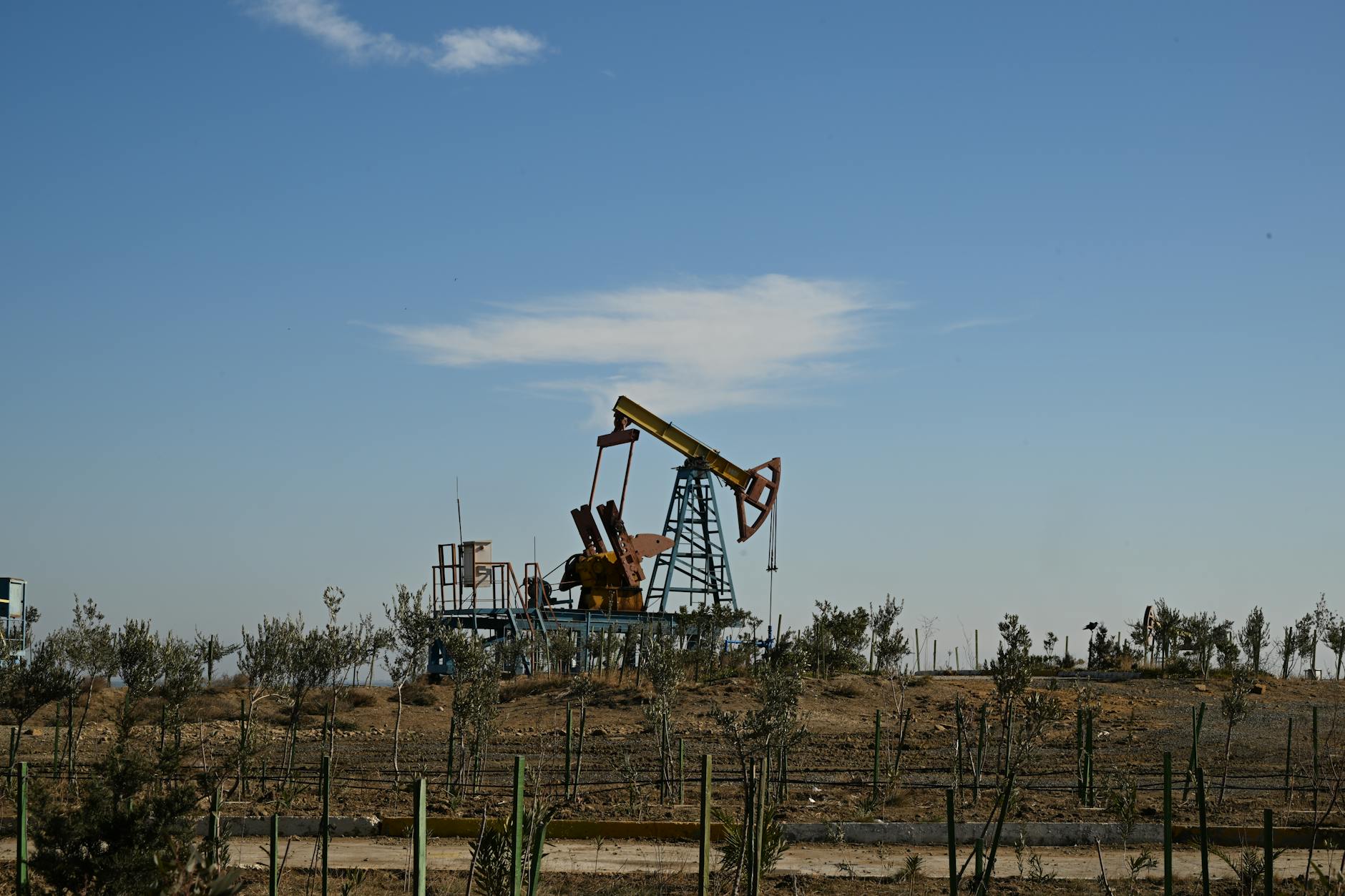
At the centre of investor attention was Trump’s stated deadline of 8 p.m. U.S. Eastern Time for Iran to agree to terms tied to reopening the Strait of Hormuz. The waterway is one of the most strategically important routes in the global energy system, and any prolonged closure or severe impairment raises immediate concerns over oil supply, shipping costs, refined-product pricing and inflation transmission into Europe. Reuters reported Brent crude at around $111.43 to $111.53 a barrel on Tuesday, a dramatic increase of more than 50% since the conflict began. In a market already alert to war-driven inflation risk, that surge has become the principal variable shaping European asset prices.
The flat performance of the headline index therefore concealed a more informative internal rotation. Europe’s energy sector rose roughly 0.8% as stronger crude prices improved earnings expectations for producers and integrated majors. Banks outperformed as well, rising about 0.7%, helped by the possibility that persistent inflation could delay or reduce the scope for monetary easing and keep rates higher than previously expected. By contrast, technology stocks underperformed, with ASML falling 4.2% after proposed U.S. legislation pointed to further restrictions on exports of advanced chipmaking equipment to China. The divergence highlighted how geopolitical risk was affecting not just commodity-sensitive equities, but also globally exposed growth names vulnerable to fresh policy intervention.
One of the day’s most eye-catching moves came from Universal Music Group, whose shares jumped 15.4% after a €55.75 billion takeover proposal from Pershing Square. In calmer conditions, such a transaction-driven rally might have dominated the European tape. Instead, it functioned more as a reminder that stock-specific catalysts were being filtered through a market environment overwhelmingly shaped by macro and geopolitical considerations. In other words, corporate dealmaking could still generate sharp moves, but it was not enough to shift the wider mood away from caution.
That caution was visible beyond equities. MarketWatch reported weakness in European government bonds as oil prices rose, with the UK 10-year gilt yield up 3.6 basis points, Germany’s 10-year yield up 1.9 basis points and France’s 10-year yield up 2.6 basis points. The move suggested investors were not treating the episode solely as a classic flight-to-safety event. Instead, higher energy prices were reviving concerns about inflation persistence and the possible erosion of real growth at the same time. For portfolio managers in Europe, that is the more difficult configuration: a geopolitical shock that pushes inflation-linked assets higher while also darkening the economic outlook.
The timing is especially awkward for the euro area because incoming business data already show stress from the war. In France, the March services PMI fell to 48.8 from 49.6, staying below the 50 threshold that separates expansion from contraction. S&P Global attributed weakness to softer client spending and increased caution among businesses, with the Middle East war adding to uncertainty. Italy’s services PMI also dropped to 48.8 from 52.3, its first contraction in 16 months, while its composite reading slid to 49.2 from 52.2. In both cases, companies reported a deterioration in demand and rising cost pressure, underscoring that the market reaction in equities was occurring against a backdrop of already weakening activity.

For European investors, the implication is straightforward: the market is no longer trading only on the immediate military or diplomatic outcome. It is also pricing the second-round effects of expensive energy on consumer demand, industrial input costs and central-bank strategy. Reuters cited ECB policymaker Dimitar Radev warning that inflation expectations may now rise more quickly than in earlier cycles because recent shocks have left a stronger imprint on price-setting behaviour. He said the ECB should be ready to respond if persistent energy-driven inflation and second-round effects begin to take hold. That message matters because any perception that the central bank may need to tighten, or at least stay restrictive for longer, changes how investors value both equities and bonds.
Markets also had to consider the asymmetric risk around the deadline itself. A diplomatic breakthrough, even a temporary one, could ease crude prices and trigger a relief move in cyclicals, transport and consumer-sensitive sectors. Europe has already shown how sharp that rebound can be: Reuters reported that on April 1, hopes of de-escalation drove the STOXX 600 up 2.5%, with banks and defence shares leading broad gains. But the opposite outcome remains more consequential. Analysts cited by Reuters warned that failure to secure a deal could expose Gulf energy infrastructure to retaliation and deepen disruption around Hormuz. In that scenario, Europe’s current flat session could look less like stability and more like a pause before repricing.
Trump’s own rhetoric has amplified that sense of event risk. According to the Associated Press, he has repeatedly delayed earlier deadlines for Iran while insisting Tuesday’s deadline is final. AP reported that Iran rejected a recent U.S.-backed ceasefire proposal and continues to seek broader guarantees tied to ending the conflict. The repeated shifting of deadlines has made markets wary of overreacting to any single statement, but it has also increased the premium investors place on optionality and liquidity. When political signalling becomes uncertain, flat index performance can coexist with substantial repositioning underneath, as funds reduce exposure to the most vulnerable parts of the market while keeping dry powder for a possible relief rally.
Global context reinforced the European mood. Reuters’ broader markets coverage said stocks stumbled and oil rose above $110 as the deadline approached, with investors increasingly focused on the risk that the conflict could produce a stagflationary mix of higher prices and weaker growth. That framing resonates particularly strongly in Europe, where the energy import bill transmits quickly into industrial costs and household budgets. It also helps explain why the day’s modest gain in the STOXX 600 did not signal confidence. Rather, it suggested the market was attempting to balance mutually exclusive scenarios: a late diplomatic compromise, a limited escalation, or a more severe extension of conflict that could impose a fresh macro shock across the region.
Another feature of Tuesday’s trade was the distinction between relative and absolute resilience. On a relative basis, European equities holding near flat while oil remained above $111 a barrel can be read as a sign of discipline. There was no cascade through the index, no broad-based collapse in financials, and no indiscriminate dumping of risk assets. Yet in absolute terms, the market’s tolerance should not be overstated. A stronger energy sector and isolated corporate stories masked fragility elsewhere, particularly in technology and in any businesses exposed to rising transport, feedstock or consumer financing costs. The composition of gains suggested hedging rather than conviction.
European investors are also confronting a narrowing policy cushion. Earlier in the year, softer inflation and uneven growth left room for expectations that major central banks might pivot more decisively toward easing. The current war-driven oil surge has complicated that path. Reuters reported that financial markets are pricing in multiple ECB rate hikes this year, with a first move expected in June, after the recent inflation shock. Whether or not that exact path materialises, the market logic is clear: when energy costs rise quickly and growth data soften simultaneously, policymakers have less room to support activity without risking further inflation persistence. That challenge increases the valuation pressure on rate-sensitive sectors and raises the bar for a sustained equity rebound.
There is also a practical, corporate-level reason why investors in Europe are highly sensitive to any disruption around Hormuz. Even businesses not directly consuming crude are exposed through freight, insurance, petrochemical inputs and power costs. Earlier Reuters reporting on euro zone manufacturing showed a jump in input prices and renewed supply snags linked to the war, with companies lifting selling prices at the fastest pace in more than three years. While manufacturing had shown pockets of nominal improvement, the underlying message was less reassuring: supply shocks can mechanically lift activity gauges while simultaneously worsening inflation and weakening confidence. Tuesday’s flat market reflected awareness that Europe’s economic fabric is vulnerable not merely to oil prices, but to the broader logistics and cost consequences of a prolonged regional conflict.
The market reaction also spoke to the importance of the deadline’s timing in the European session. Because Trump’s cutoff falls after the close of most major European cash markets, Tuesday’s trading became a form of pre-positioning. Investors could not wait for clarity, but neither were they prepared to commit aggressively ahead of an event with obvious overnight risk. That dynamic often produces exactly the kind of session Europe saw: subdued index movement, heavy sector rotation, cautious bond trading and elevated sensitivity to headlines in oil. The absence of panic, in this context, should not be confused with calm. It can just as easily indicate a market that has shifted into observation mode until the decisive political signal arrives.
By late morning in Europe, the working assumption was that the next major move in equities would likely come from outside Europe itself: a White House statement, an Iranian response, or new evidence that shipping flows through the Strait of Hormuz were either being restored or further constrained. Until then, investors appeared content to hold a defensive balance. Energy remained the clearest beneficiary, banks retained support from higher-rate logic, and technology bore the brunt of policy and growth anxieties. The result was a market that looked stable on the surface but was in fact transmitting a concentrated macro signal: Europe is trying to price a geopolitical event whose most immediate consequence is an energy shock, and whose broader consequence could be a renewed collision between inflation and growth.
For now, that is why the session mattered. European shares did not break down, but neither did they express confidence. The flat tape was a measure of suspension, not resolution. Investors were effectively saying that the next 24 hours could determine whether this remains a contained geopolitical premium or becomes a more durable macro dislocation for Europe. With oil already elevated, service-sector surveys weakening and central-bank vigilance rising, the threshold for market relief is high. Unless diplomacy produces a credible de-escalation, Europe’s equities may struggle to hold even this modest equilibrium.
Leave a Reply