Romania’s governing coalition collapsed on Friday after weeks of escalating internal disputes, pushing the country into a fresh period of political instability that immediately drew concern from European Union officials, investors, and regional security observers.
The crisis unfolded after coalition negotiations between the country’s main governing parties broke down over disagreements related to fiscal policy, ministerial appointments, anti-corruption reforms, and the pace of economic restructuring demanded under Romania’s obligations to Brussels. The prime minister formally submitted his resignation after coalition talks failed to produce a compromise, opening a new constitutional phase that could ultimately lead either to the formation of a caretaker government or to early parliamentary elections.
Romanian President Klaus Iohannis convened emergency consultations with parliamentary parties shortly after the government collapse was confirmed. The presidency stated that institutional continuity and fiscal stability would remain priorities during the transition period. Political leaders from both governing and opposition parties arrived in Bucharest for negotiations that analysts described as highly uncertain and potentially prolonged.
The coalition breakdown marks one of the most serious political disruptions in Romania in recent years and arrives at a sensitive moment for the country’s economy and regional diplomatic role. Romania has become increasingly important within the European Union and NATO because of its geographic position on the Black Sea, its logistical role in supporting Ukraine, and its participation in regional energy and defence initiatives.
The political fracture developed gradually over several months but intensified in recent days as coalition members publicly accused one another of undermining reform commitments and attempting to consolidate political influence ahead of future elections. Senior coalition officials exchanged criticism over budget policy, pension reform, tax proposals, and public sector spending, while disagreements also emerged regarding judicial appointments and anti-corruption oversight.
Opposition parties reacted quickly after the coalition collapsed, demanding immediate elections and accusing the former governing alliance of mismanagement and political opportunism. Several nationalist and populist political groups argued that the coalition had lost public legitimacy and claimed that Romania needed a broader political reset. At the same time, pro-European opposition figures warned against prolonged instability that could weaken Romania’s position within European institutions.
Financial markets responded cautiously to the political turmoil. Romania’s currency experienced moderate pressure during trading sessions, while government bond yields moved higher amid uncertainty over the future direction of fiscal policy. Economists warned that prolonged instability could complicate Romania’s efforts to reduce its budget deficit and maintain investor confidence.
Romania has faced persistent fiscal challenges in recent years, including inflation pressures, rising public spending, and concerns from Brussels regarding budget discipline. The country remains dependent on substantial European Union recovery and development funds, many of which are tied to governance reforms, administrative modernization, infrastructure investment, and fiscal benchmarks.
European Commission officials avoided direct intervention in domestic political negotiations but emphasized the importance of maintaining reform continuity and preserving institutional stability. EU representatives reiterated that Romania’s commitments under the Recovery and Resilience Facility remain critical for the disbursement of European funding.
Brussels has closely monitored political developments in Bucharest because Romania occupies a strategically significant position in the bloc’s eastern architecture. Since Russia’s invasion of Ukraine, Romania has expanded its logistical and military coordination with NATO allies while also becoming an important route for Ukrainian grain exports and regional energy transit operations.
The government collapse also raised questions about whether Romania could maintain momentum on infrastructure projects and defence modernization plans that have accelerated during the past two years. Analysts noted that political instability has historically delayed major procurement decisions and public investment initiatives in the country.
Security officials across Europe are paying particular attention to Romania’s domestic situation because of the broader geopolitical environment surrounding the Black Sea region. NATO has strengthened its military posture along the alliance’s eastern flank, and Romania has hosted increased allied military activity, including troop deployments, air defence operations, and logistical coordination facilities.

Diplomatic officials in Brussels and several European capitals privately expressed concern that prolonged political paralysis in Bucharest could complicate regional coordination during a period of continuing uncertainty related to the war in Ukraine. Although Romania’s core foreign policy orientation is not expected to change dramatically, instability inside government institutions could slow decision-making processes.
Political analysts said the immediate constitutional pathway remains uncertain. Under Romanian law, the president can nominate a new prime minister candidate who must secure parliamentary support. If multiple attempts fail, the country could move toward early elections. However, assembling a stable parliamentary majority may prove difficult because of deep divisions between parties.
Several scenarios are now being discussed within Romanian political circles. One possibility involves the construction of a temporary technocratic administration designed to stabilize markets and preserve EU funding flows until broader elections can be organized. Another scenario would involve the reassembly of a modified coalition arrangement with revised power-sharing agreements.
Public frustration with mainstream political parties has increased in recent years amid inflation concerns, corruption allegations, and dissatisfaction over living costs. Polling trends have shown rising support for nationalist and anti-establishment groups, reflecting patterns visible elsewhere across Europe.
The collapse of the coalition is therefore being viewed not only as a domestic political dispute but also as part of a broader European trend in which traditional centrist alliances are struggling to maintain voter cohesion amid economic pressure and political fragmentation.
Romania’s economic outlook remains closely connected to the political outcome. International investors are particularly focused on fiscal policy because Romania continues to maintain one of the larger budget deficits within the European Union. Credit rating agencies have repeatedly warned that failure to implement fiscal consolidation measures could increase borrowing costs and weaken long-term confidence.
Business organizations inside Romania urged political leaders to reach a rapid compromise in order to avoid disruptions to investment programs and EU-backed infrastructure projects. Industry groups warned that administrative uncertainty could slow transportation, energy, and digital modernization initiatives already underway across the country.
Romania has emerged as an increasingly important destination for manufacturing relocation and regional investment linked to broader European supply chain diversification efforts. Investors have viewed the country as a relatively stable production and logistics hub within southeastern Europe, benefiting from EU membership, labour availability, and geographic positioning.
However, analysts noted that sustained political instability could damage Romania’s competitive standing at a time when governments across Central and Eastern Europe are competing aggressively for industrial investment, defence manufacturing contracts, and strategic infrastructure financing.
The European Union’s relationship with Romania has evolved significantly during the past decade. Brussels had previously expressed concerns over corruption, judicial independence, and governance standards, but Romania has also become an important participant in European defence coordination and regional economic planning.
EU officials are expected to monitor whether ongoing political negotiations affect Romania’s compliance with governance benchmarks tied to European funding. Several reform milestones linked to judiciary modernization, public administration efficiency, and fiscal management remain under active review.
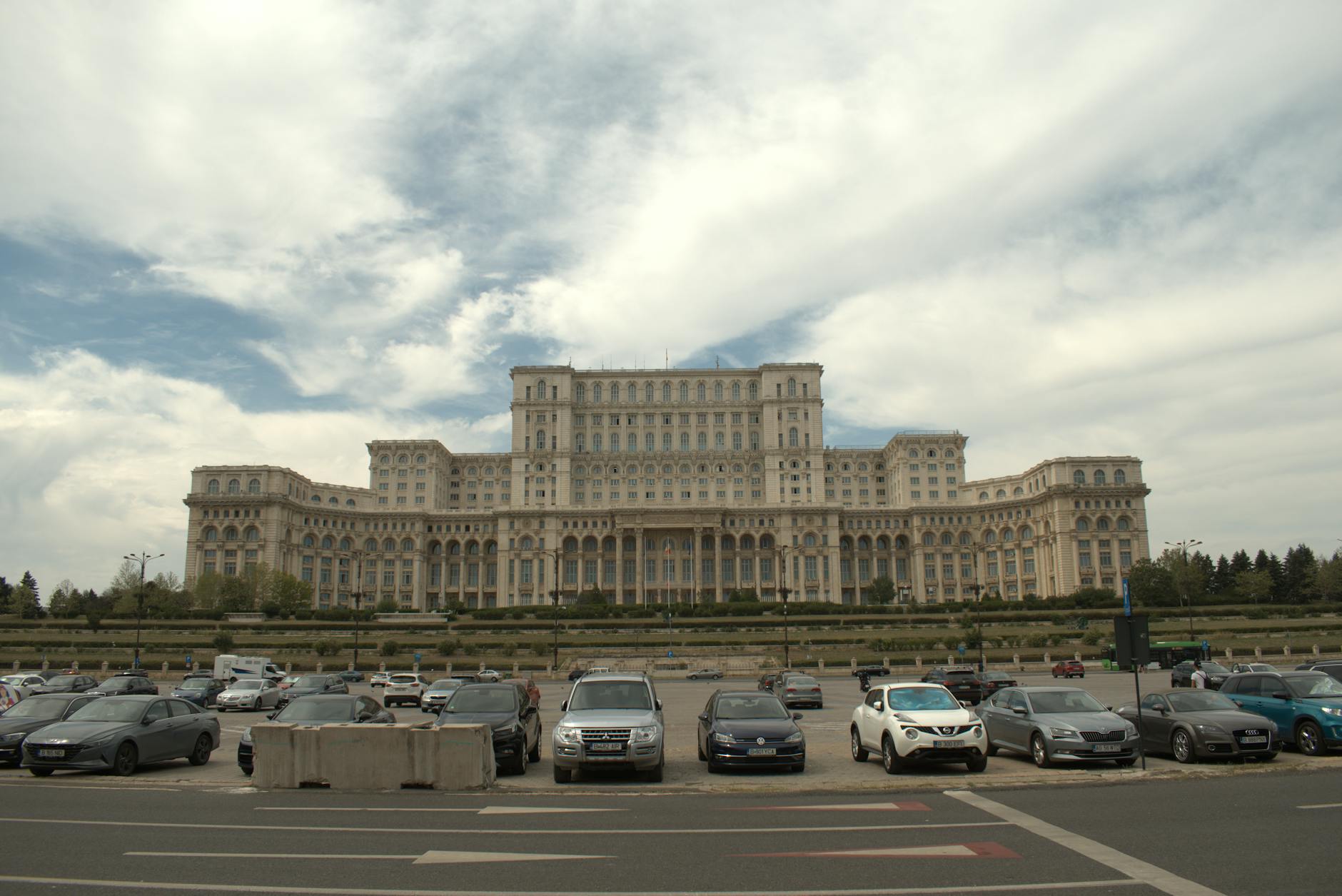
Within Romania itself, the coalition collapse has intensified public debate about the effectiveness of repeated power-sharing arrangements between ideologically different parties. Critics argue that coalition governments have often produced unstable compromises without resolving structural policy disagreements.
Supporters of coalition governance, however, contend that broad alliances remain necessary to isolate extremist political movements and maintain Romania’s pro-European strategic orientation. Some analysts warned that snap elections could strengthen more radical political forces if mainstream parties appear divided and ineffective.
Street demonstrations remained relatively limited on Friday evening, though several gatherings occurred in Bucharest and other major cities. Protesters expressed mixed concerns ranging from inflation and corruption to dissatisfaction with political elites more broadly. Police presence around government buildings was increased as a precaution.
International observers also noted the symbolic significance of the crisis occurring during a period when the European Union is attempting to reinforce unity around defence, economic resilience, and support for Ukraine. Romania has often been presented as a reliable partner in regional security coordination, making domestic instability particularly sensitive.
Energy policy may also become more complicated during the transition period. Romania has pursued expanded natural gas production projects in the Black Sea and has positioned itself as a potential contributor to regional energy diversification efforts aimed at reducing dependence on Russian supplies.
Any delays in regulatory approvals or investment coordination caused by political uncertainty could affect broader regional planning tied to energy security initiatives supported by Brussels and several neighbouring states.
Romania’s central bank signaled that it is monitoring financial market conditions closely. Officials emphasized that the banking sector remains stable and that institutional safeguards are functioning normally despite the political disruption. Economists nevertheless warned that prolonged uncertainty could place additional pressure on inflation expectations and borrowing conditions.
European diplomats stressed that Romania’s democratic institutions remain intact despite the political breakdown. Several officials noted that coalition collapses and government transitions are part of normal parliamentary processes, though they acknowledged concern about the timing and broader geopolitical environment.
The coming days are expected to be decisive for determining whether Romania can quickly form a replacement administration or whether the country will enter a prolonged period of caretaker governance and electoral campaigning.
For many European policymakers, the central question is not simply who will govern Romania next, but whether the country can maintain political continuity at a time when the European Union faces mounting strategic pressure on multiple fronts. The answer could shape investor confidence, regional coordination, and Romania’s standing within European institutions well beyond the immediate crisis.
Leave a Reply