NATO foreign ministers concluded talks in Helsingborg, Sweden, on Friday after a two-day meeting intended to prepare the political ground for the alliance’s leaders’ summit in Ankara in July, with defence spending, defence industrial production and support for Ukraine placed at the centre of the agenda.
The meeting, held on May 21 and 22, was the first NATO ministerial-level gathering hosted by Sweden, a symbolic marker of Stockholm’s entry into the alliance’s core diplomatic work. Swedish officials had described the event as an important part of the run-up to the Ankara summit, where leaders are expected to assess progress on the defence expenditure commitments adopted at last year’s summit in The Hague and review the alliance’s long-term support for Ukraine.
NATO Secretary General Mark Rutte said after the meeting that ministers had focused on how to make the alliance “stronger and fairer,” including by charting what he called a credible path toward the spending targets already agreed by allied leaders. The discussions were framed less as a broad strategic review than as a test of implementation: how quickly governments can convert political promises into deployable forces, ammunition stocks, air defence systems, logistics capacity and industrial output.
Rutte said ministers discussed steady and sustained increases in defence investment, stronger defence industrial production across the alliance and the need to ensure armed forces have the equipment required to deter any adversary and defend every ally. The emphasis reflected a wider NATO argument that budget commitments are no longer sufficient on their own unless they lead to usable capability and predictable production pipelines.
The Helsingborg meeting followed NATO’s previous agreement that allies should move toward defence spending equivalent to 5 percent of gross domestic product by 2035. That figure has become a central benchmark in the alliance’s debate over burden-sharing, particularly as European allies and Canada face pressure to assume more responsibility for conventional defence while the United States weighs competing commitments in Europe, the Middle East and the Indo-Pacific.
For Sweden, the host role carried domestic and alliance significance. The Swedish Government said before the meeting that hosting a high-level NATO event demonstrated Sweden’s ambition to be an active and constructive ally. Foreign Minister Maria Malmer Stenergard was expected to hold bilateral meetings alongside the ministerial programme, while Sweden worked with NATO on practical arrangements for the gathering.
The meeting also highlighted the importance of the Nordic-Baltic region in NATO’s current security planning. Sweden’s accession, following Finland’s earlier entry, has changed the alliance’s geography in the Baltic Sea and the High North. The Helsingborg venue placed the ministerial in a region where deterrence, maritime security, air defence and resilience against Russian pressure are now treated as core NATO concerns.
Ukraine was one of the principal issues before ministers. Ukrainian Foreign Minister Andrii Sybiha joined the gathering on Thursday for discussions with NATO counterparts on how to keep support for Kyiv substantial, predictable and sustainable. Rutte said the alliance was working to ensure assistance is based on Ukraine’s critical requirements as Russia continues its war and attacks on civilians and civilian infrastructure.
The Ukraine discussion was closely linked to the broader spending and production debate. NATO governments have repeatedly pledged political backing for Kyiv, but the war has exposed shortages in ammunition, air defence interceptors, long-range strike capabilities, repair capacity and procurement coordination. By placing Ukraine support alongside defence industrial production, ministers signalled that sustaining Kyiv and rebuilding allied inventories are now part of the same strategic problem.
The Ankara summit is expected to test whether allies can move beyond declarations and agree on credible delivery mechanisms. That may include clearer national spending trajectories, commitments to multi-year procurement, stronger coordination with industry and a more explicit division of responsibilities between European allies, Canada and the United States. The Helsingborg meeting did not produce a final summit communiqué, but it shaped the political terms under which leaders will negotiate in July.
Rutte also underlined the role of European allies and Canada in taking greater responsibility for conventional defence. NATO has increasingly framed this shift as a way to strengthen, rather than weaken, the transatlantic bond. The argument advanced by the secretary general is that a stronger European pillar inside NATO can make the alliance more sustainable by easing dependence on U.S. forces while preserving American leadership in key areas.
U.S. Secretary of State Marco Rubio met Rutte during the ministerial, with their discussions focused on defence spending, defence industrial production and the development of a stronger Europe in a stronger NATO. Rubio said ahead of the meeting that NATO must be good for all those involved and that allies needed a clear understanding of expectations. His comments reflected Washington’s continued insistence that European members should carry a larger share of the defence burden.
The U.S. presence in Helsingborg gave the meeting added political weight. Allies are preparing for Ankara at a time when questions about U.S. priorities, force posture and global commitments continue to shape European security planning. Even when Washington reaffirms its commitment to NATO, European governments are working on the assumption that they must increase readiness and capacity to reduce vulnerability to shifts in U.S. policy.
Defence industry was one of the most concrete themes of the ministerial. Rutte said foreign ministers agreed on the importance of increasing production across the alliance and argued that NATO performs best when allies work together. The subject is expected to remain central in Ankara because higher spending will not translate into stronger deterrence unless industry can produce at scale, governments can sign longer contracts and supply chains can withstand pressure.
The industrial challenge spans both conventional and high-end systems. NATO members face demand for artillery ammunition, missiles, drones, air defence, electronic warfare tools, secure communications and heavy equipment. The war in Ukraine has also shown that stockpile depth, maintenance systems and rapid replenishment are decisive factors in modern conflict. Ministers in Sweden therefore treated production capacity as a strategic issue rather than a purely economic or procurement matter.
The Helsingborg meeting also addressed wider developments affecting allied security, including the Middle East and risks to freedom of navigation. Rutte warned that threats to the Strait of Hormuz would affect global commerce and illustrated how security challenges in different regions are increasingly interconnected. The inclusion of Middle East risks alongside Ukraine and deterrence showed that Ankara’s agenda is likely to extend beyond the eastern flank, even while Russia remains NATO’s central security concern.
For allied governments, the difficulty is that simultaneous crises create pressure on resources and political attention. Support for Ukraine, reinforcement of the eastern flank, maritime security, the High North, cyber resilience and Middle East instability all compete for military capacity. NATO’s answer, as expressed in Helsingborg, is that allies must invest at a level that can meet multiple threats rather than rely on narrow contingency planning.
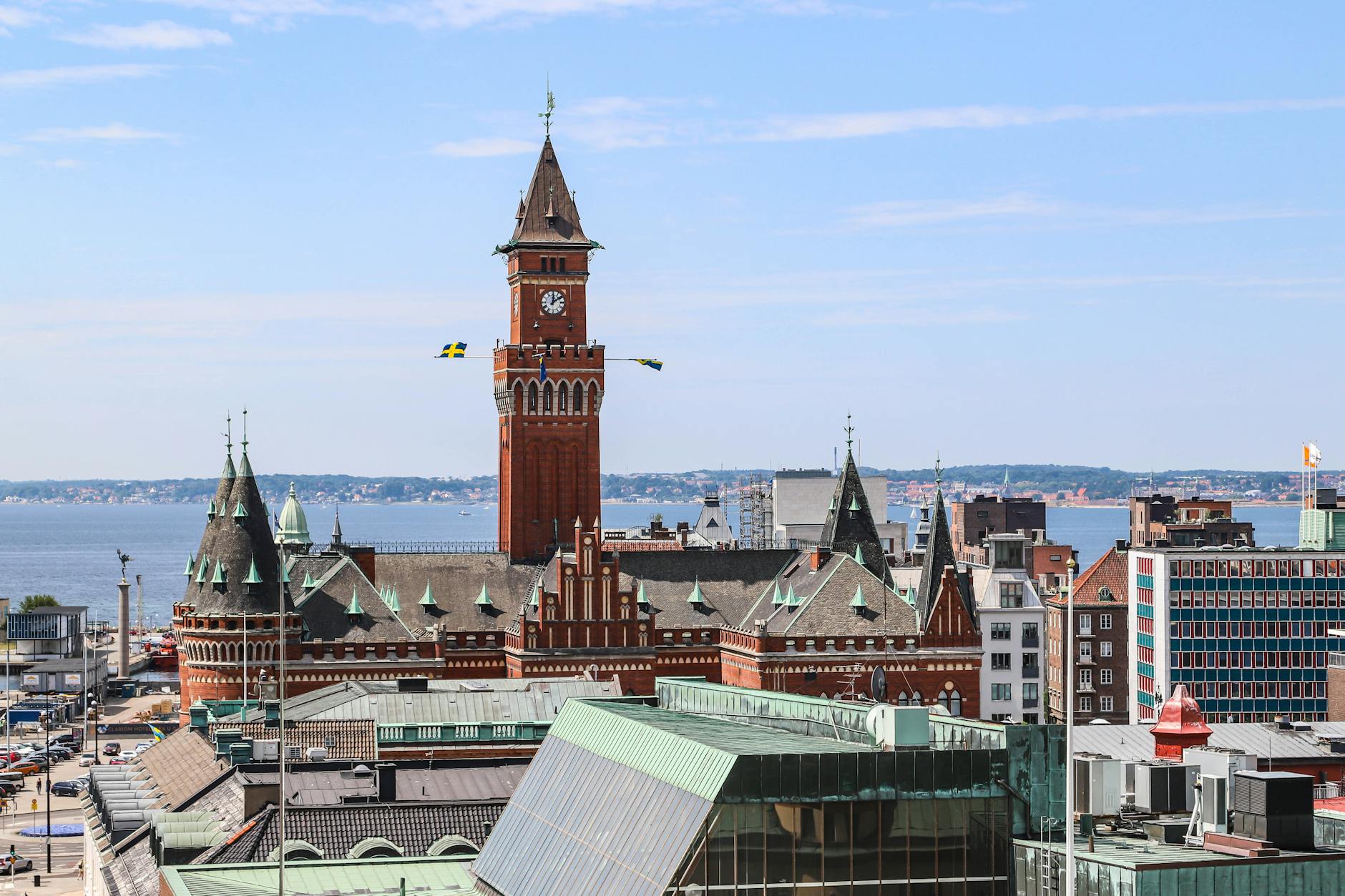
Sweden’s role as host also gave the meeting a strong message of alliance consolidation. Since joining NATO, Sweden has moved quickly to present itself not as a passive beneficiary of collective defence but as an operational contributor in the Baltic Sea region and the High North. The Helsingborg ministerial placed Swedish diplomacy at the centre of summit preparation and reinforced the country’s alignment with Nordic, Baltic and broader alliance priorities.
In the weeks before the meeting, Nordic-Baltic foreign ministers had already discussed priorities for both the Helsingborg session and the Ankara summit, including Ukraine, Russia’s threat to the region, NATO issues and developments in the Middle East. That preparatory work reflected how regional groupings inside NATO are seeking to influence the alliance’s broader agenda, particularly on Russia, resilience and support for Kyiv.
The ministerial’s timing also mattered. With the Ankara summit approaching in July, foreign ministers were among the last senior political groups able to shape the agenda before leaders meet. Their role was to identify points of convergence, reduce unresolved disputes and establish the language that heads of government may later adopt. In practice, that means testing how far allies are prepared to go on spending timelines, defence production and Ukraine assistance before decisions are elevated to summit level.
The discussions in Sweden did not remove the political complexity facing NATO. Some allies are already moving quickly to raise defence budgets, while others face fiscal constraints, domestic political resistance or competing social spending pressures. Defence industry expansion also requires long-term contracts, skilled labour, raw materials and regulatory adjustments. These issues will not be solved by a single summit, but Helsingborg made clear that they are now treated as central to alliance credibility.
The same applies to Ukraine. NATO members broadly support continued assistance, but sustaining that support over the long term requires predictable funding, coordinated procurement and political durability. The inclusion of Ukraine’s foreign minister in the Helsingborg discussions reinforced the message that Kyiv remains tied to NATO’s security planning even as the alliance continues to manage the political boundaries of its relationship with Ukraine.
Rutte closed the ministerial by saying the task ahead is to turn commitments into concrete results: increased investment, industrial production and continued support to Ukraine. That formulation is likely to carry into the Ankara summit, where leaders will be judged less by new declarations than by whether they can demonstrate measurable delivery.
The Helsingborg meeting therefore functioned as both a preparatory session and a political signal. It showed Sweden acting as a fully engaged NATO host, placed European responsibility and industrial capacity at the centre of alliance planning, and confirmed that Ukraine will remain a defining test of NATO unity. The Ankara summit will determine how far those priorities become binding commitments for the alliance’s next phase.
Leave a Reply