Thousands of Serbians rallied in Kraljevo on Sunday, keeping pressure on President Aleksandar Vucic one day after he promised to step down within weeks and clear the way for early presidential and parliamentary elections. The gathering in the central Serbian city showed that the country’s anti-government movement, led largely by students and civic groups, is not treating the announcement as the end of its campaign. Instead, protesters are framing it as a test of whether Serbia will see a genuine opening of political competition or a managed transition that leaves Vucic’s power network intact.
The rally followed Vucic’s announcement at a pro-government gathering in Belgrade on Saturday, where he told supporters that he would soon leave the presidency. His second and final presidential mandate was due to expire in mid-2027, and he has not given an exact resignation date. He also has not specified when parliament would be dissolved, a step required before early parliamentary elections can take place. That uncertainty has become central to the opposition response: demonstrators say the pledge must be matched by a clear electoral calendar, institutional guarantees and fair campaign conditions.
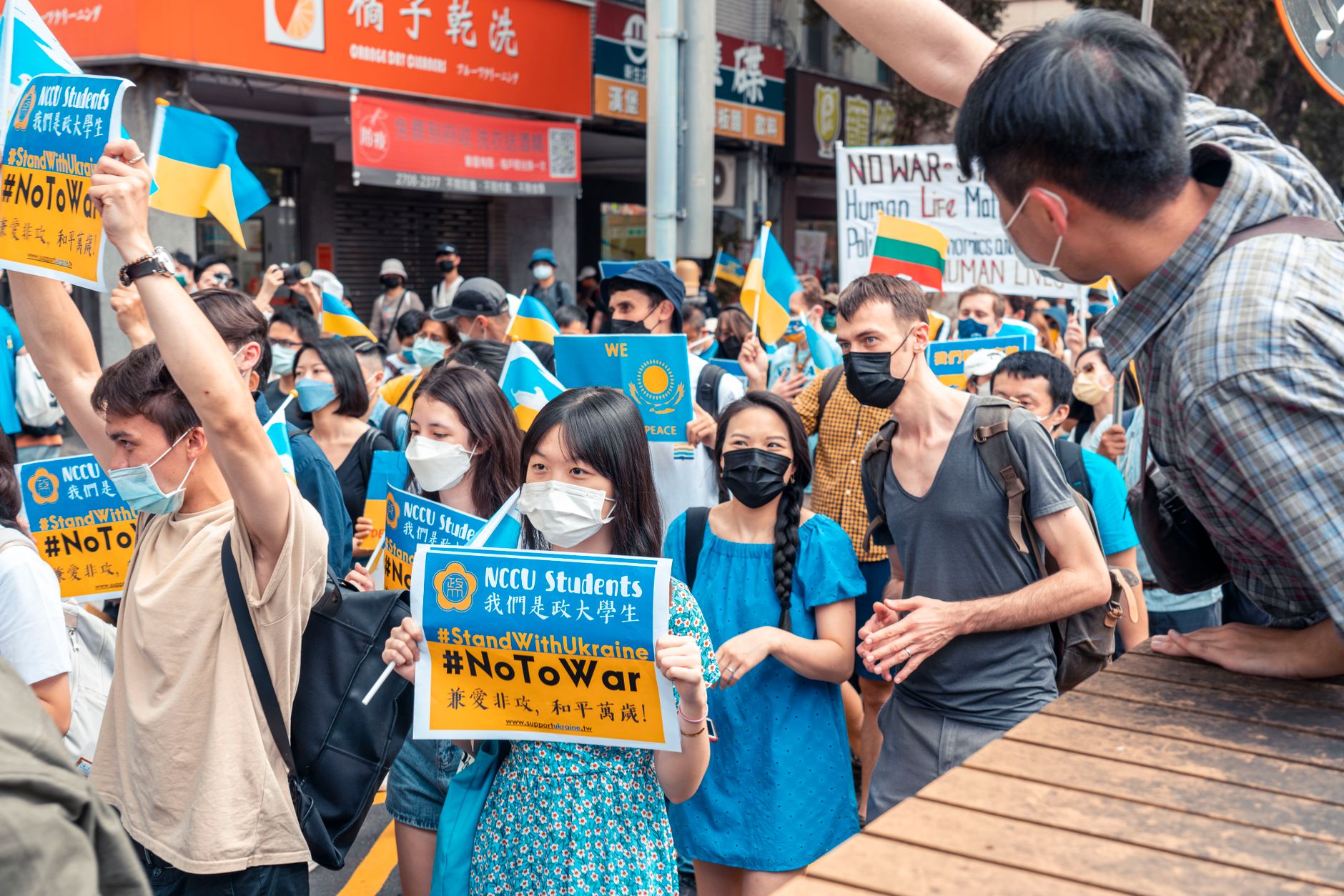
The Kraljevo protest took place in hot weather and drew demonstrators carrying Serbian flags and banners backing the student movement. The slogan “Students are winning” appeared at the rally, reflecting the confidence of activists who have sustained demonstrations for more than 18 months. The atmosphere was peaceful, but the political message was direct. Protesters said Vucic’s resignation promise did not answer their core concerns about corruption, accountability and the concentration of power under the Serbian Progressive Party, known as SNS.
The protest movement traces its immediate origin to the collapse of a concrete canopy at the railway station in Novi Sad in November 2024, which killed 16 people. The disaster became a national political flashpoint, with protesters and opposition parties arguing that it symbolised broader failures in public procurement, construction oversight and state accountability. Authorities have rejected claims that the tragedy proves systemic corruption, while Vucic has denied allegations that his administration has tolerated corrupt governance. The competing interpretations of the disaster now sit at the centre of Serbia’s political crisis.
Students, university staff, civic activists and opposition figures have expanded the demonstrations from memorial gatherings and campus actions into a national movement demanding early elections. The mobilisation is widely described as Serbia’s largest protest wave since the 2000 overthrow of Slobodan Milosevic. Its durability has changed the political calculation for Vucic, who has dominated Serbian politics for 12 years, first as prime minister and then as president. His announcement signals that the street pressure has imposed a cost, but not necessarily that the balance of power has already shifted.
Much of the scepticism among protesters centres on the possibility that Vucic could leave the presidency while remaining the country’s most powerful political figure. Serbia’s presidency is formally less powerful than the premiership, but Vucic has exercised substantial authority through his control of the SNS and his influence over state institutions. Analysts and opponents have suggested that he could seek to become prime minister if his party wins the next parliamentary election, while a loyal ally occupies the presidency. That scenario would preserve continuity in practice while presenting a formal change of office.
Vucic has previously not ruled out a return to party politics or a renewed role in government after the presidency. At Saturday’s rally, he said he would help the SNS in the coming campaign and proposed that the ruling coalition list be called “United Serbia.” He told supporters that the party would seek a convincing victory, casting the coming vote as a referendum on stability and national direction. His allies have also publicly backed the idea of him remaining politically active after his resignation from the presidency.
Opposition figures argue that the timing of the announcement shows Vucic is trying to regain the initiative before the protest movement can convert street pressure into an electoral challenge. Student-linked political actors and other opposition groups have said they intend to contest any early elections. Their central demand is not only that elections be held sooner, but that the process be conducted under conditions they view as credible, including access to media, protection for activists and transparent vote administration.
The government’s position is that the protests have been politically driven and destabilising. Vucic has accused protesters of trying to weaken the country and has alleged foreign involvement, claims rejected by protest organisers. His supporters argue that the SNS remains the only force capable of maintaining order, investment and Serbia’s diplomatic flexibility. The government has also promised measures addressing pensions, social support, healthcare and anti-corruption reform, seeking to shift the campaign terrain from protest accountability to governance and economic delivery.
The opposition and rights groups have accused Vucic and his allies of pressuring independent institutions, restricting media space and using state resources to maintain political dominance. Vucic and the SNS deny such allegations. The dispute over institutions is likely to define the pre-election period. If elections are called quickly, opposition forces will face the challenge of turning a decentralised protest movement into a coherent electoral vehicle. If the process is delayed or lacks clear rules, protests are likely to continue and could intensify.
The Kraljevo rally also demonstrated the geographic spread of discontent beyond Belgrade and Novi Sad. Protesters have repeatedly gathered in cities and towns across Serbia, a significant development in a political system where national power has often been reinforced through control of local party structures and public-sector networks. The student movement’s ability to draw support outside the capital has given it an unusually broad civic character and complicated efforts to dismiss it as a narrow opposition campaign.
At the same time, Vucic retains a powerful political machine. The SNS has governed through disciplined party organisation, control of local structures and a messaging strategy centred on stability, infrastructure and national sovereignty. The party can mobilise large rallies, and Saturday’s Belgrade event was designed to show that Vucic still commands a mass support base. The coming contest may therefore become a test between the institutional strength of the ruling party and the momentum of a protest movement that has altered Serbia’s public mood.
Serbia’s constitutional and electoral sequencing will now matter. A presidential resignation would trigger procedures for a new presidential vote, while an early parliamentary election would require dissolution of the National Assembly. Regular presidential and parliamentary elections had been due in 2027. By promising an earlier timetable but withholding exact dates, Vucic has created a transition period in which both the government and protesters are competing to define the terms of the next vote. The longer the uncertainty persists, the more likely the protest movement is to keep pressure on the streets.
The European Union is watching closely because Serbia’s internal political crisis intersects with its accession process. Serbia has been negotiating EU membership since 2014, but Brussels has repeatedly stressed the need for stronger rule of law, judicial independence, anti-corruption measures, media freedom and credible elections. EU officials have also raised concerns over the treatment of peaceful protesters. For Brussels, any Serbian election held under the current crisis will be assessed not only as a domestic political event but as a measure of democratic resilience in a candidate country.
Serbia’s foreign policy position adds further significance. Belgrade remains formally committed to EU accession while maintaining close ties with Russia and China. It has not fully aligned with the EU’s foreign policy stance on Russia, and Vucic has often presented himself as a leader capable of balancing competing external pressures. A leadership reshuffle, especially one in which he moves from the presidency to the premiership, could preserve that foreign policy posture. A more competitive political transition could open a wider debate over Serbia’s strategic direction.
The Kosovo issue also remains part of the broader European context. Serbia does not recognise Kosovo’s 2008 declaration of independence, and normalisation of relations is a core EU requirement for both Belgrade and Pristina. Domestic political instability in Serbia could slow dialogue, harden nationalist rhetoric or limit the ability of any government to make concessions. Conversely, a credible electoral process could give a future Serbian government a stronger democratic mandate for difficult negotiations. For now, the protest movement’s immediate focus remains domestic accountability rather than foreign policy realignment.
The student-led movement has so far avoided being absorbed fully by traditional opposition parties, which is one of its strengths and one of its vulnerabilities. Its strength lies in public trust among citizens who are sceptical of established political actors. Its vulnerability lies in the difficulty of turning moral authority and street mobilisation into a national electoral platform with candidates, policy positions and campaign infrastructure. Vucic’s pledge to resign may force that transition sooner than some organisers expected.
The coming days are expected to clarify whether Vucic will provide a formal resignation date and an election timetable. Protest organisers are likely to continue demanding guarantees on media access, voter-list integrity, campaign financing and protection from pressure on public employees and students. The government, meanwhile, is expected to present the early vote as a democratic response to public demands while accusing opponents of seeking instability. Both sides will try to claim the legitimacy of the election before the campaign formally begins.
For protesters in Kraljevo, the central message was that Vucic’s words are not enough. The movement wants a visible break with the political practices it blames for the Novi Sad disaster and for a broader erosion of public trust. Vucic’s supporters, by contrast, see his decision as a controlled and constitutional route through the crisis, preserving continuity while giving voters a say. Serbia is therefore entering a high-stakes interim period in which resignation, elections and street pressure will unfold together.
The political outcome remains uncertain. Vucic may succeed in transforming the crisis into an electoral contest that his party can win, potentially allowing him to retain decisive influence from another office. The protest movement may use the same opening to build the first serious challenge to his rule in more than a decade. What is already clear is that the pledge to step down has not demobilised the streets. It has shifted the struggle from whether Serbia will vote early to whether that vote will produce a meaningful redistribution of political power.
Leave a Reply