Ukrainian long-range drones struck a major warehouse operated by Russian online retailer Wildberries in Yekaterinburg, setting part of the facility on fire in one of the deepest attacks reported inside Russia during the war. The incident occurred early on 7 August and remained under assessment on 8 August as officials and the company issued details about the evacuation, damage and interruption to deliveries.
Yekaterinburg is the administrative centre of the Sverdlovsk region and one of Russia’s largest cities. Situated east of the Ural Mountains’ conventional boundary between Europe and Asia, it is approximately 2,000 kilometres from the Ukrainian front line and farther still from many plausible Ukrainian launch areas. Exact distance estimates vary according to the point of measurement and potential flight path, but the location is well beyond the western Russian regions most frequently affected by Ukrainian drones.
Sverdlovsk Governor Denis Pasler said Russian air-defence forces had shot down eight drones over the region. According to his account, three of the aircraft or their wreckage fell onto the roof of the Wildberries logistics centre. It was not immediately clear whether the building was struck by drones that remained under control, by falling debris after interceptions, or by a combination of both.
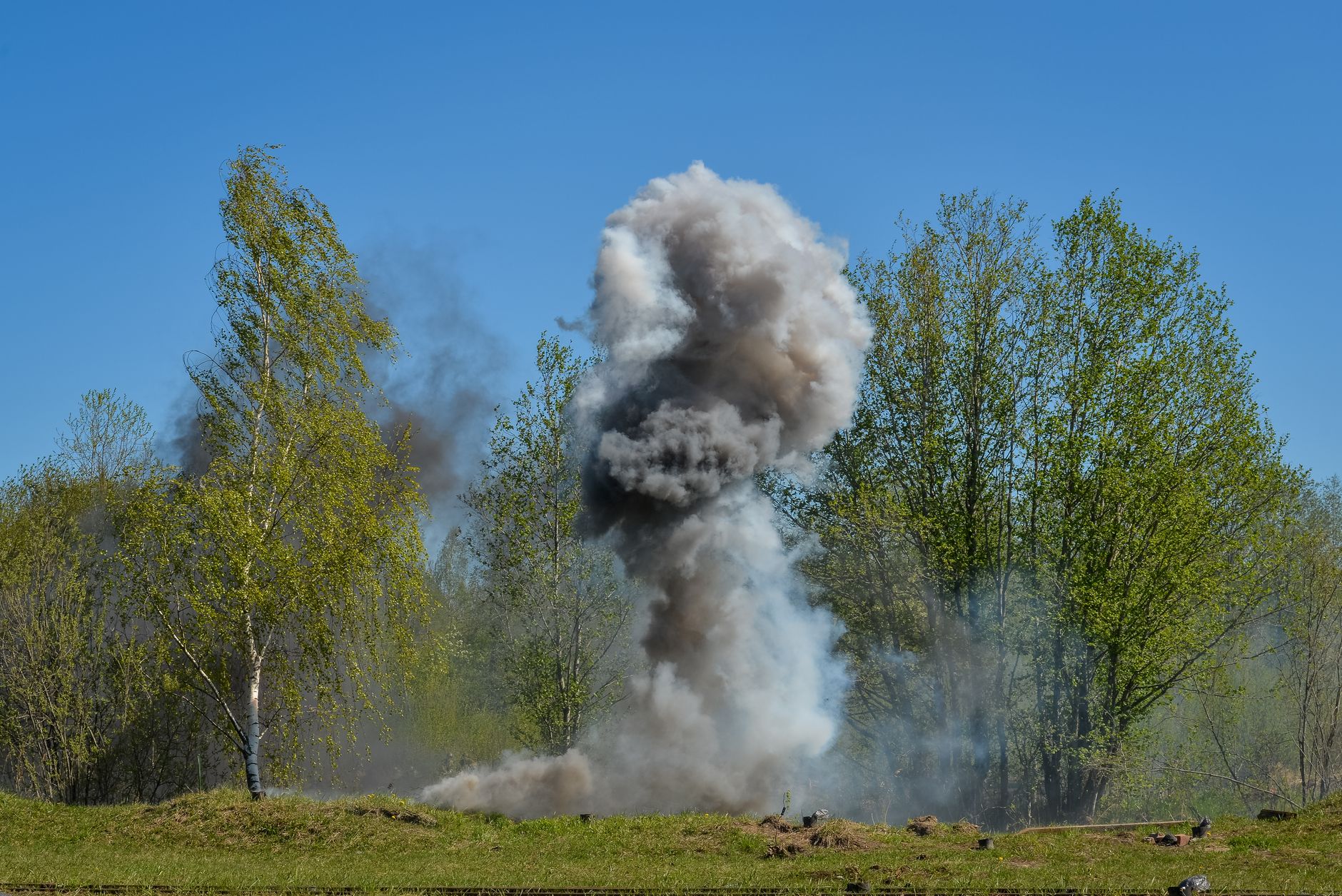
Wildberries confirmed that a fire had broken out at the site following the attack. Firefighters brought the blaze under control, the company said, adding that most goods stored inside had escaped damage. Photographs and video circulated on social media showed smoke rising above the complex, while other footage appeared to show employees leaving the building as defensive gunfire could be heard. The precise time, location and full sequence shown in every recording could not be independently authenticated.
Artyom Zhoga, the Russian president’s envoy to the Ural Federal District, said approximately 800 people had been evacuated from the warehouse. Regional officials and Wildberries reported no injuries. The absence of casualties was a significant element of the initial assessment because logistics centres of this scale can employ hundreds of people during an operating shift.
Wildberries temporarily restricted the processing of incoming supplies at the affected facility and redirected shipments to other hubs. The company said outbound operations and the condition of stored inventory were being assessed. Such rerouting can limit immediate disruption, although it can also increase transport distances, processing times and pressure on neighbouring distribution centres.
The Yekaterinburg complex is part of a nationwide network supporting Wildberries, Russia’s dominant e-commerce marketplace. The company connects sellers, warehouses, sorting facilities, couriers and local collection points across the country. Damage to a logistics centre can therefore affect businesses and consumers far beyond the immediate site, even when the majority of goods remain intact.
Russia’s Defence Ministry said its forces intercepted 203 Ukrainian fixed-wing drones over Russian regions and Russian-occupied Crimea between Thursday evening and Friday morning. The ministry’s figure covered a much wider operation than the attack in Sverdlovsk and could not be independently verified. Moscow generally reports drones it says were destroyed but releases limited information about aircraft that reach their targets or damage caused by falling wreckage.
The scale of the reported barrage illustrates the continuing evolution of the drone war. Ukraine has increasingly used large numbers of relatively inexpensive unmanned aircraft to challenge Russia’s air-defence network, compel dispersal of interceptors and reach targets far behind the battlefield. Some drones may be assigned to substantive targets, while others can complicate detection and interception by approaching along different routes or at different times.
Long-distance missions of this kind require aircraft with sufficient fuel, navigation capability and resistance to electronic interference. They also demand careful route planning across an extensive airspace covered by radar, electronic-warfare systems and mobile defensive units. Reaching Yekaterinburg does not by itself establish the launch point or model of drone involved. No independently verified evidence available immediately after the attack conclusively identified the aircraft type.

Ukrainian-linked channels claimed that domestically produced long-range drones carried out the operation. Russian and Ukrainian social-media accounts offered competing descriptions of the aircraft, but neither Kyiv nor Moscow released wreckage evidence sufficient for a definitive identification. Ukraine has developed several families of one-way attack drones, and their operational ranges, payloads and configurations continue to change.
Kyiv did not immediately provide a detailed official account of the Yekaterinburg strike. Ukrainian officials frequently withhold operational information about attacks inside Russia or acknowledge them only after Russian authorities and open-source researchers report damage. This practice is intended partly to protect intelligence, launch methods and personnel involved in long-range operations.
Ukrainian media described the attack as part of a wider campaign against Wildberries warehouses. Kyiv alleges that the retailer’s distribution system handles equipment or components that can serve Russia’s armed forces, including communications products, tactical equipment and items with possible military or dual-use applications. Wildberries remains overwhelmingly a civilian commercial platform, and publicly available reporting has not established that every warehouse targeted was directly supporting a specific military operation.
That distinction is important under international humanitarian law, which protects civilian objects from attack unless they become military objectives through their nature, location, purpose or use. The information released publicly after the Yekaterinburg incident was insufficient to make an independent legal assessment of the target. Ukraine’s allegation about military-related distribution and the warehouse’s extensive civilian role must therefore both be reported with attribution.
Repeated attacks on a commercial logistics network can have effects beyond the destruction of individual buildings. Warehouse operators may need to reduce concentrations of inventory, establish smaller replacement sites, install physical barriers and firefighting equipment, alter working hours or suspend operations during drone warnings. Those measures increase costs and can slow the movement of goods through an economy already adapting to sanctions, labour shortages and wartime expenditure.
The Moscow Times reported that satellite imagery reviewed by Reuters indicated that at least 1.18 million square metres of Wildberries storage capacity had been damaged or destroyed since the campaign began. The reported area represented more than one-fifth of the company’s total capacity. The estimate could not be independently reproduced from the information immediately available, but it suggests that the cumulative commercial impact may be more substantial than the limited damage reported in Yekaterinburg.
Wildberries subsequently announced plans to establish additional partner storage facilities, inviting property owners and tenants in Russian regions to offer premises for processing, storage and shipping. The move points to an effort to decentralise the network and restore lost capacity. A more distributed system may be harder to disrupt through attacks on a small number of large hubs, although it is generally less efficient than operating highly automated central warehouses.
For Moscow, the attack presents a difficult air-defence calculation. Russia must protect military bases, defence factories, energy installations, transport corridors, major cities and economically important civilian sites across the world’s largest national territory. Each new region demonstrated to be within Ukrainian reach expands the number of potential assets requiring radar coverage, electronic protection or interceptor systems.
Russia can reinforce selected locations, but moving additional air-defence batteries deep into the country can reduce the equipment available near the battlefield or around other strategic sites. Ukrainian planners appear to view that dispersion as one purpose of deep strikes, alongside physical damage. Even an attack producing a contained fire can force changes in Russian deployments if it demonstrates that a previously low-risk region is exposed.
The operational significance should nevertheless be measured carefully. The initial Russian and company statements indicated that the fire was contained, most stock survived and no one was hurt. There was no confirmed report that the facility had been destroyed or rendered permanently unusable. A successful penetration of airspace does not necessarily translate into proportionate economic or military damage.
The psychological and political effects may be broader. Yekaterinburg is far removed from the internationally recognised Russian-Ukrainian border, and residents there have generally experienced the conflict differently from communities in Belgorod, Kursk and other western border regions. Drone alerts, airport restrictions and visible fires in the Urals erode the assumption that distance provides reliable protection.
Temporary restrictions were imposed at Yekaterinburg’s Koltsovo Airport during the alert, according to Russian aviation authorities. Restrictions of this kind have become common during large Ukrainian drone operations, particularly around Moscow and airports in southern and western Russia. Even brief closures can delay passenger and freight services as aircraft hold, divert or await clearance to depart.
The strike also comes amid continuing Russian missile and drone attacks on Ukrainian cities, energy facilities, transport infrastructure and warehouses. Moscow has used Iranian-designed and domestically manufactured one-way attack drones in large nightly formations, often alongside cruise or ballistic missiles. Ukraine argues that strikes on infrastructure inside Russia are intended to reduce Moscow’s ability to sustain those attacks and its wider invasion.
Russia describes Ukrainian attacks on its territory as terrorism when civilian or commercial sites are affected. Kyiv rejects that characterisation and says it is acting in self-defence against the state that launched the full-scale invasion in February 2022. Both countries’ claims about individual targets, interception rates and damage regularly require independent scrutiny because military censorship and information operations limit immediate verification.
Ukraine’s ability to conduct deep strikes has developed despite restrictions on the use of some foreign-supplied weapons against targets far inside Russia. Domestically manufactured drones give Kyiv greater freedom in target selection because their use is not governed by the same conditions attached to certain imported missile systems. They are also generally cheaper to manufacture than cruise or ballistic missiles, permitting attacks in greater numbers.
Long-range drones carry smaller warheads and are slower than many missiles, however, making them vulnerable to interception and limiting their destructive power against hardened structures. Ukraine can partly compensate by concentrating several drones on one site or directing repeated attacks against the same network. The Yekaterinburg incident appears to fit this pattern of persistent pressure rather than a single decisive blow.
The immediate priority at the site was to inspect the roof, determine the structural condition of the warehouse and assess smoke, fire and water damage to stored goods. Investigators were also expected to examine debris to identify the aircraft and reconstruct how it penetrated regional defences. Russian authorities did not initially announce a timetable for the facility to resume full inbound operations.
Further independent evidence will be required to establish the extent of the damage, the number and type of drones that reached the complex, and whether the warehouse was selected because of a documented military function or as part of a broader campaign against Russian logistics. What is already clear is that a large workforce was evacuated and a commercial facility in one of Russia’s principal industrial regions was disrupted by an attack launched from an as-yet-undisclosed location.
The incident therefore combines limited reported damage with substantial strategic reach. It shows that Russian air defences can intercept multiple incoming aircraft while still failing to prevent debris or drones from reaching a major facility. For Ukraine, the operation demonstrates distance and persistence. For Russia, it adds another large city and another class of infrastructure to the expanding list of assets requiring wartime protection.
Leave a Reply