BELGRADE/KYIV — Ukrainian President Volodymyr Zelenskyy held talks in Serbia on Saturday as authorities in Ukraine reported that a new Russian missile and drone attack had killed four people, including a three-year-old child, in Kyiv and the surrounding region.
The violence gave immediate urgency to Zelenskyy’s first official visit to Serbia, a European Union candidate country that has sought to maintain working relations with both Moscow and Kyiv. Serbian President Aleksandar Vučić formally welcomed the Ukrainian leader at the Palace of Serbia in Belgrade before the two presidents held discussions and appeared at a joint press conference.
Ukrainian authorities said the overnight Russian barrage involved six ballistic missiles and more than 150 drones. Ukraine’s air force reported that 135 drones were intercepted or otherwise neutralised, but the ballistic component of the attack again exposed gaps in the country’s defensive coverage. The information could not be independently verified immediately, and Russian authorities did not provide a detailed public account of the individual strikes reported in Kyiv and the surrounding communities.
The heaviest loss of life was reported in Pukhivka, a village in the Brovary district east of the capital. Zelenskyy said a three-year-old boy was killed together with his grandmother and grandfather. The child’s parents and his 15-year-old brother were among those wounded, as was a neighbour who had gone to help the family. The injured were taken to hospital.
A fourth person was killed in Kyiv, according to the city’s military administration. At least four people were reported wounded in the capital, bringing the preliminary number of injured across Kyiv and its surrounding region to at least eight. Casualty figures from major aerial attacks can change as rescue teams search damaged buildings and local administrations consolidate reports.
Officials said homes, vehicles and outbuildings were damaged in the Brovary district. A fire also broke out at a non-residential building. In Kyiv, emergency services reported fires at two garages and a commercial building in the southern Holosiivskyi district, while another blaze was extinguished at an enterprise in the northern Obolonskyi district.
Air-raid warnings began shortly after midnight as Ukrainian monitoring systems detected waves of drones approaching the capital region. Explosions were reported in Kyiv at about 00:45 local time, followed by further blasts. Another round of explosions was heard around 03:00 after warnings that ballistic missiles were heading towards the city.
The attack was the latest in an intensified series of Russian aerial operations against Kyiv and neighbouring communities. Ballistic missiles present a particularly difficult challenge because their speed and flight profile leave little time for detection and interception. Ukraine relies heavily on a limited number of advanced systems, particularly the United States-designed Patriot, to protect cities and critical infrastructure from such weapons.
Kyiv has repeatedly appealed to its partners for more interceptor missiles and additional launch systems. Ukrainian officials say the expanding scale of Russia’s attacks is consuming defensive ammunition faster than it can be replaced. Drones can often be engaged by a wider mix of weapons, electronic warfare and mobile air-defence teams, but ballistic targets require specialised capabilities that remain scarce.
Zelenskyy linked the deaths to the wider diplomatic struggle over the war, arguing that Russia was relying on missiles and drones rather than pursuing a settlement. He renewed his appeal for international pressure on Moscow and stronger protection for Ukrainian population centres. Russia maintains that its forces strike military and military-related targets, but repeated attacks have caused extensive civilian deaths and damage throughout the full-scale invasion.
The overnight casualties formed a stark backdrop to the official ceremonies in Belgrade. Serbia occupies an unusual position in Europe’s response to the war. Its government supports Ukraine’s sovereignty and territorial integrity, has voted for United Nations resolutions condemning the invasion and has provided humanitarian assistance. At the same time, Belgrade has not joined the EU sanctions imposed on Russia and continues to emphasise its historic, cultural and economic ties with Moscow.
That balancing policy has placed Serbia under sustained pressure from competing directions. EU institutions expect candidate countries gradually to align their foreign and security policies with those of the bloc. Russia, meanwhile, retains political influence in Serbia and remains important to parts of the country’s energy system and public debate. Vučić has consequently avoided a complete break with Moscow while increasing diplomatic engagement with Ukraine.
The Serbian president said after the talks that his country fundamentally supported the territorial integrity of every United Nations member state, including Ukraine. He also thanked Kyiv for maintaining its position in support of Serbia’s territorial integrity in relation to Kosovo, whose independence Ukraine does not recognise.
Questions of sovereignty have therefore provided an important point of connection between the two governments despite their different relationships with Russia. Zelenskyy reiterated that Ukraine respected Serbia’s territorial integrity and international law, while expressing appreciation for Belgrade’s recognition of Ukraine’s internationally accepted borders.
Vučić said the talks covered the European paths of both countries and promised Serbia’s support for Ukraine’s integration ambitions. Zelenskyy, in turn, said Ukraine backed an acceleration of Serbia’s route towards EU membership. Both leaders presented enlargement as a strategic process that should provide credible signals to European states seeking membership.
The meeting also produced an extensive economic agenda. The presidents discussed infrastructure, energy, agriculture, food security and the possible conclusion of a free-trade agreement. Zelenskyy said negotiations on that agreement were progressing and expressed hope that preparations could be completed by the end of 2026.
According to the Serbian government, trade between the countries reached approximately $450 million in 2025. Trade during the first six months of 2026 was reported at about $321 million, indicating further growth if the pace is maintained. Vučić identified agricultural products and raw materials as areas with additional potential, including Ukrainian soybeans, soybean meal, flax seeds and iron ore, as well as Serbian exports such as fruit seedlings, sunflower seeds and baby food.
Infrastructure cooperation was another central subject. The two sides discussed transport connections, railways, ports and the possible participation of Serbian and Ukrainian companies in joint projects. Zelenskyy said future reconstruction projects in Ukraine could create and preserve jobs in both countries. The scale of Ukraine’s eventual rebuilding requirements makes access to such projects commercially important for European construction, engineering, transport and energy businesses.
Energy assistance carries more immediate significance. Russian strikes have repeatedly damaged Ukrainian generation, transmission and distribution facilities, increasing the country’s need for replacement equipment and emergency supplies. Vučić said Serbia would seek to offer support in the energy sector and provide devices needed by Ukraine, particularly ahead of winter.
Serbia also plans a new humanitarian package focused on medicine and health needs. Zelenskyy thanked Vučić and Serbian citizens for their assistance to Ukrainians, including those who have found temporary protection in Serbia. The Ukrainian president later met Serbian Prime Minister Đuro Macut to discuss transport and infrastructure projects, energy support and continued humanitarian assistance.
The governments signed a memorandum on cooperation in animal health and food safety during the visit. Although less politically prominent than the discussions on sovereignty and the war, the agreement reflected an effort to broaden practical ties and establish regular institutional cooperation. Food security has become an important element of Ukraine’s diplomatic agenda because the country remains a major agricultural producer despite wartime disruption.
Neither side announced a major shift in Serbia’s position on sanctions against Russia. Belgrade’s refusal to adopt the EU’s restrictive measures remains one of the clearest differences between Serbia and most other European governments. Vučić has argued that Serbia must protect its national interests while preserving diplomatic flexibility, whereas critics say the policy undermines alignment with the EU.
Zelenskyy’s decision to visit despite those differences suggested that Kyiv sees value in sustained engagement rather than isolating Belgrade. Serbia’s recognition of Ukraine’s territorial integrity, humanitarian contributions and prospective economic assistance provide areas for cooperation even while the two governments remain divided over sanctions and Serbia’s wider relationship with Russia.
The visit also had a broader Balkan dimension. Russia has historically drawn on religious, cultural and political links with Serbia to maintain influence in southeastern Europe. Ukraine’s direct engagement with Belgrade challenges the view that the region is divided into fixed pro-Western and pro-Russian camps. It also allows Kyiv to focus attention on the principle of territorial integrity, a subject with particular political weight in Serbia.
For Vučić, hosting Zelenskyy offered an opportunity to demonstrate that Serbia’s relations with Moscow do not prevent dialogue with Ukraine. It also supported Belgrade’s effort to present itself as an independent actor capable of maintaining contacts across geopolitical divisions. The Serbian government emphasised that the last visit by a Ukrainian president had taken place eight years earlier, underlining the diplomatic importance attached to the occasion.
No peace initiative or mediation framework was announced. Zelenskyy said the presidents discussed diplomatic options for ending the war, but the public statements concentrated on bilateral relations, economic projects, humanitarian support and European integration. The absence of a specific proposal reflected the continuing gulf between the positions of Kyiv and Moscow and the limited leverage available to Serbia.
Ukraine insists that any settlement must protect its sovereignty and cannot legitimise territorial acquisition through force. Russia continues to occupy Ukrainian territory and has tied negotiations to demands Kyiv regards as unacceptable. Against that background, Zelenskyy has pursued diplomatic contact with governments that retain channels to Moscow while continuing to seek military assistance from Ukraine’s principal Western partners.
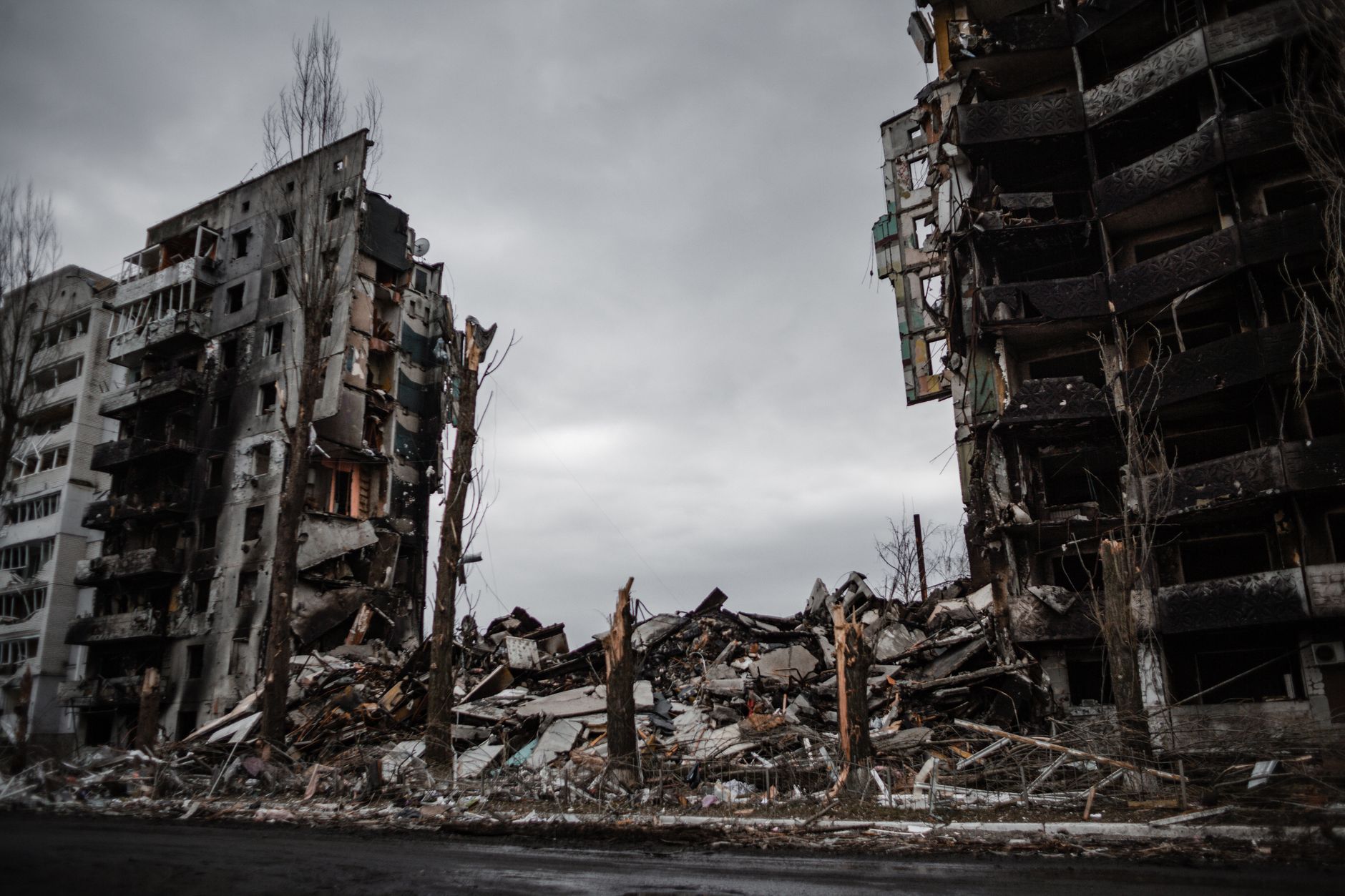
The latest deaths near Kyiv reinforced the central contradiction facing those diplomatic efforts: political discussions are continuing while Russian aerial attacks cause new casualties and destruction. The killing of three generations of one family in Pukhivka was cited by Ukrainian officials as evidence that civilian communities remain exposed even in the heavily defended capital region.
Ukraine’s reported interception of most of the incoming drones also illustrated both the strengths and limitations of its current defences. Large numbers of comparatively inexpensive unmanned aircraft can be used to exhaust defensive systems, identify positions and create multiple threats before or alongside missile launches. Even when most drones are stopped, a small number of successful strikes—or ballistic missiles that evade interception—can inflict severe damage.
For Kyiv, the diplomatic objective in Serbia was therefore closely connected to the military emergency at home: to secure political backing, material assistance and stronger economic relationships wherever possible. For Belgrade, the meeting was an attempt to deepen ties with Ukraine while preserving its distinctive foreign-policy position.
The immediate outcomes were modest but concrete: reaffirmed mutual recognition of territorial integrity, plans for humanitarian and energy assistance, work towards expanded trade, discussion of infrastructure and reconstruction, and a new sectoral memorandum. Whether the visit produces a lasting political realignment will depend on Serbia’s subsequent decisions, particularly its alignment with EU foreign policy and the implementation of promised assistance.
As Zelenskyy completed his meetings in Belgrade, emergency crews continued working at strike sites around Kyiv. The contrast between the ceremonial welcome in Serbia and the destruction in Pukhivka captured the dual nature of Ukraine’s position: a government conducting European diplomacy while its population remains under sustained aerial attack.
Leave a Reply