PARIS, October 17, 2026 — French President Emmanuel Macron vowed to prosecute those responsible for widespread violence after hundreds of thousands of demonstrators took to the streets across France on Saturday to protest soaring living costs, economic inequality and declining public services. What began as a nationwide mobilization involving students, trade unions and anti-government campaigners developed into serious disorder in several major cities, with police confronting masked groups, shops being looted and public buildings attacked.
Macron condemned the destruction in a statement published on social media late Saturday, declaring that there was no place for violence in the French Republic. He promised that individuals responsible for vandalizing government offices, attacking businesses and looting public buildings would face prosecution and punishment. The president also expressed support for law enforcement personnel, while emphasizing that violent groups should not prevent peaceful demonstrators from expressing legitimate grievances.
The Interior Ministry estimated that approximately 550,000 people participated in 110 marches nationwide. Organizers, including the CGT labor union and student organizations, placed attendance closer to 800,000. The competing estimates nevertheless pointed to one of the country’s largest recent protest mobilizations, reflecting dissatisfaction extending beyond a single political organization or demographic group.
The security situation deteriorated throughout the day. Earlier reports from Interior Minister Laurent Nuñez indicated approximately 400 arrests, but the scale of the police operation expanded as disturbances continued into the evening. In a later update reported by Agence France-Presse, Prime Minister Sébastien Lecornu said 1,200 people had been arrested and 150 police officers injured. The different totals reflected successive reporting periods rather than separate protest events.
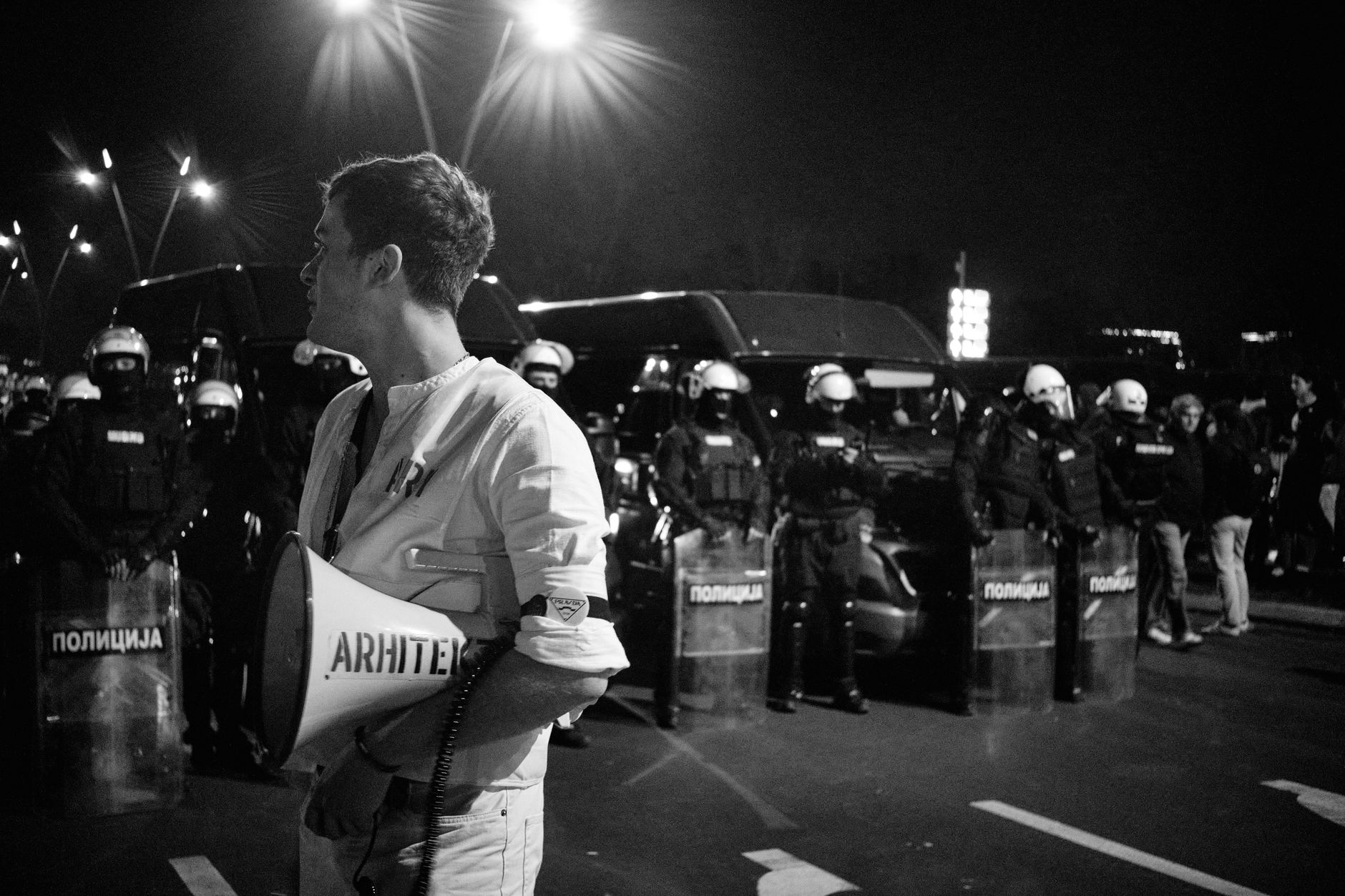
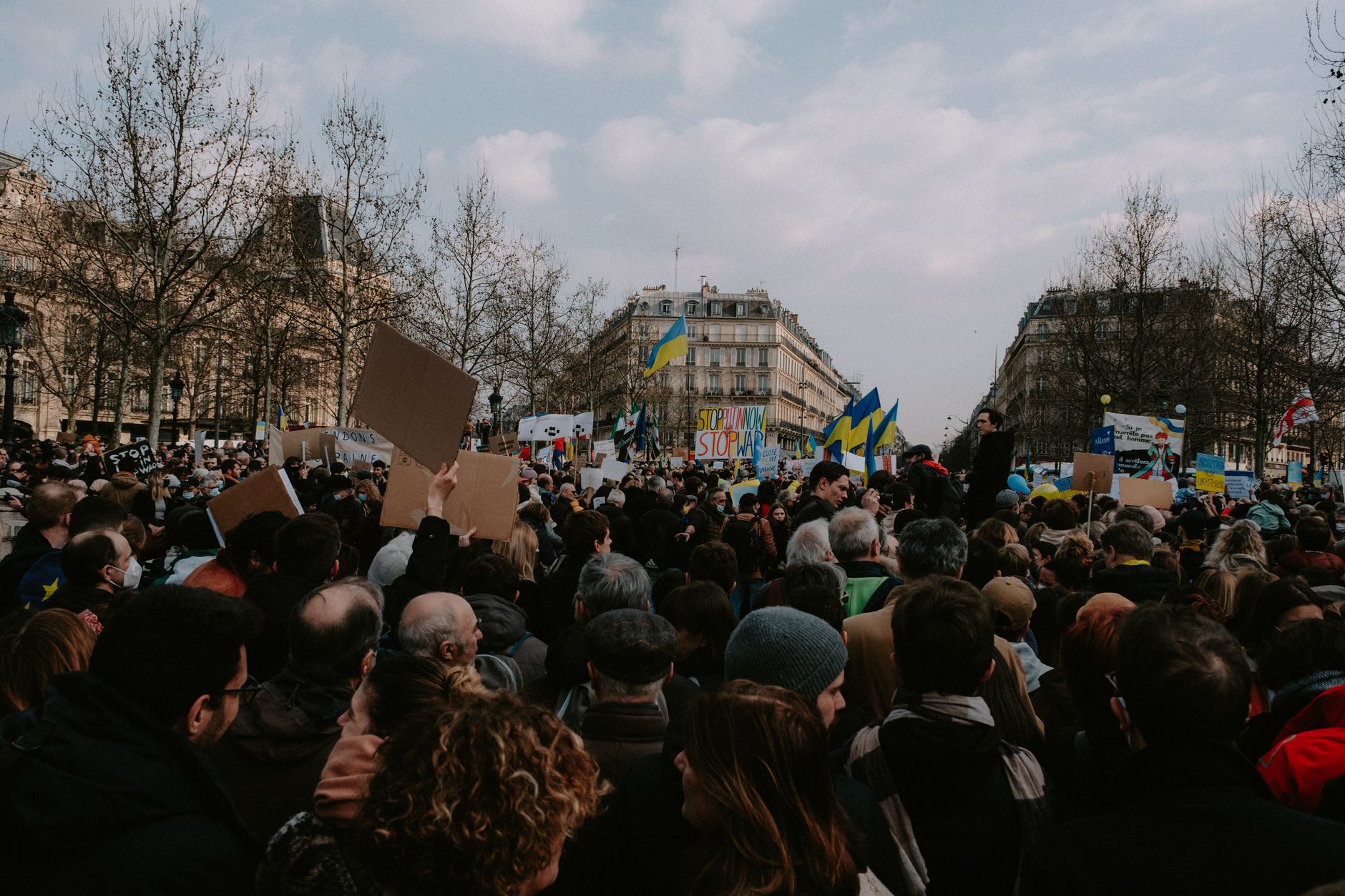
Although the disturbances attracted extensive attention, the majority of participants took part in peaceful demonstrations. Marchers carried French flags, sang the national anthem and demanded improvements in wages, pensions, education and public services. Authorities and witnesses described a contrasting pattern on the fringes of several rallies, where masked individuals confronted police and targeted commercial properties.
In Paris, the first significant confrontations occurred around Place de la République, where groups of demonstrators threw fireworks, paving stones and other projectiles toward security personnel. Police responded with tear gas and water cannon as burning vehicles and barricades sent thick smoke across nearby streets. Officers attempted to prevent violent groups from moving toward sensitive government locations while allowing authorized demonstrations to proceed.
The approved Paris march moved toward the northwest of the capital, while separate groups attempted to gather in restricted areas. Authorities had already prohibited demonstrations around several politically sensitive locations, including parts of the Champs-Élysées and areas near the presidential palace. Numerous Paris Métro stations were closed at police request, affecting transport access around major government buildings and central commercial districts.
Property destruction spread beyond the initial confrontations. Parked cars, rubbish containers and a newspaper kiosk were set on fire, while shopfronts were smashed and merchandise stolen. Witness accounts described groups moving through commercial streets and attacking businesses after police lines shifted. AFP reported that some looters operated in small, apparently coordinated groups, using masks and gloves and disabling security cameras before breaking into stores. The reported targets included clothing retailers, electronics shops, pharmacies, supermarkets and luxury businesses.
Paris Mayor Emmanuel Grégoire described extensive damage in parts of the capital. The destruction raised immediate concerns about public safety, business losses and the financial consequences of restoring damaged infrastructure. It also complicated the distinction between organized political demonstration and opportunistic criminal activity, with government officials arguing that groups involved in looting were exploiting protests primarily intended to express economic and social demands.
In Lyon, one of the most serious incidents involved a tourism office in the city center. The building was attacked and set on fire during disturbances around Place Bellecour. Police used tear gas and water cannon as clashes unfolded, while emergency crews encountered difficulties reaching the burning property. Associated Press reporting indicated that approximately 20,000 people had joined demonstrations in Lyon, although the violent incidents involved groups operating within or alongside the broader mobilization.
Marseille experienced attacks on municipal property after demonstrators forced their way into City Hall. According to EFE, dozens entered the building’s lobby, damaging property and leaving graffiti before being removed by police. A bust of Marianne, the symbolic representation of the French Republic, was damaged during the incident. Businesses and a municipal police facility were also targeted elsewhere in the southern port city.
Marseille Mayor Benoît Payan condemned the attack on civic institutions and said Macron had promised additional security reinforcements, including riot-police units. Payan argued that the destruction undermined legitimate social demands and risked reinforcing political narratives centered on insecurity. His response illustrated how local authorities faced pressure both to protect public buildings and to maintain conditions in which peaceful gatherings could continue.
In Limoges, violence caused extensive damage to the historic town hall. Flames spread through the building after masked individuals reportedly entered and set fires. AFP subsequently reported that the structure, more than 140 years old, had been largely destroyed. The attack made Limoges one of the most prominent examples of the day’s destruction of municipal property and added a significant heritage dimension to the consequences of the unrest.
Other cities also experienced attacks on government premises. Lille’s city hall was targeted, while a police facility in Bordeaux suffered vandalism. Authorities reported disturbances in Rennes, Toulouse, Montpellier and Grenoble, alongside attempted intrusions at municipal buildings elsewhere. Looting was also reported in Nantes, Nice and Strasbourg. In Rouen, investigators examined a fire that damaged a university building, although the precise circumstances and any criminal responsibility had not been established in the initial reporting.
The geographical spread demonstrated that the disturbances were not confined to Paris or a single center of political activism. They affected major metropolitan areas, regional cities and smaller municipalities, creating simultaneous demands on police, firefighters and emergency services. The range of incidents also made it difficult to establish a comprehensive national picture while events were still unfolding.
The underlying demonstrations reflected several overlapping grievances. Rising food, energy and fuel prices have placed additional pressure on household budgets, while concerns about purchasing power have intensified demands for higher wages and pensions. Protesters also criticized inequality and what they viewed as insufficient government protection for lower-income households. The CGT supported the mobilization, calling for improved incomes, lower prices and stronger public services.
Education grievances formed another important element of the movement. Student groups had been organizing demonstrations and school blockades since September, protesting conditions in secondary schools and broader shortcomings in the education system. Saturday’s mobilization brought these groups together with workers, union activists and older anti-government campaigners, expanding the demonstrations beyond their original student-centered base.
The demonstrations also drew participants associated with the Yellow Vest movement, which emerged in 2018 in opposition to proposed fuel-tax increases and subsequently developed into a broader protest against economic inequality and government policy. Calls circulated on social media encouraging a renewed mobilization that would bring Yellow Vest supporters and younger demonstrators together. Fluorescent yellow vests were visible at some rallies, providing an unmistakable connection to France’s earlier period of widespread street protests.
The comparison with 2018 carries political significance, although the current movement has its own composition and demands. The earlier protests demonstrated how concerns about transport costs and household finances could develop into sustained criticism of national institutions. The October 17 demonstrations similarly combined immediate economic complaints with wider dissatisfaction about government accountability, representation and public-service provision.
Police tactics came under renewed scrutiny after a 17-year-old demonstrator lost a hand in Saint-Étienne during Saturday’s unrest. AFP reported that the injury resulted from a crowd-control grenade. Interior Minister Nuñez confirmed that authorities had opened an investigation but, in comments reported by the Associated Press, declined to confirm the initial accounts identifying a police grenade as the cause. The investigation is therefore significant in establishing the circumstances of the injury and determining whether any misconduct occurred.
The incident followed another serious injury on October 5, when a 15-year-old lost a hand during a demonstration in Lens. That earlier case had already prompted Nuñez to suspend the use of a particular type of stun grenade against high school demonstrators. The restriction did not extend to every form of protest, leaving unresolved questions about when certain riot-control weapons could still be deployed. Saturday’s injury brought those questions back into national attention.
Authorities have defended the need to protect officers, civilians and property during violent confrontations. Demonstrators and rights advocates, however, have raised concerns about the dangers associated with certain crowd-control weapons, particularly when young people are involved. The competing considerations place substantial importance on the findings of investigations, the proportionality of police action and the distinction between individuals committing violent offenses and those participating peacefully.
Macron’s response sought to draw precisely that distinction. His statement supported the right of citizens to demonstrate while promising consequences for vandalism, arson, attacks and looting. The commitment amounted to a pledge of enforcement and prosecution; the publicly reported remarks did not establish a new emergency law or a separately announced national security program. The practical scope of the government’s crackdown will depend on subsequent police operations, investigations and judicial proceedings.
Prime Minister Lecornu adopted a similarly forceful position, condemning what he characterized as violence of extreme intensity. He accused ultraleft groups of organizing violent confrontations and said criminal offenders had joined the disturbances to loot and destroy property. These assessments represent the government’s characterization of those involved; responsibility for individual criminal acts remains a matter for investigation and, where appropriate, judicial determination.
Lecornu also highlighted the burden that repeated episodes of vandalism place on public finances. Repairing municipal buildings, replacing damaged infrastructure, funding emergency responses and restoring public spaces can generate substantial costs for local and national authorities. Those expenses arise at a time when France is already confronting disputes over public spending priorities, increasing the political sensitivity of damage to public property.
The protests took place against the backdrop of a broader debate about France’s economic direction. The government faces pressure to control public expenditure while responding to demands for stronger social protection. Critics of spending restraint argue that cuts or inadequate investment can deepen dissatisfaction with schools, infrastructure and essential services. Government officials, meanwhile, have stressed the difficulty of financing competing priorities within limited fiscal resources.
The unrest also immediately became an issue in the developing campaign for the 2027 presidential election, expected in April and May. With Macron approaching the end of his presidency, political figures across the ideological spectrum are positioning themselves around questions of economic fairness, public order and institutional legitimacy. Saturday’s events offered those groups a highly visible example through which to present competing arguments about the country’s direction.
Far-right leader Marine Le Pen condemned the rioters and accused the political camp of Jean-Luc Mélenchon of legitimizing violence. Mélenchon, who had supported the student movement and participated in the Paris demonstration, urged protesters to avoid looting and rejected such actions as incompatible with his movement’s methods. The exchange illustrated how quickly the disorder became part of the contest between rival political organizations.
Different political interpretations of the protests are likely to persist because the mobilization combined several developments that do not point toward a single explanation. Large crowds expressed dissatisfaction with the cost of living and government services. Some groups committed serious acts of violence. Police used substantial force in response, and questions about particular injuries remain unresolved. Each element has political consequences, but none alone represents the entire day’s events.
The arrest figures also require careful interpretation. The initial total of approximately 400 reflected an earlier stage of police reporting, while the subsequent 1,200 figure represented a later update announced by the prime minister. Arrests do not establish criminal guilt, and the eventual number of prosecutions or convictions may differ considerably from the number of people detained during the unrest. Similarly, the reported 150 injured officers should be understood as the late government tally available in the verified reporting.
For businesses and residents in affected neighborhoods, the immediate consequences were practical as well as political. Fires, damaged storefronts, closed transport stations and police restrictions disrupted ordinary activity in several city centers. Municipal authorities faced the task of securing damaged premises, assessing losses and restoring access. The extent of the financial damage had not been established in the reporting available on Saturday night.
For peaceful demonstrators, the violence threatened to divert attention from their central demands. Participants protesting school conditions, living costs and public-service deterioration risked seeing their concerns overshadowed by images of burning buildings and police confrontations. At the same time, the scale of the peaceful marches indicated that dissatisfaction with economic conditions could not be explained solely by the conduct of violent groups.
The events also presented a difficult challenge for French institutions. The government must demonstrate that serious offenses will be investigated and prosecuted without weakening the rights of citizens who gather peacefully. Police authorities must account for injuries and the use of force. Political leaders must address the economic questions that brought hundreds of thousands onto the streets rather than treating the entire mobilization as a single public-order problem.
By Saturday night, authorities had reported significant destruction across multiple cities, a major nationwide arrest operation and continuing concerns about security. Macron had promised punishment for those responsible, while opposition figures were already disputing the political meaning of the unrest. The next developments will be determined by official investigations, judicial decisions, assessments of property damage and the response of unions and student organizations.
The October 17 demonstrations have therefore become more than a confrontation over inflation. They expose a broader tension between economic insecurity, trust in public institutions and the state’s obligation to protect both civic freedoms and public safety. Whether the protests lead to further mobilization, changes in government policy or a sustained political confrontation remains uncertain. What is already clear is that France enters the final months before its presidential election facing renewed pressure over living standards, social cohesion and the boundaries of legitimate protest.
Leave a Reply