TIRANA, Albania, October 17, 2026 — Albanian police fired rubber bullets at anti-government demonstrators in the capital, Tirana, on Saturday as a growing protest movement demanding Prime Minister Edi Rama’s resignation entered its fifth consecutive day. The escalation followed repeated confrontations between riot police and demonstrators, with security forces deploying tear gas and water cannons while protesters threw stones, fireworks and petrol bombs.
Thousands of young Albanians gathered outside the Ministry of Education, a central location in demonstrations that have brought together high school students, university students and other opponents of the government. What began as protests over education costs, limited employment opportunities and alleged corruption has developed into a broader political confrontation challenging Rama’s leadership.
The latest violence marked an intensification of police tactics. Reuters reported that video footage showed officers firing towards crowds outside the education ministry. Journalists subsequently found rubber pellets at the scene, and two Reuters reporters and several demonstrators were struck by projectiles that left circular marks. National Police Chief Skender Hita acknowledged the use of additional crowd-control equipment, describing its deployment as limited.
By Saturday evening, clashes had extended through parts of central Tirana, including streets near the prime minister’s office. Demonstrators erected burning barricades, damaged vehicles and confronted officers attempting to clear roads. Police responded with repeated dispersal operations as groups of protesters regrouped after being pushed back.
The Associated Press reported that protesters hurled rocks, petrol bombs, flares and fireworks towards police positions. Officers used tear gas, water cannons and baton charges, while burning rubbish bins and damaged infrastructure complicated efforts to restore order.
Police figures released Saturday indicated that 167 people had been arrested during the five days of unrest. Hita also reported that 132 officers had been injured, with some requiring hospital treatment. Seven police officers were suspended while disciplinary investigations examined allegations that they had exceeded their authority during operations against demonstrators.
Separate police figures reported by Reuters earlier Saturday indicated that approximately 500 demonstrators had been detained during the unrest, with about 330 subsequently released. The detention and arrest figures describe different stages of police processing and should not be treated as interchangeable totals. Local reporting also said that 388 people had been subjected to criminal proceedings, a category distinct from formal arrest.
The figures illustrate the scale of the security response, although the full number of civilian injuries has not been independently established. The Ministry of Health and Social Welfare reported that nine protesters and four police officers received medical treatment on Saturday. Those figures refer to treatment reported for that day rather than a comprehensive casualty count for the entire protest period.
The events have intensified scrutiny of the conduct of both demonstrators and security personnel. Police authorities say officers have faced sustained attacks involving stones, metal objects, incendiary devices and other projectiles. Protesters and observers have meanwhile raised concerns about the proportionality of police responses, particularly the firing of rubber bullets into crowds.
Hita defended the broader police operation, maintaining that officers had been instructed to follow established procedures during violent gatherings. He said security personnel had not received orders to act contrary to operational standards. The suspension of seven officers nevertheless confirms that allegations concerning individual police conduct are being examined internally.
The distinction between peaceful demonstrators and people participating in violence has become central to the government’s response. Rama has repeatedly acknowledged the right of citizens to demonstrate while arguing that attacks on police officers, damage to businesses and the destruction of public property fall outside legitimate political protest.
On Saturday, the prime minister visited businesses damaged during the unrest and pledged that those responsible for vandalism would face consequences. He also said his government remained prepared to listen to students’ concerns, even as he accused conservative political opponents of encouraging disorder.
Rama, whose Socialist Party has governed Albania since 2013, is serving his fourth term as prime minister. He has rejected demands that he resign and maintains that the government has a democratic mandate to continue in office.
In a video message, Rama pledged to protect citizens, uphold justice and maintain the country’s political direction. He said he would not permit violence and destruction to undermine Albania’s future, characterising the unrest as an effort by political adversaries to exploit public dissatisfaction.
Opposition to the government, however, extends beyond disputes over crowd-control tactics. Student organisers have drawn attention to expensive university fees, deteriorating educational facilities, insufficient financial assistance and weak employment prospects for graduates. These complaints have helped bring younger demonstrators into a movement that previously drew support from groups opposing specific government development policies.
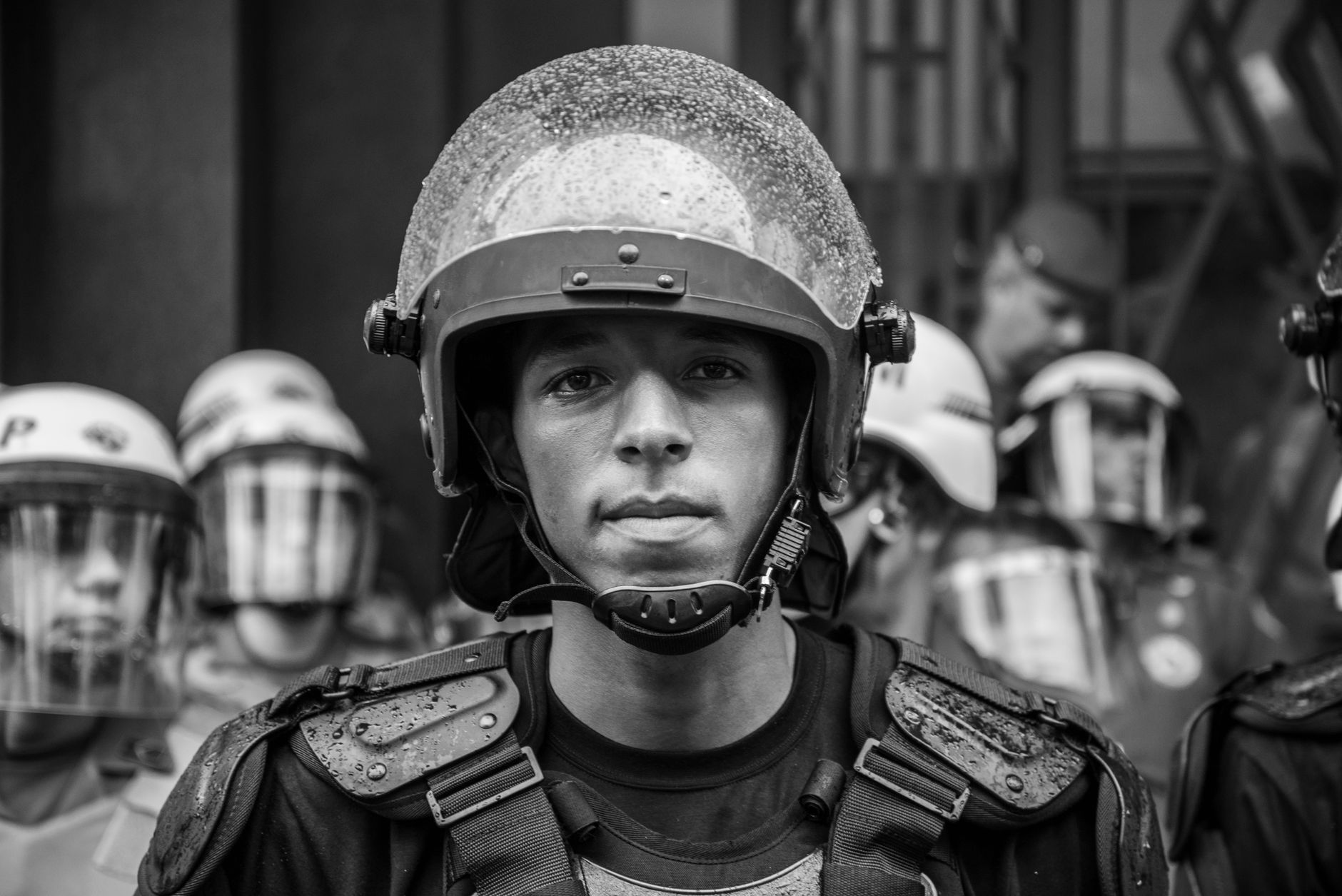
The role of students has been particularly significant. Their participation has shifted the demonstrations towards issues affecting education and opportunities for younger Albanians, while connecting those concerns with wider allegations of corruption and dissatisfaction with the country’s political leadership.
At the beginning of Saturday’s demonstration, protesters set fire to a suitcase and threw it into the Ministry of Education’s courtyard. According to AFP reporting, the gesture was intended to express young people’s determination not to leave Albania in search of better opportunities. The symbolic act reflected concerns about emigration and the perceived lack of attractive prospects at home.
The demonstration was not limited to Tirana. Reports indicated that anti-government protests had spread to other Albanian cities, extending the dispute beyond the capital. Local media cited by Al Jazeera reported damaged property and burning road barricades in the coastal city of Durres, while earlier demonstrations had also been reported in university communities elsewhere in the country.
The movement’s expansion has made its political demands more difficult to separate from the immediate confrontation over policing. Some participants are demanding specific improvements to university financing, educational facilities and employment opportunities. Others have called directly for Rama’s resignation, arguing that the underlying problems reflect broader failures of government accountability.
These demands have converged with an existing protest movement known as Flamingo, which emerged from opposition to a proposed luxury tourism development on Albania’s southern coastline. The development is associated with an investment company founded by Jared Kushner, the son-in-law of US President Donald Trump.
The tourism project became a focus of controversy after residents raised objections concerning land ownership and the development’s implications for coastal communities. Reuters previously reported allegations from villagers that land connected to the project had been improperly sold. The agency stated that it had found no evidence of wrongdoing by Kushner, who was not directly involved in the villagers’ dispute.
Those earlier demonstrations were largely peaceful. Their subsequent convergence with student-led protests has widened the movement’s political agenda, bringing questions of governance, corruption allegations, economic opportunity and public accountability into a single national confrontation.
The escalation has also damaged public and private property. Earlier in the week, demonstrators set fire to a government building and two banks in Tirana, according to reporting by The Guardian. Windows were smashed, businesses were damaged and protesters confronted police using stones and incendiary materials.
President Bajram Begaj condemned the violence earlier in the week and appealed for calm, stressing that political activity must remain within constitutional and legal boundaries. Deputy Prime Minister Albana Koçiu similarly defended the right to protest while urging demonstrators to distance themselves from vandalism and attacks on public property.
The authorities’ statements have highlighted a central dilemma: the government must preserve public order without allowing security operations to undermine fundamental civil liberties. The presence of peaceful demonstrators alongside individuals engaging in violence complicates crowd management and increases the importance of distinguishing between individual criminal conduct and participation in lawful assemblies.
The reported use of rubber bullets has sharpened that concern. Such projectiles are classified as less-lethal crowd-control weapons, but they can still cause serious injuries, particularly when fired at close range or towards vulnerable areas of the body. Their deployment raises questions about operational necessity, proportionality, targeting practices and the availability of alternatives.
Reuters’ account of two journalists being struck also introduces questions about the safety of media personnel covering the unrest. Journalists documenting demonstrations perform a public-interest function, and injuries to reporters can affect their ability to observe and report independently on police operations and protesters’ actions.
Hita’s announcement that seven officers had been suspended establishes that disciplinary inquiries are underway. It does not, however, establish that misconduct has been proven. The eventual findings, together with any subsequent legal proceedings, will be important in determining whether the allegations are substantiated and whether the authorities’ response meets applicable standards.
The European Union has already expressed concern about the violence surrounding the demonstrations. Earlier in the week, the EU delegation in Tirana called for de-escalation and acknowledged allegations of excessive police force against protesters and journalists. It encouraged a prompt investigation while urging the parties involved to reduce tensions.
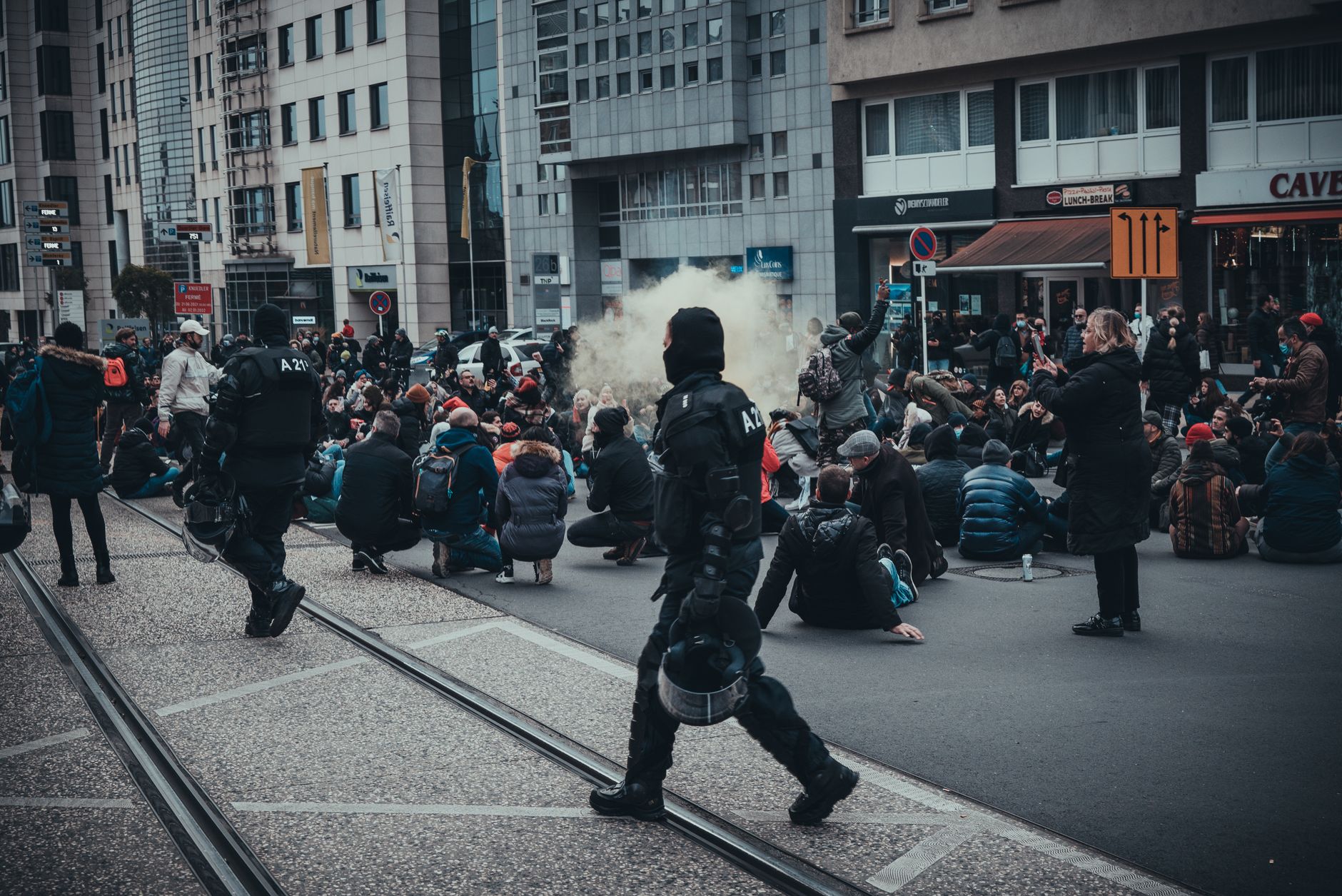
The European dimension is particularly relevant because Albania is seeking EU membership. Together with Montenegro, it is among the Western Balkan countries most advanced in the accession process. Rama’s government has identified membership by 2030 as a political objective, making the country’s institutional record an important part of its European ambitions.
Albania’s accession process involves scrutiny of judicial independence, the rule of law, anti-corruption efforts and fundamental rights. The protests do not themselves determine the country’s membership prospects, but the authorities’ handling of the crisis provides a visible test of governance and institutional accountability.
For European partners, the central issues include whether allegations of excessive force are investigated effectively, whether criminal proceedings against demonstrators respect legal safeguards and whether peaceful political expression can continue without intimidation. The treatment of journalists and the transparency of official investigations also carry implications for assessments of democratic institutions.
At the same time, the violence committed by some demonstrators presents legitimate security challenges. Attacks involving petrol bombs, fireworks and stones can endanger officers, bystanders and nearby residents. The existence of those risks does not remove the obligation to assess the necessity and proportionality of the police response in individual incidents.
The government faces increasing political pressure because the movement’s demands now extend across several areas of policy. Education reform, employment opportunities, alleged corruption and controversial investment projects are distinct issues, but they have become connected through a shared demand for greater accountability from the authorities.
Rama’s refusal to resign has left no immediate prospect of resolving the confrontation through a change of government. His administration has instead emphasised its electoral mandate, the need to maintain public order and its willingness to engage with legitimate student concerns.
The protesters’ position remains more fragmented. Student participants have focused on the costs and quality of education and the transition into employment, while the wider opposition movement is demanding the prime minister’s departure. The different priorities may affect whether future negotiations can address concrete policy grievances without resolving the broader political dispute.
The scale of the unrest also presents practical challenges for municipal authorities and businesses in Tirana. Repeated demonstrations, road obstructions, damaged vehicles and fires have disrupted parts of the city centre. Restoring normal activity will require both security operations and repairs to affected public and private property.
The events of October 17 therefore represent more than another day of street clashes. They mark a change in the methods used by security forces, a further broadening of the protest movement and a new phase of scrutiny over how the Albanian government responds to political dissent.
Several questions remained unresolved by Saturday evening. Authorities had not provided a comprehensive independently verified count of injured demonstrators. The disciplinary investigations involving suspended police officers had not reached final conclusions. Nor had the government announced a political agreement capable of ending the demonstrations or satisfying the principal demands for resignation and reform.
The reported firing of rubber bullets is likely to remain a central issue as those investigations proceed. The circumstances in which officers used the weapons, the extent of injuries and the consistency of police actions with official procedures have become important factual questions alongside the broader political dispute.
Albania’s government has maintained that public safety and the country’s development must continue despite the unrest. Protesters, meanwhile, have demonstrated that dissatisfaction over education, economic prospects and alleged corruption can mobilise substantial numbers of young people and sustain confrontations over several days.
As the fifth day ended, police continued efforts to restore control in central Tirana while protesters maintained pressure on Rama’s administration. The prime minister remained in office, the movement’s demands had not been resolved and investigations into alleged police misconduct were still underway. The immediate question was whether the authorities and demonstrators could prevent another escalation while the underlying political disagreements remained unsettled.
Leave a Reply